ACCUPLACER Writing: What Does the Writing Test Measure?
Learn what the ACCUPLACER Writing test measures and how to prepare for questions involving revision, organization, and standard English conventions.

Practical advice, expert viewpoints, and inspiring stories for aspiring nurses and prenursing students.
Learn what the ACCUPLACER Writing test measures and how to prepare for questions involving revision, organization, and standard English conventions.


Preparing for ACCUPLACER Advanced Algebra and Functions? Review linear equations, quadratics, functions, exponential equations, and trigonometry.

Preparing for GED Social Studies? Learn how to practice reading, historical reasoning, graphs, charts, and evidence-based questions.

Learn how to prepare for the GED Reasoning Through Language Arts test by focusing on reading, arguments, grammar, and extended responses.

Find out what the GED Science test focuses on and how to prepare for questions involving scientific information, experiments, data, and graphs.

Build a focused HESI A2 Anatomy and Physiology study plan by reviewing major body systems, terminology, and basic functions.

Learn how to prepare for HESI A2 Reading Comprehension by practicing main ideas, supporting details, vocabulary, and logical inferences.

Review the grammar, language, and writing concepts included in the TEAS English and Language Usage section.

Preparing for TEAS Science? Start with these important anatomy and physiology areas and build a study plan around the topics tested by ATI.

Learn how the TEAS Reading section is structured and how to use your 55 minutes effectively without rushing through questions.

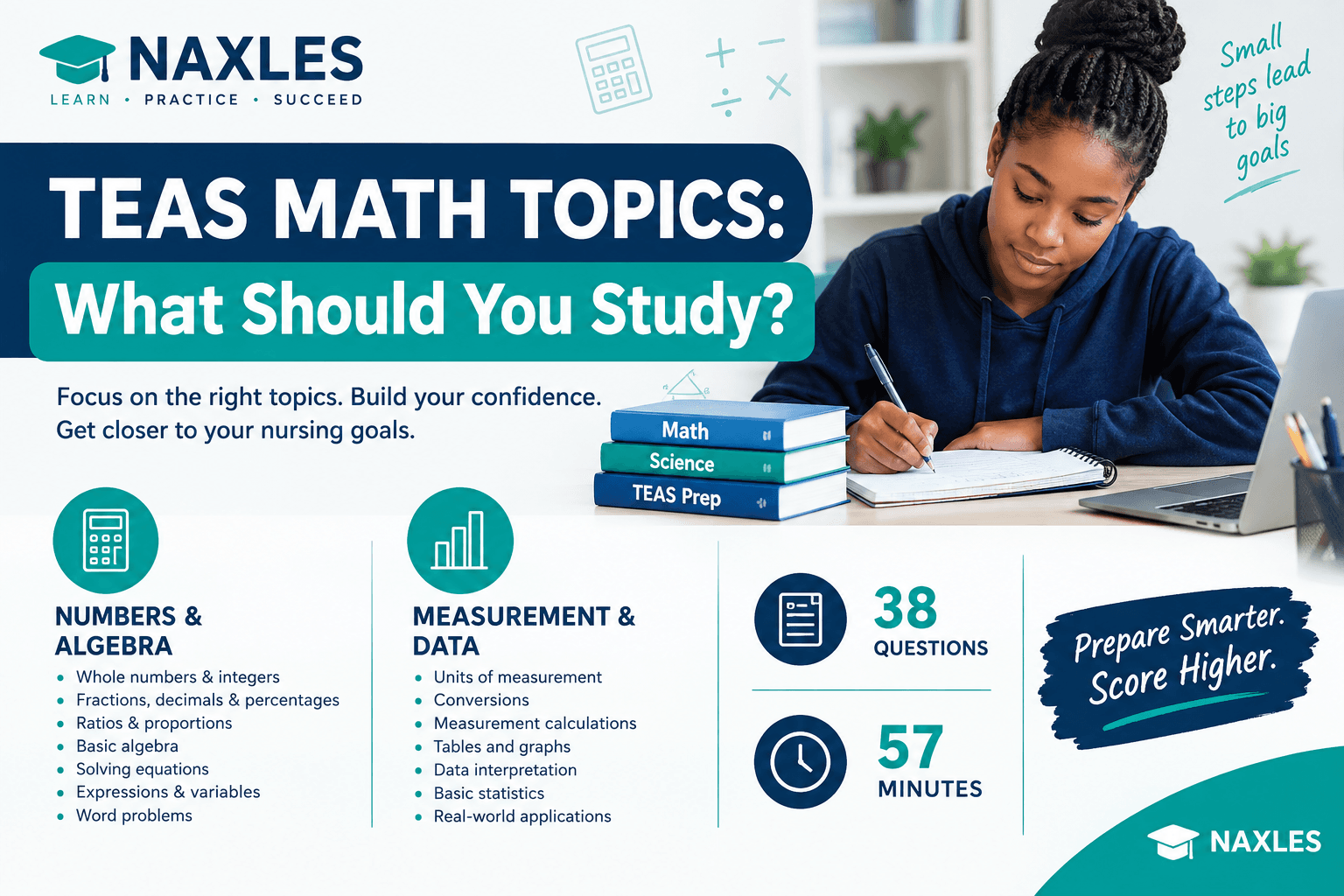
Preparing for the TEAS Math section? Learn which math topics to study, how the section is structured, and how to organize your preparation around the areas tested on the exam.

Learn the main ACCUPLACER Math tests, including Arithmetic, QAS, and Advanced Algebra and Functions, and what each one covers.

Build a focused HESI A2 Anatomy and Physiology study plan by reviewing major body systems, terminology, and basic functions.

Learn what the ACCUPLACER Reading test measures and the reading skills you should practice before test day.

Get a practical HESI A2 Math study checklist covering fractions, decimals, ratios, proportions, measurements, and other core skills.

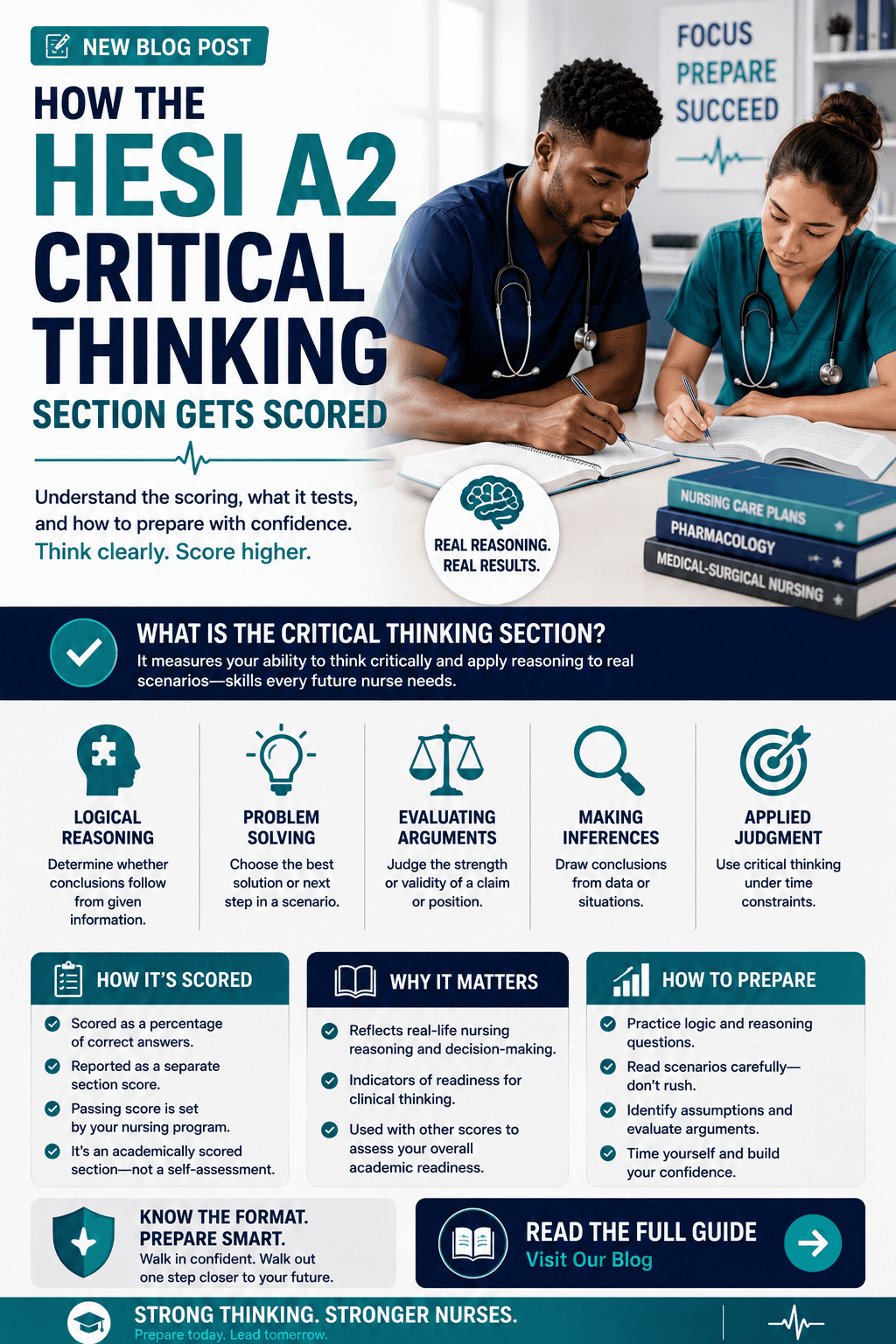
Critical thinking sections can sometimes feel more nebulous than straightforward content sections; in part, because it is not always clear what is being measured or how those results factor into your overall exam performance. If the version of HESI A2 you are taking includes a critical thinking section, understanding how it is scored can help you tackle it with greater clarity and less unwarranted anxiety. This guide explains what we know about the typical scoring and interpretation of this section.

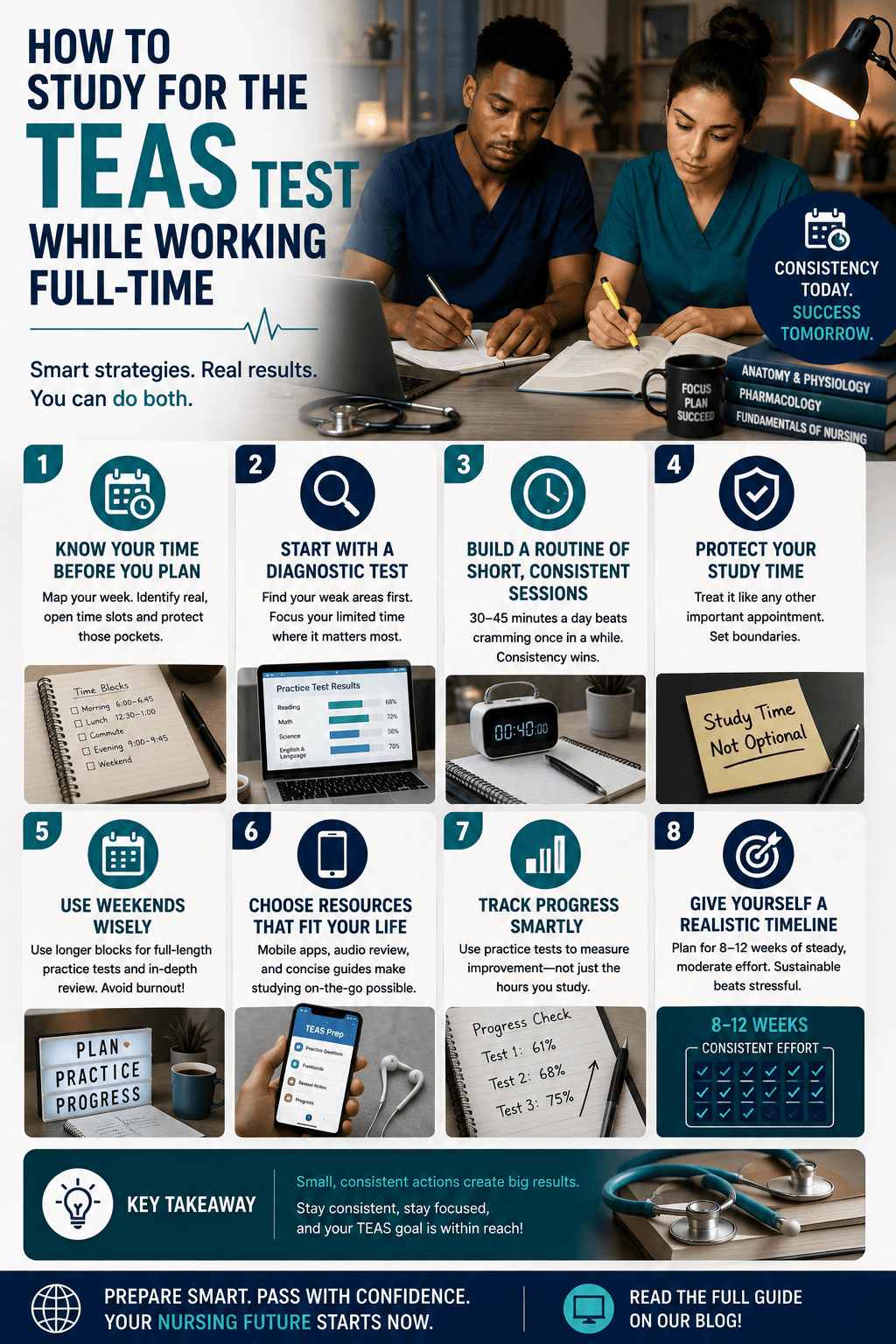
It is a far different task to study for a standardized test while working a full-time job than it is to study as a full-time student. You’re not in the abstract deciding between studying and other responsibilities. You’re fitting in exam prep around work, transportation, kids, and basic rest. The good news is that working professionals are effectively preparing for the TEAS all the time, and the best tactics for this situation look different than typical study suggestions created around students with open afternoons. This is a practical strategy that is designed especially with the limitations of a working schedule in mind.

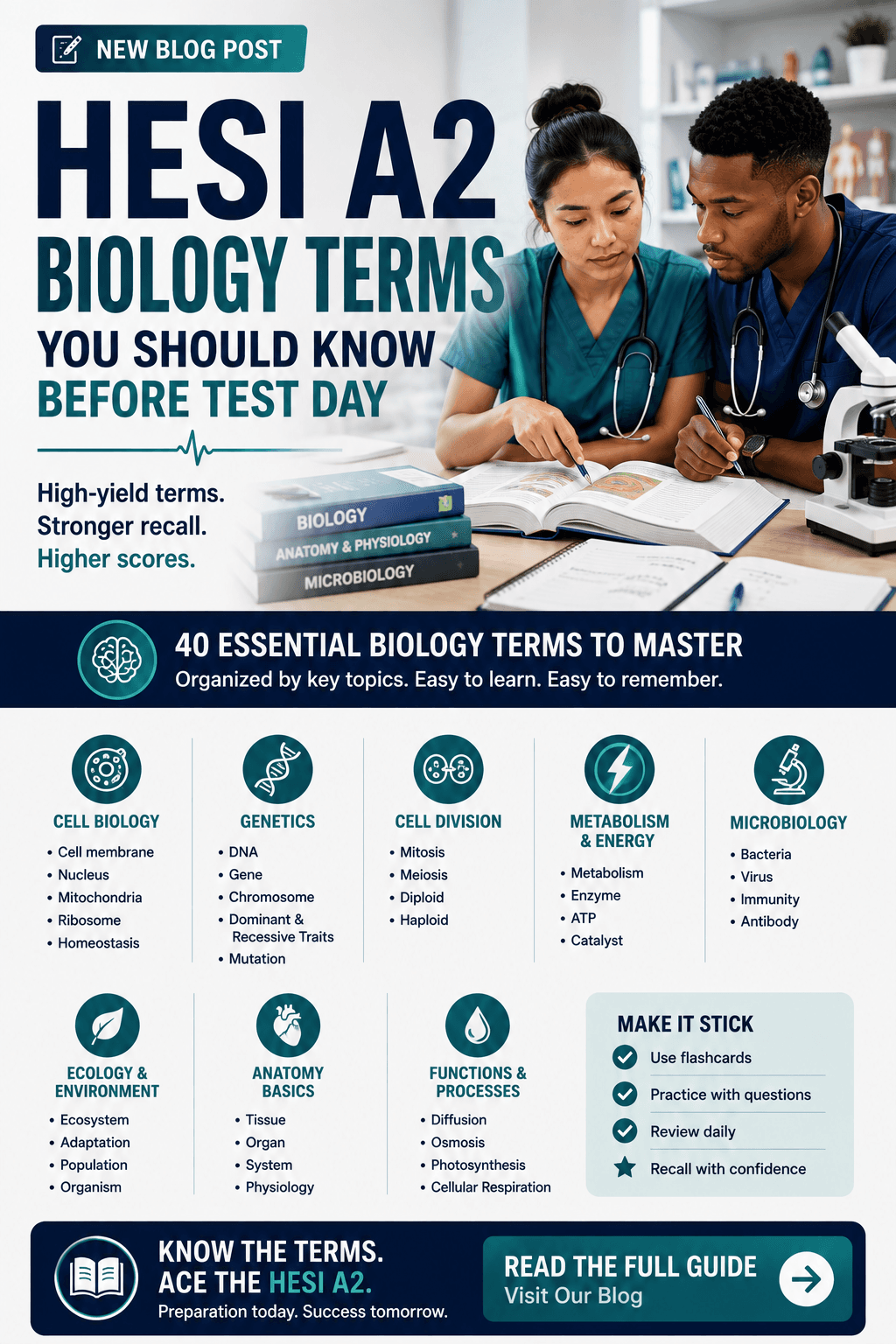
Biology vocabulary tends to run together as you approach test day, words that seemed simple in your last biology class can start to feel a little fuzzy without regular review. This guide is structured to help you focus on the biology vocabulary you are most likely to encounter on the HESI A2. It is intended for efficient last-mile review, not as a method to re-learn an entire biology textbook's worth of terminology.

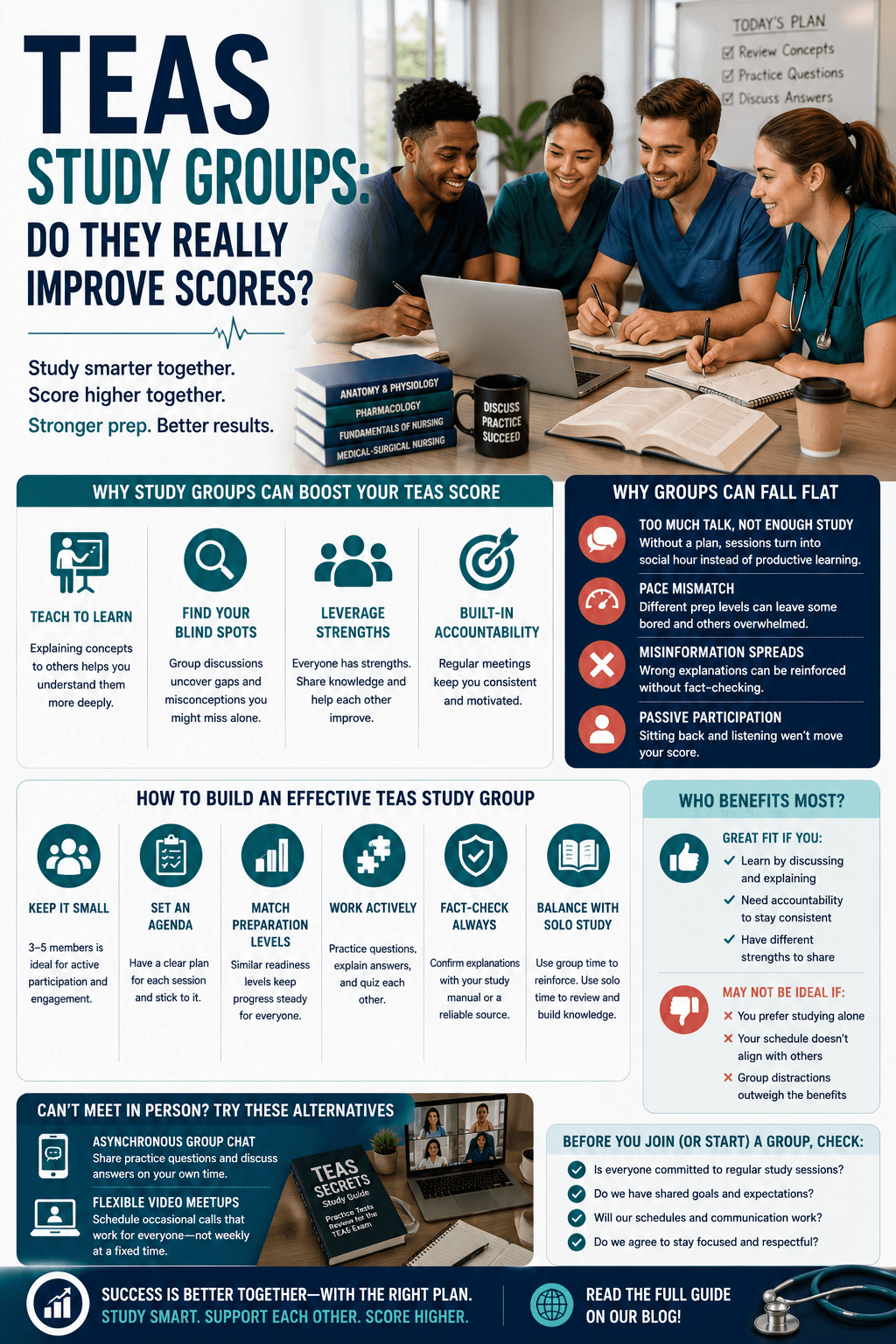
Study groups are a mixed bag. For every candidate who gives thanks to a study group for helping them finally grasp a tough idea, there is another who recalls group sessions degenerating into mindless chatter that produced little. There’s no TEAS-specific research following score outcomes for group vs solo studiers, but there is an abundance of general research on collaborative learning, and it leads to a clear conclusion: study groups can meaningfully boost performance, but only on certain conditions. It's much more important how a study group is structured than if you have a study group at all.

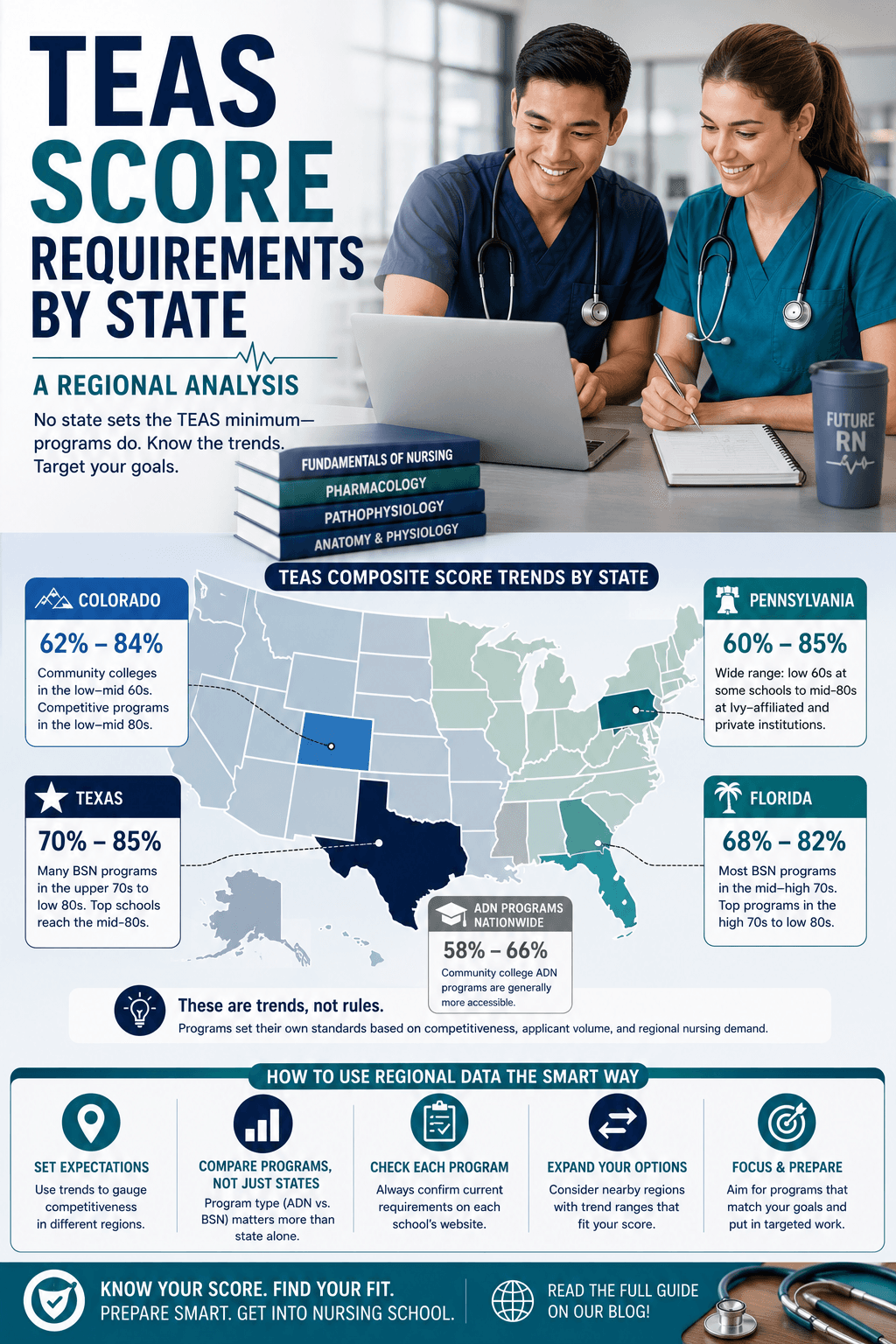
Before getting into regional trends, it’s essential clarifying one thing: There is no official, state-mandated TEAS score requirement anywhere in the US. The TEAS is created by a private testing company, not a state government or licensing board, and no state board of nursing has a uniform minimum score that all programs within its jurisdiction must meet. When you look at “TEAS requirements by state” you are really looking at an aggregation of hundreds of individual program policies, which just so happen to cluster into observable regional patterns, driven by things like program competitiveness, applicant volume, and regional healthcare workforce demand. Understanding that difference allows you to use regional data properly: as a general expectation-setting tool, not as a replacement for evaluating your specific target program's published minimum.

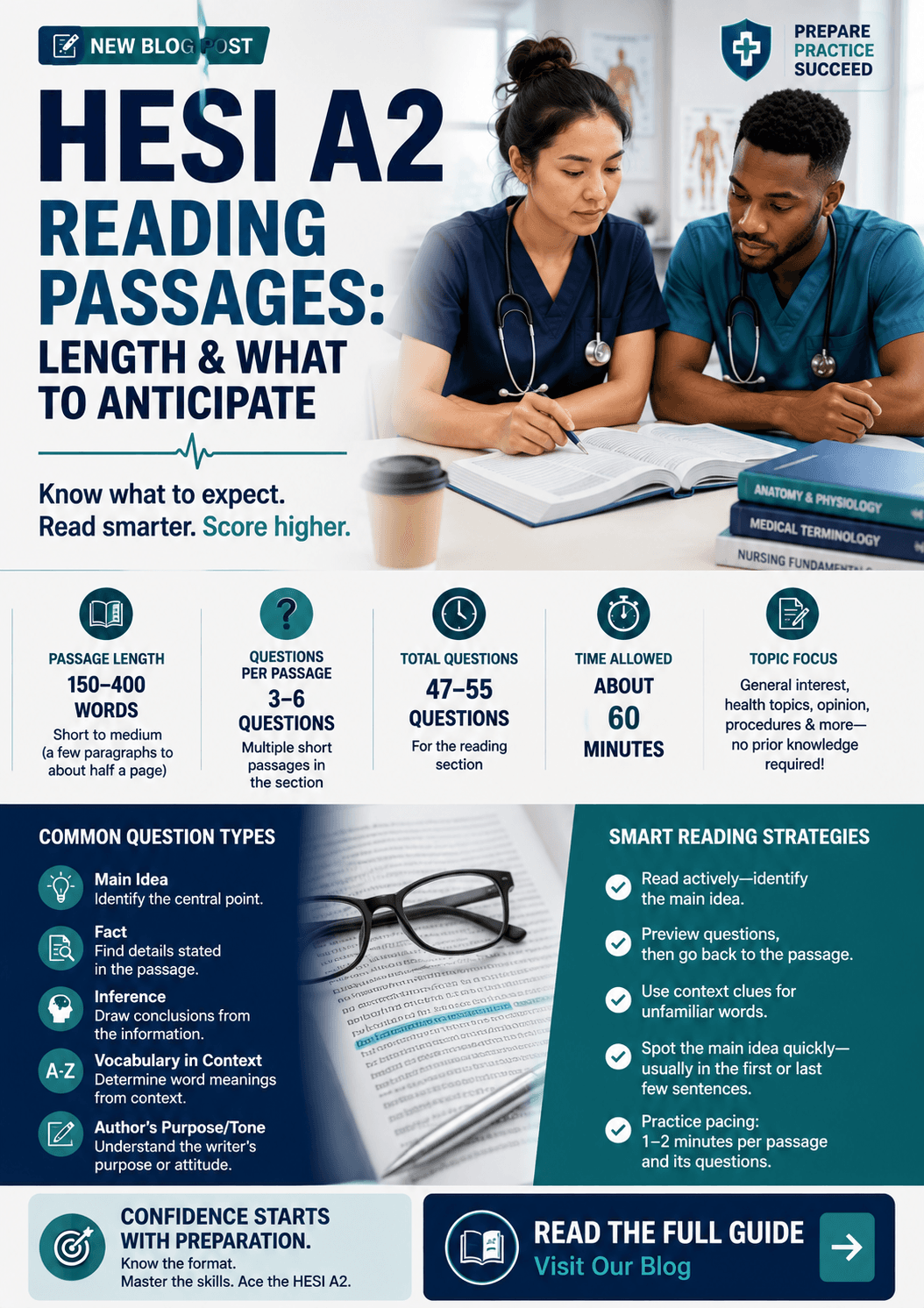
Having no idea what the passages actually look like as you walk into the reading comprehension section can make an already time-pressured section seem even more unpredictable. Knowing the approximate length of the passages, the kinds of topics they cover, and how questions are constructed around the passages can help you approach this section with a better sense of what to anticipate. In this guide, we will tell you exactly what to expect from HESI A2 reading passages.

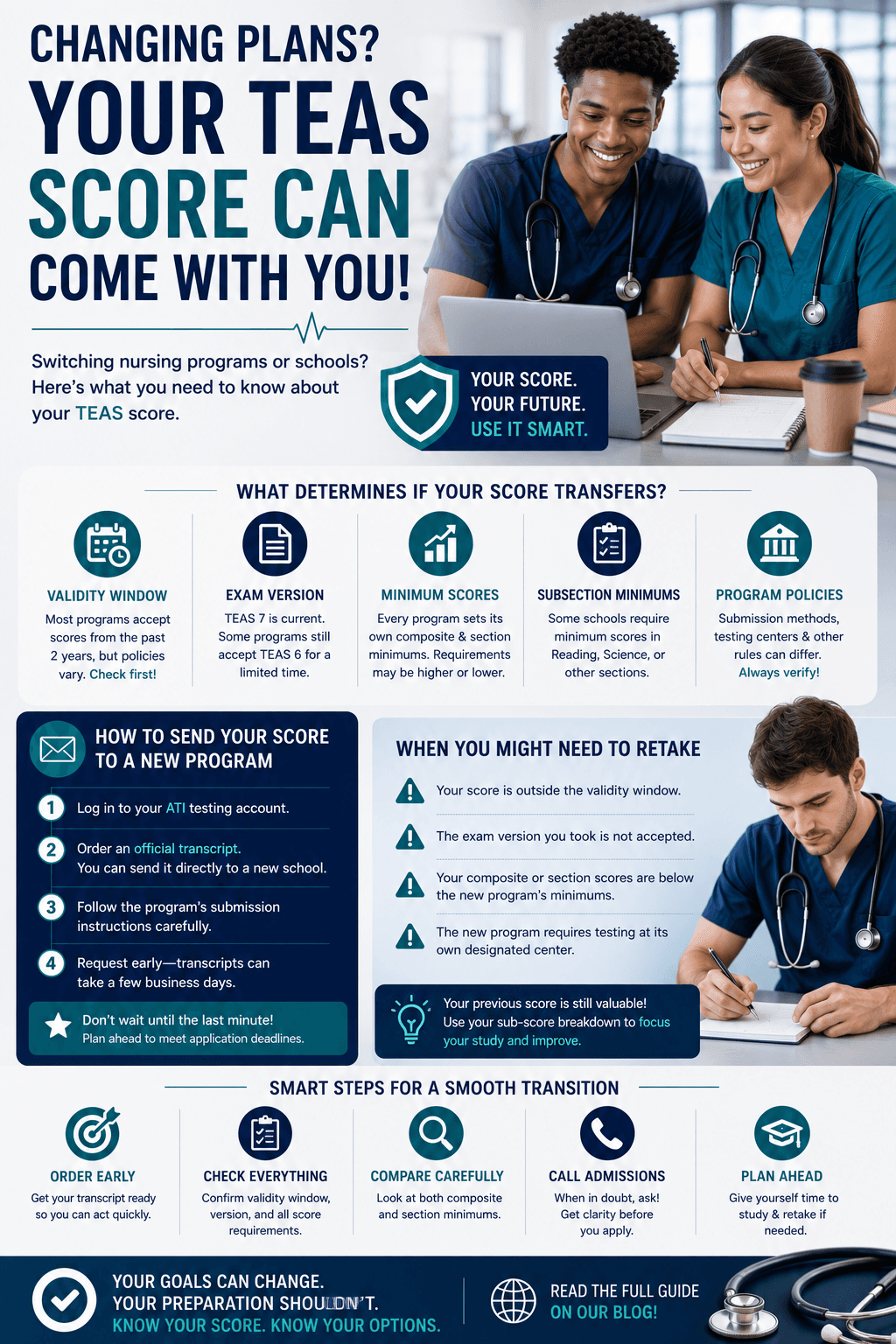
Plans change. Maybe you started the application process for one nursing program, but decided to apply somewhere else. Maybe you’re transferring from a community college ADN track to a university BSN program. Maybe your family moved and you’re applying to schools in a different state altogether. For whatever reason, a typical and sensible inquiry arises, does your TEAS score transfer with you or are you starting over? The honest answer is that it relies on a few certain things, and knowing them in advance can save you from an unexpected surprise later in your application timeline.

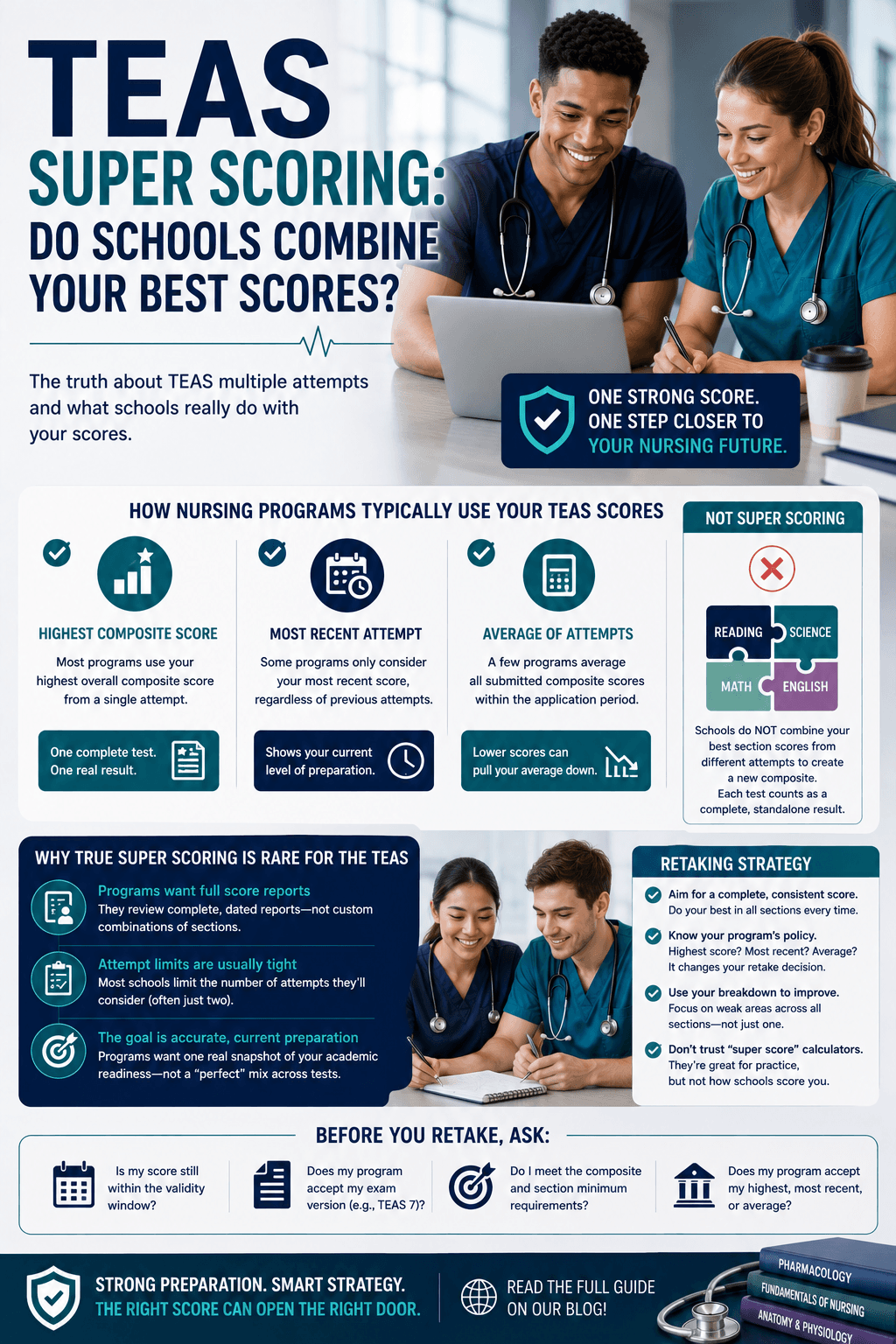
If you’ve looked into college admissions testing at all, you may have come across the term “super scoring” when talking about standardized tests like the SAT or ACT, in which certain universities would take your greatest individual section scores from separate test dates and aggregate them into one ideal composite. So do nursing programs do the same with the TEAS? It’s a fair question to ask. The honest answer is a little more complicated than a yes or no, and knowing how TEAS multiple-attempt procedures really function is going to serve you much better than presuming here that SAT style super scoring applies.

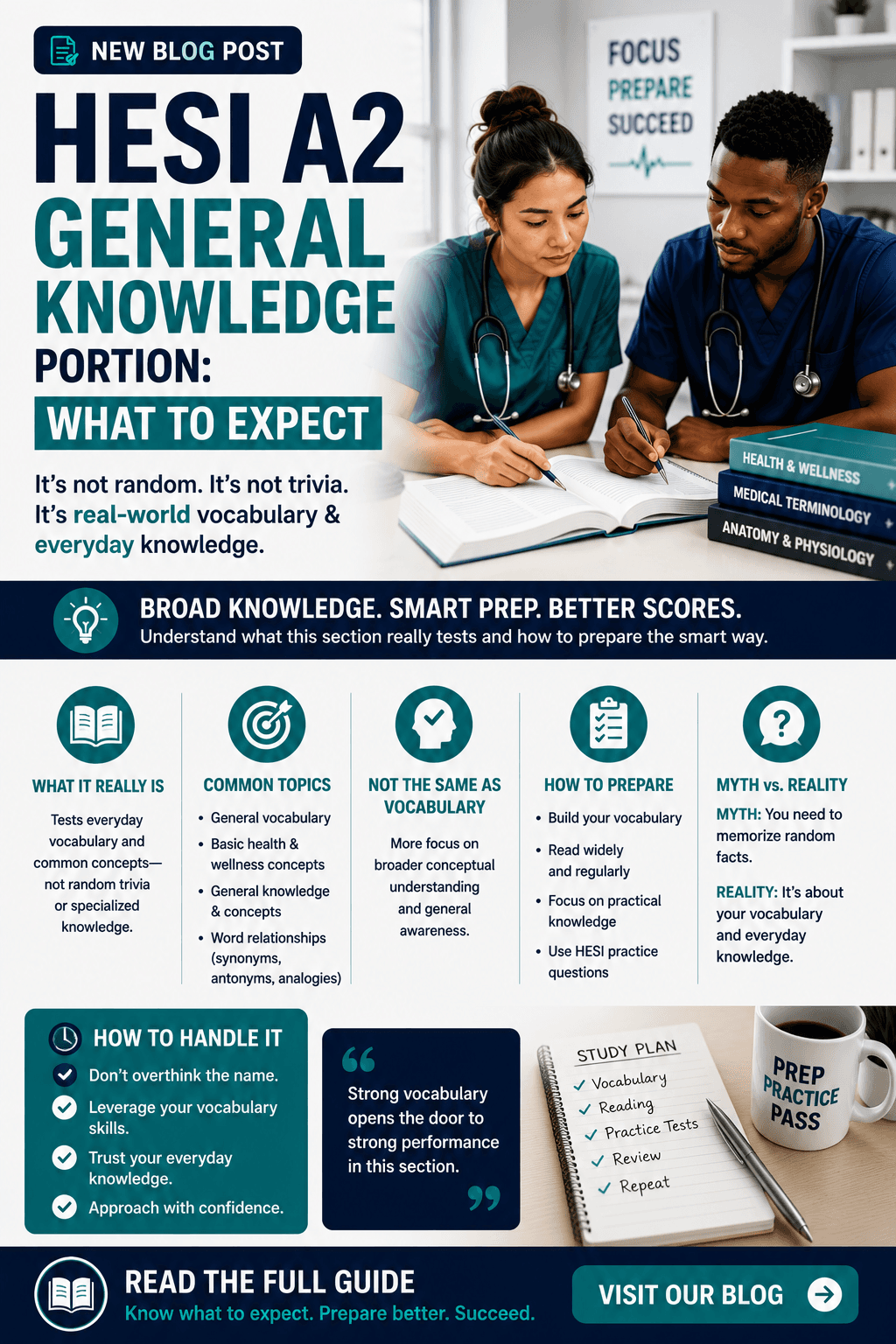
One of the more vaguely worded sections of the HESI A2 is the “general knowledge” section, and that vagueness has a way of making test-takers nervous, since it is not clear what to study for a section that sounds like it could be about anything. This guide clarifies the confusion surrounding what the general knowledge section actually tests, how it differs from the other sections, and how to prepare for it without wasting time studying irrelevant topics.