TEAS Science: Anatomy & Physiology Topics to Review
Anatomy and physiology is an important part of the TEAS Science section. If you are preparing for the exam, understanding how the major body systems work together can make your science review more focused.
What Is Covered in TEAS Science?
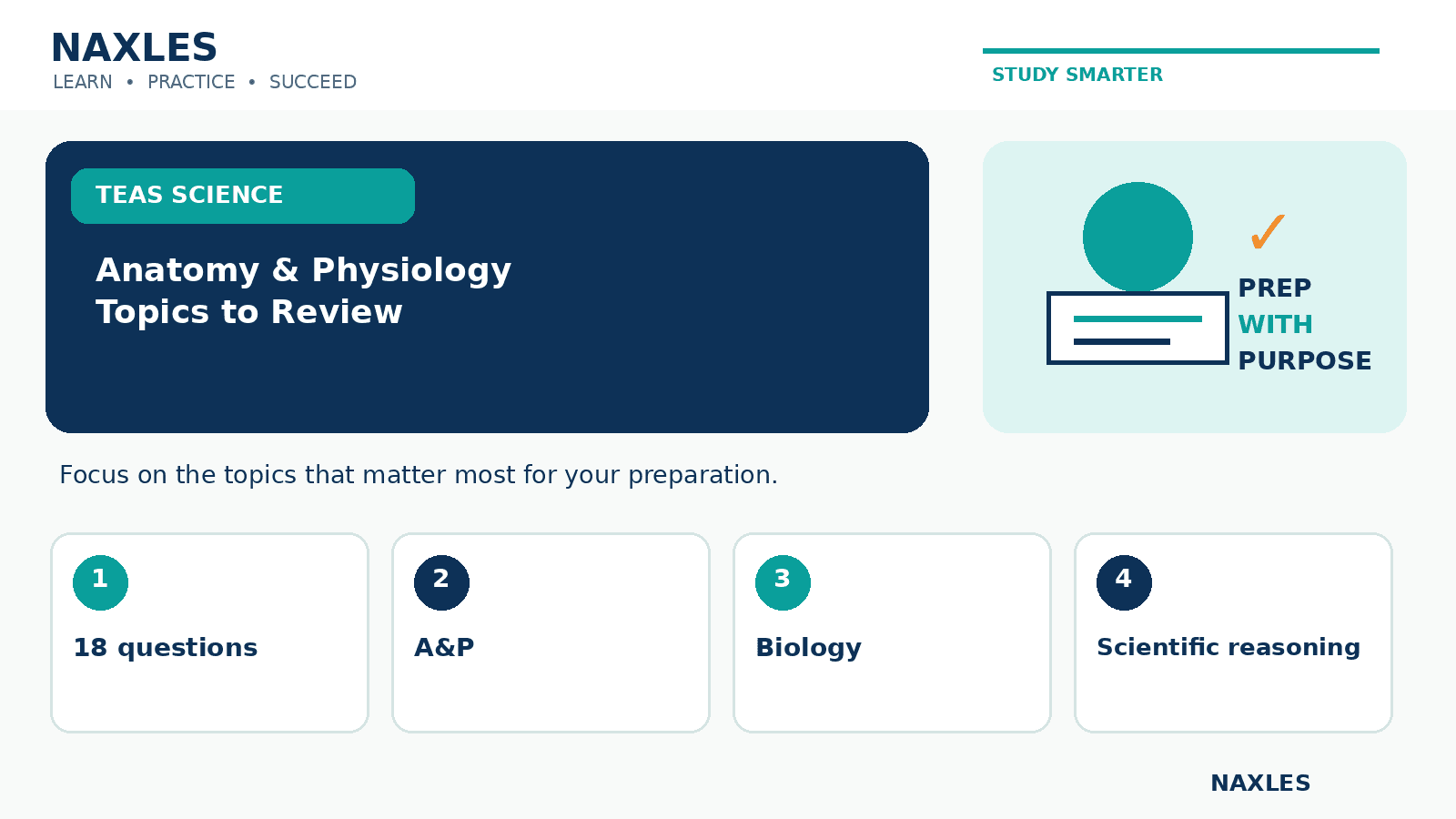
ATI divides the Science section into four areas:
- Human anatomy and physiology
- Biology
- Chemistry
- Scientific reasoning
Human anatomy and physiology account for the largest number of Science questions in the current ATI blueprint.
Start With the Major Body Systems
When reviewing anatomy and physiology, begin with the major systems rather than trying to memorize isolated facts. Important areas include:
- Cardiovascular system
- Respiratory system
- Digestive system
- Nervous system
- Endocrine system
- Musculoskeletal system
- Reproductive system
- Immune and lymphatic systems
- Urinary system
- Integumentary system
Focus on both structure and function. For example, do not only memorize the names of organs. Make sure you understand what each organ does and how it interacts with other parts of the body.
Study Connections Between Systems
Many students study each body system separately and stop there. Instead, practice connecting them. For example, the respiratory and cardiovascular systems work together to help deliver oxygen to tissues. Understanding that relationship can be more useful than memorizing two unrelated lists.
Use Diagrams and Active Recall
Anatomy contains many terms, so passive reading can become inefficient. Try drawing simple diagrams, labeling body structures, and explaining processes without looking at your notes. You can also use flashcards for terminology and practice questions to test whether you can apply what you have learned.
Don't Ignore the Other Science Areas
Anatomy and physiology is important, but it is not the entire Science section. ATI also includes Biology, Chemistry, and Scientific Reasoning. Your study schedule should give attention to all four areas.
Final Thoughts
A strong TEAS Science plan should combine anatomy and physiology with Biology, Chemistry, and Scientific Reasoning. Start with the major body systems, understand how they function, and then use practice questions to identify the areas that need more review.