General Structure of the Reading Section
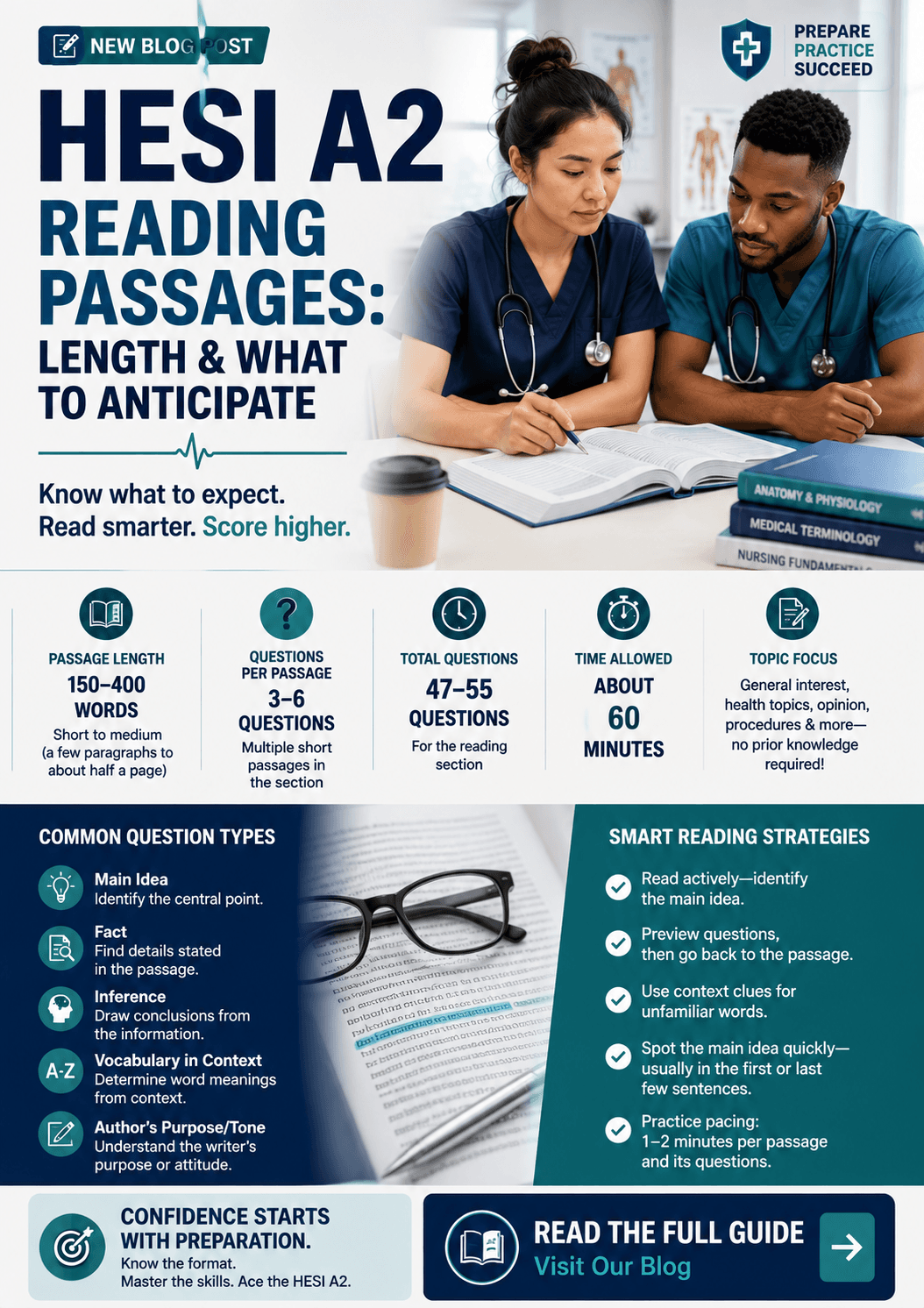
In the HESI A2, the reading comprehension section will usually have a handful of passages, with several questions about each passage rather than one large passage with dozens of questions about that passage. Most of the test versions contain around 47 to 55 questions in total for all the reading passages together. The test is generally administered in around 60 minutes.
How Long Are the Passages?
Passages on the HESI A2 are generally short to medium length (a few paragraphs to about half a page long). Generally, they are shorter than the extended, multi-page passages you may see on other standardized tests, so the section is weighted more toward a higher number of shorter passages than fewer, longer ones. Most passages are 150-400 words long, but the exact length may vary somewhat from version to version of the exam.
Instead of a long list of questions attached to a passage, there are usually three to six questions that follow each passage. The passages are shorter, so you will have to jump among several different passages and topics in a section, making it even more important to read efficiently than to just read quickly.
What Is the Subject of the Passages?
- The HESI A2 reading passages are typically a mix of general interest and health care related topics and do not require any prior specialized knowledge.
- General information topics (e.g. historical events, scientific phenomena, everyday processes explained in an accessible manner, etc.)
- General wellness information, basic medical concepts, or public health topics (though these usually do not require specialized nursing knowledge to understand).
- Opinion or argumentative sections, sometimes testing your ability to identify an author’s perspective or persuasive intent.
- Procedural or instructional passages - describing a process or set of steps, requiring you to interpret sequence or purpose.
- The passages are so diverse in topic that doing well in this section is more about overall reading-comprehension skill than specific knowledge of the subject matter.
Common Question Types You’ll Encounter
The question types tend to be similar and repetitive, no matter what the passage is about.
- Main idea questions, which ask you to determine the main point of the entire passage.
- Fact questions, that ask about facts or information given directly in the passage.
- Inference Questions: You are asked to draw a reasonable conclusion based on what the passage suggests but does not state explicitly.
- Vocabulary-in-context questions, which ask you what a word means based on how it appears in the specific passage.
- Author's purpose or tone questions, which require you to determine the reason the passage was written or the general attitude it expresses.
How Long for Each Passage?
The format is important to the pacing of this section.
- Spend about one to two minutes reading each passage and the same amount of time working thru the attached questions.
- Avoid rereading passages multiple times, since the shorter length is designed to be read efficiently once, with a clear strategy for locating specific details afterward if needed.
- Practice this pacing pattern under timed conditions in advance, as it is difficult to get used to without direct practice.
Approaching Short Passages: Strategies for Success
- This means reading actively, not passively. As you read each short passage, mentally summarize the main idea.
- Read the questions first and then go back into the passage to find the specific information you need.
- Do not spend time on words within the passage that you do not know; instead, use context clues to make a reasonable interpretation.
- Get used to spotting the main idea quickly, because shorter passages tend to have a clear main idea, usually in the first or last couple of sentences.
Common Student Mistakes with this Format
- Over-analyzing short passages as if they were much longer and more complex texts, which can waste valuable time.
- If you skip the passage and jump straight to the questions, you will miss important context that will affect the accuracy of your answers.
- Hurrying through several passages without an awareness of pacing, creating time pressure later in the section.
- When in fact all information needed is generally contained within the passage itself, provided outside knowledge is required.
How to Prepare for This Specific Format
- Select practice passages that are similar to the HESI, not generic reading comprehension drills that might not resemble the HESI’s typical passage length and question format.
- Practice and time yourself consistently, getting comfortable with the pacing required in this shorter-passage format.
- Go back and analyze your wrong answers to determine if they were caused by misreading the passage, misreading the question, or lack of time.
Summary
The reading passages on the HESI A2 are typically shorter and more frequent than students expect. Passages are usually a few paragraphs to half a page long and are followed by several questions about the passage. If you know the format in advance – and you are familiar with the common topics and types of questions you are likely to get – you will be approaching this section with a clearer, strategic mindset, rather than a sense of uncertainty about what is to come. Practicing specifically with this shorter-passage format will help you develop the pacing and reading efficiency that this particular section rewards.