How the ACCUPLACER Reading Test Works
The ACCUPLACER Reading test measures how well you understand information presented in written passages. Preparing effectively means practicing several different reading skills rather than simply reading more books.
What Does ACCUPLACER Reading Test?
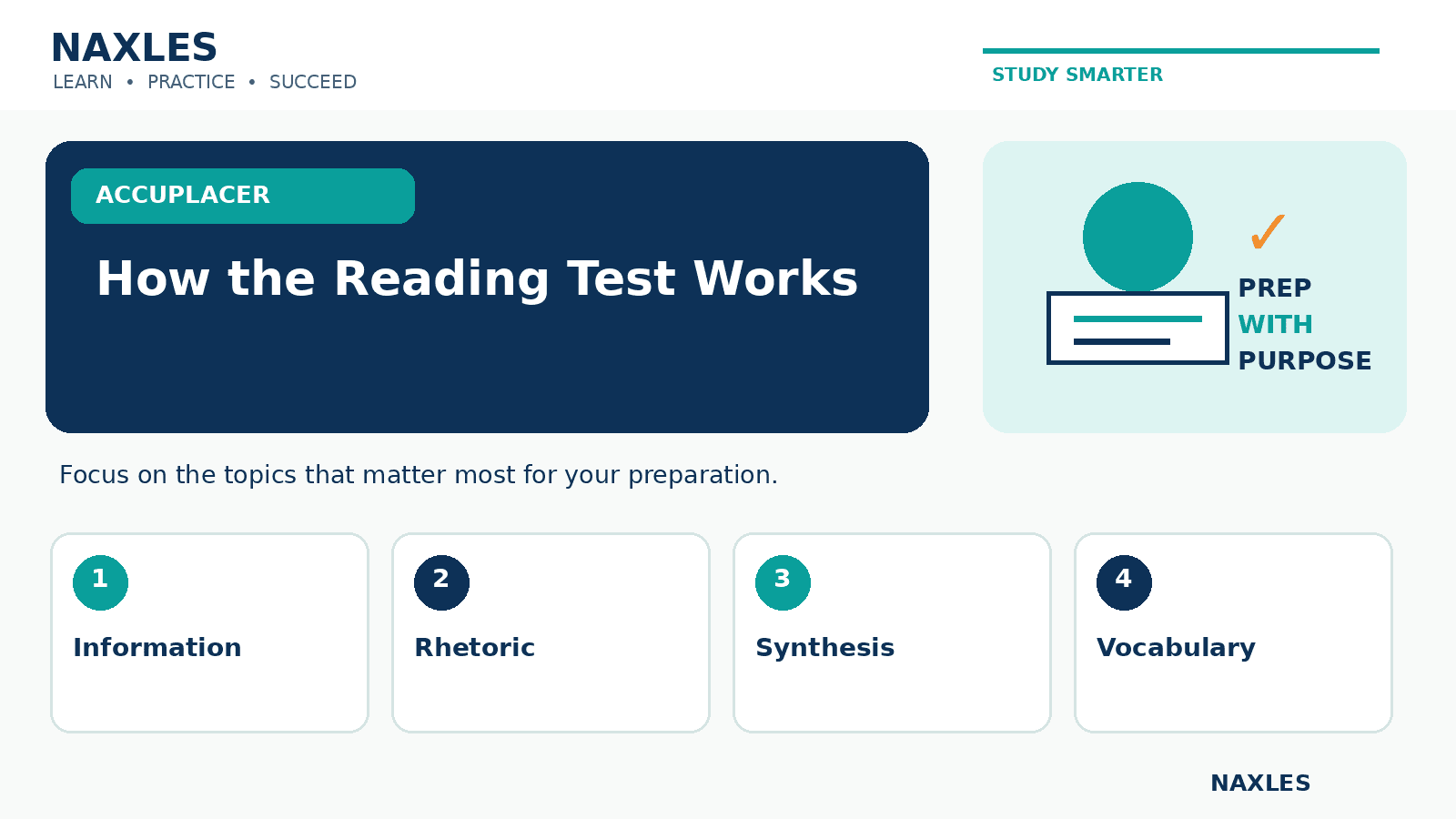
College Board identifies four broad skill areas:
- Information and Ideas
- Rhetoric
- Synthesis
- Vocabulary
Information and Ideas
You may need to identify important information, understand relationships between ideas, or determine what a passage communicates. When practicing, ask yourself: What is the author trying to tell me? Then identify the details that support that understanding.
Rhetoric
Rhetorical questions require you to think about how a passage communicates its message. Pay attention to:
- Purpose
- Organization
- Tone
- Word choice
- How ideas are presented
Synthesis
Some questions require you to connect information from different parts of a passage or compare ideas. Do not treat each sentence as completely separate. Think about how the ideas fit together.
Vocabulary
Vocabulary questions may ask you to determine the meaning of a word or phrase based on context. When you see an unfamiliar word, read the surrounding sentence carefully before choosing an answer.
Practice Without a Timer First
ACCUPLACER tests do not have a general time limit, so your initial preparation can focus on accuracy and understanding. Once you become comfortable with the question types, continue practicing so you can work efficiently
Use Official Practice Questions
College Board provides sample questions for ACCUPLACER Reading and other tests. Using official practice material can help you become familiar with the types of questions and passages you may encounter.
Final Thoughts
ACCUPLACER Reading preparation should focus on information and ideas, rhetoric, synthesis, and vocabulary. Work on understanding passages carefully, explaining why answers are correct, and learning from mistakes.