Step 1: Check whether you actually meet the requirement.
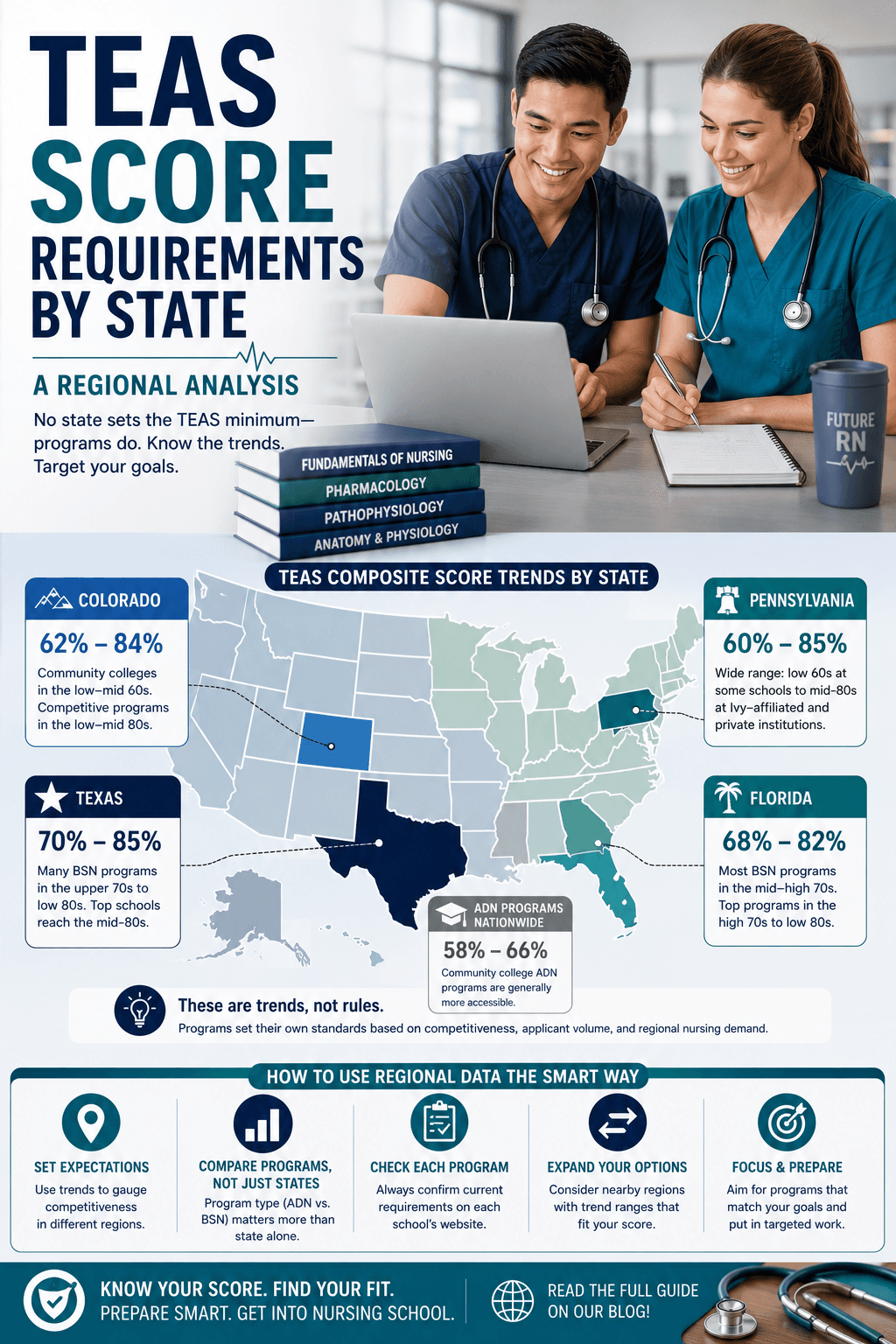
Don't assume, look at your composite score against the minimum for your specific program — not the minimum for a general program, and not the minimum for a friend's program. There is considerable variation in programs' thresholds, and it is good to also consider if your program scores sections separately, Science has a minimum of its own sometimes. You may be successful with one target program and not another and this will alter your next steps significantly.
Step 2: Learn that this is truly common
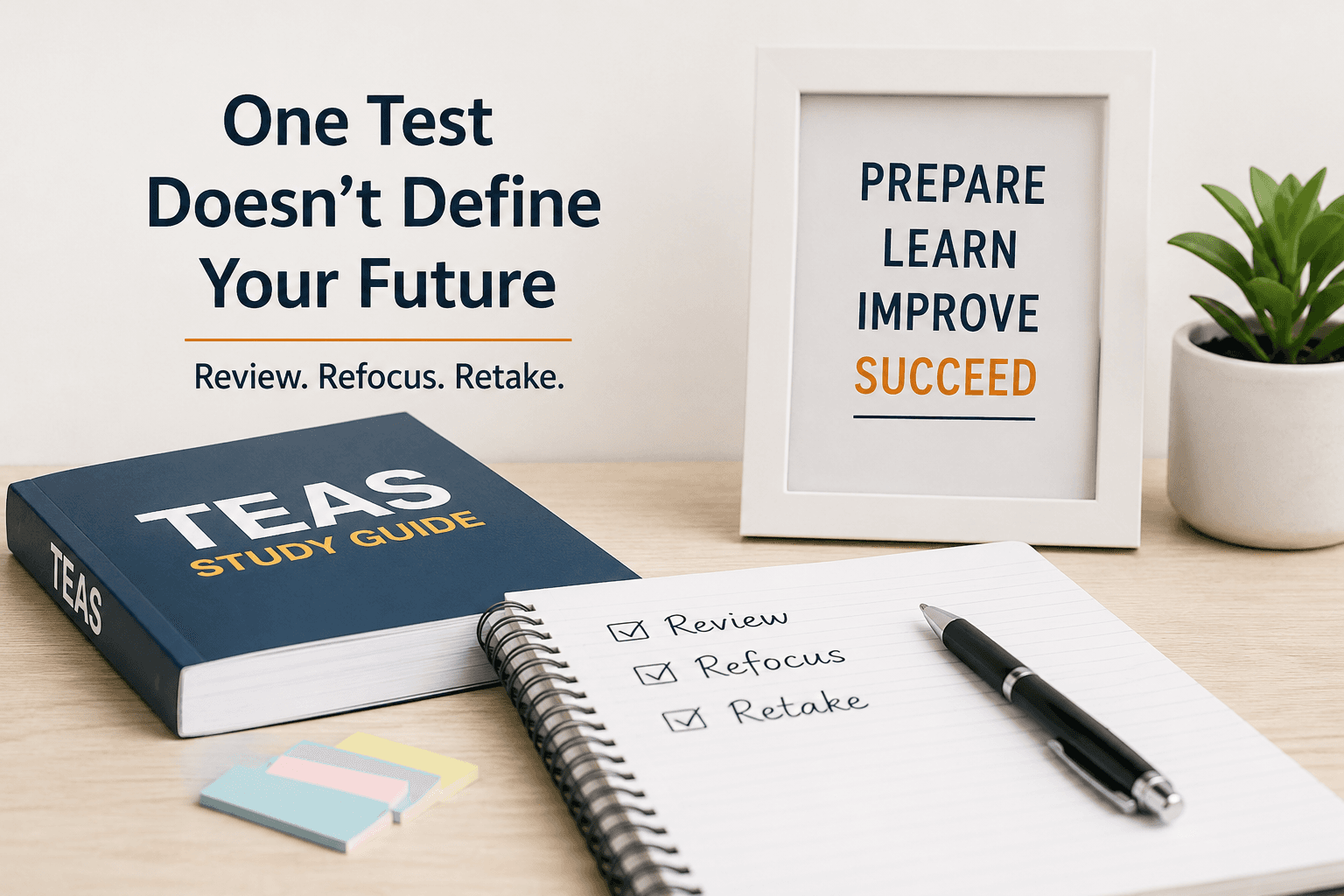
Numerous students who have succeeded in nursing school didn't get the grade that they had hoped for on their first try. One test date isn't an indicator of your success or failure in nursing school. It's important to reframe this early so that you can proceed to your next steps in a rational manner and not rush into a retake right away without knowing what to do to correct the mistake.
Step 3: Use Your Individual Performance Profile (IPP)
You receive an Individual Performance Profile that shows you how you performed on specific sub-topics in each section, not just your scores in each section. This is the only most helpful tool to determine the actual location of the point loss, not guessing or restudying from the beginning. This profile will tell you if your Science score dragged down your composite, for example, so if it was too low it will tell you whether it was anatomy and physiology, biology, chemistry or scientific reasoning, providing you with the information you need to focus on in your next study plan.
Step 4: Review the Retake Rules before scheduling any activities
Retake policies differ based on ATI's general rules and your particular program's requirements:
- ATI's general policy will allow retesting after a minimum waiting period (usually 14 to 30 days, depending on the test site, but in many cases, no more than three retests in a 12-month period).
- Individual programs may also have their own and/or more restrictive limits — for instance, some programs will only count two applications per cycle, and some programs will only count applications within a specific application window.
- For some programs it is your best score across several attempts, for others it is the average of all your attempts or your latest attempt. This is a significant factor to consider in determining if the retake is beneficial to you.
Please note: Check the retake policy of your particular program before scheduling anything as a problem-solving tip. The only time a retake strategy makes sense is if you know you can improve substantially in your second attempt; otherwise, an average might be lower than what you want because the first attempt was really low.
Step 5: Create a new Targeted Study Plan (not a repeat of the original plan)
A recipe for success is to follow the same study method you used before and expect the results to improve, but that does not always work. Instead:
- Avoid reading everything evenly, instead focus on the sub-topics that your Individual Performance Profile identified as low performing.
- If one section lowered your composite substantially, work to it, but don't forget your higher sections as the scores can go either way from one attempt to the next.
- If your first attempt at studying didn't work, try a different way. If you learned on your own and it wasn't sufficient, a structured course may cover aspects of the subject that neither a book nor an app would. If you really took a pricey course and still didn't do well, it may not be that you didn't have enough resources, but that you needed a longer runway, or perhaps a focus based upon the diagnosis.
Step 6: Re-think the timeline honestly
When the application deadline nears and a retake (plus the needed waiting period) doesn't leave you with sufficient time to get and submit a new score on time, here are some realistic options:
- Test as soon as your program will allow for a retake, giving as much time as possible for your new score to be in before the deadline.
- Talk to your program directly to see if they will take a late score submission, but don't assume they will.
- Rather, apply to a future application period which gives you more time to prepare the retake more thoroughly without the rush.
Common problems and solutions
Problem: "I don't know if a retake is even worth it before my deadline." Solution: Back work from your deadline, considering the needed waiting period plus normal time for score processing. If there really isn't enough space, then you will want to focus on a realistic plan for the next cycle, rather than trying something that is going to have a similar outcome.
Problem: “I don't know where to start when it comes to sections to retake.” Solution: DO NOT use how the test "felt" to determine the Individual Performance Profile; skip to individual performance profile directly. Provides sub-topic level detail which a general re-study cannot match.
Problem: "Are my highest score or average of my attempts my program using?" Solution: Just reach out to the admissions office of your program and be direct. This one factor ought to inform the decision of whether the retake is a low risk opportunity to improve or a strategy that requires greater confidence before engaging in it.
Problem: I feel discouraged and unsure if it's realistic for me to go to nursing school. The solution: One score on one day, against a certain threshold, does not indicate your ability. Numerous practicing nurses failed on their initial try. Don't let the failure deter you from a data-driven retake strategy; and don't let the failure stop you from thinking about your whole career path.
Final Thoughts
A failure at a program's TEAS does not mean the end. The road ahead is simple: simply find out where you really are, leverage your Individual Performance Profile to determine specific areas of need, find out what your program's actual retake policy is before booking anything and make a plan that is based on data, not fear or speculation. The majority of applicants who try this will experience some improvement on their next attempt.