What does TEAS mean?
TEAS(Test of Essential Academic Skills) is the standardized test developed and administered by Assessment Technologies Institute (ATI) for health science education programs in the U.S. It can be referred to as an "ATI TEAS," "ATI TEAS 7" (for the current version), or even just "the TEAS. The TEAS is not a course final and does not evaluate the material you applied to one class; rather, the TEAS assesses whether you have the basic academic skills (in reading, math, science and English) necessary to be successful in a demanding health science course. It's not about mastery, it's about thinking, problem solving and communicating clearly, with content that is probably what you learned in high school and in your first few years of college.
Why Do Programs Require the TEAS?
The answer is predictive validity. Nursing programs are rigorous, with high stakes: a student who has a problem with math may miscalculate a dosage, or a student who has a problem with reading may misread a critical patient instruction. It's because that if a student is academically weak in these areas, it could also become a problem for the patient's safety, and there's a need for a data point for admissions committees other than the grades. There are significant differences in the quality of education offered in schools and by different teachers; a 90% in one biology class does not necessarily indicate the same level of mastery in another. The TEAS is taken under the same conditions for all applicants, which allows programs to:
- Make fair comparisons between applicants in terms of their education
- Assess students in need of academic support prior to core coursework.
- Lower the first-year dropout rate (by taking in students who are likely to succeed)
- Fully satisfy the accreditation criteria of having an objective admissions criterion
- The TEAS isn't meant to get you into trouble; it's meant to let you know you're prepared for the intensity that lies ahead. Such a framing can help make it seem like a strategic checkpoint, as opposed to a random one.
To what extent does anyone need to take it?
Though not all programs will require the TEAS, it is very prevalent in:
- Associate Degree in Nursing (ADN) programs.
- BSN programs (accelerated and second degree)
- LPN/LVN programs
- Allied Health programs (radiologic technology, respiratory therapy, health information management)
The requirements are different for each school and program. In fact, before purchasing any study material, verify with your target program's admissions page or call directly: that the TEAS is required, the minimum score needed, which version of the TEAS is accepted (TEAS 7 is the current one, although this can vary), and how long scores are valid (usually 2 years, but varies). The most obvious error that candidates tend to make is a failure to do this, and it can be extremely expensive.
What's Actually on the Test
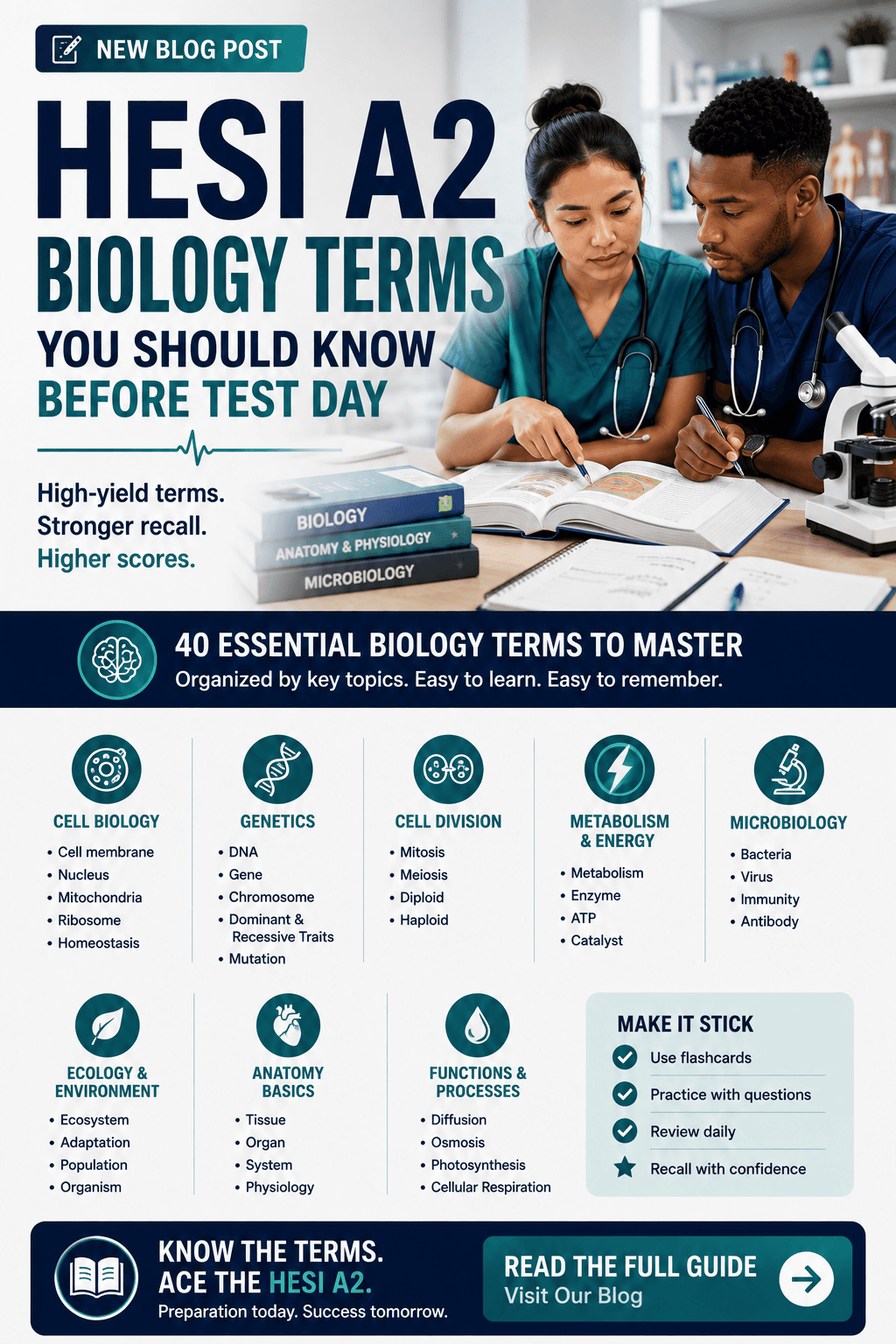
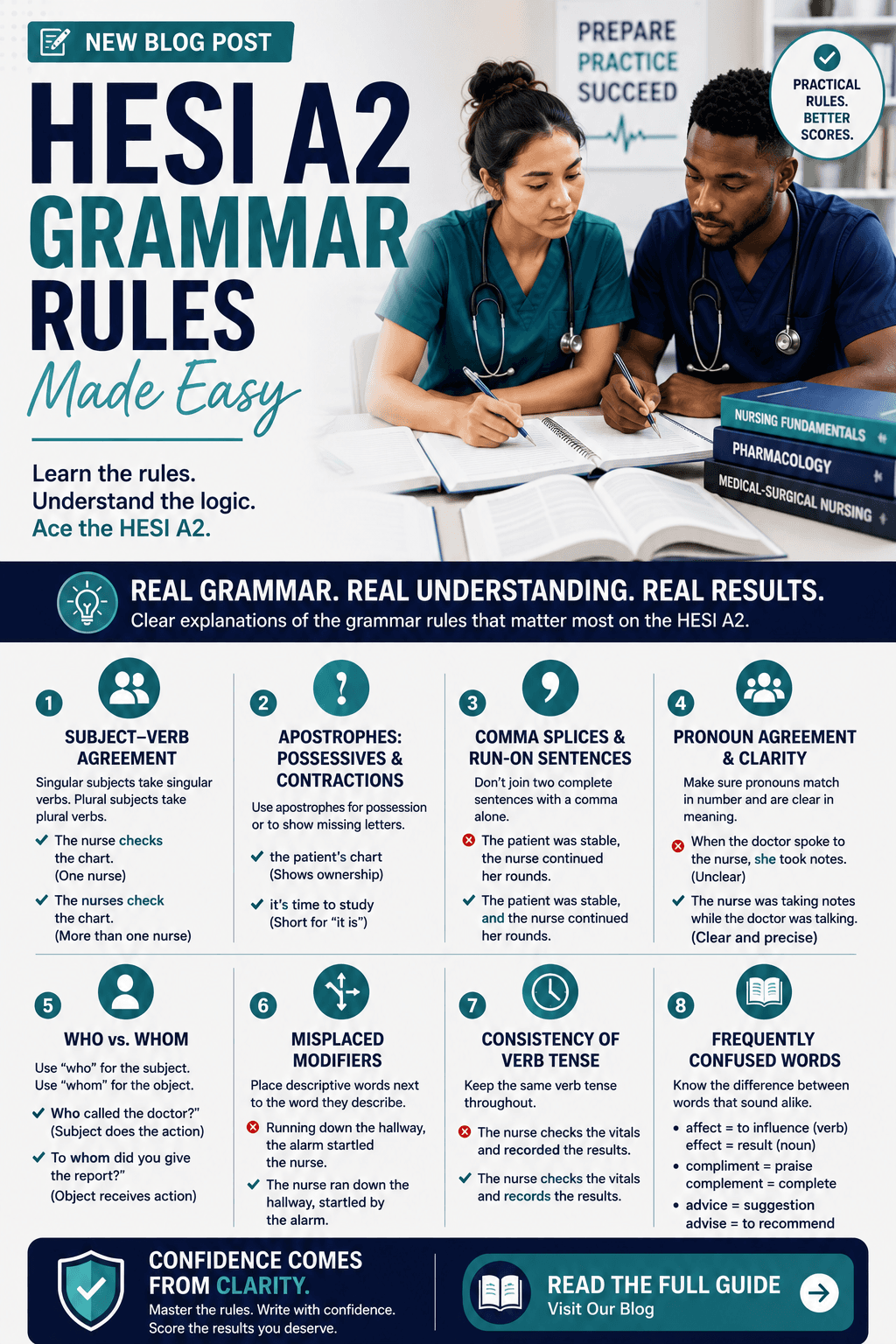
The TEAS 7 has four sections: Reading: key ideas and details, craft and structure, and integrating knowledge across texts and graphics. Mathematics: Whole numbers, fractions, decimals, percentages, ratios, algebra, reading data from tables and charts, and conversion of measure units. Science: typically the most difficult part, which involves anatomy and physiology (the most extensive unit), biology, chemistry, and scientific reasoning. English and Language Usage: grammar, sentence structure, vocabulary (including medical terminology), spelling, punctuation and capitalization. | Section | Questions | Time | |---|---|---| | Reading | 45 | 55 min | | Mathematics | 38 | 57 min | | Science | 50 | 60 min | | English and Language Usage | 37 | 37 min | Most candidates will need to allow approximately 3.5 to 4 hours for the test (allowing for a short break).

How It's Scored
You will be provided with a raw score for each section, a composite score (an average across all 4 sections) and a percentile ranking, as well as proficiency labels such as "Developmental," "Proficient" or "Exemplary. The passing mark is not standard — the passing grades are different for each program, ranging from the 60s to the 80s or more if the program is competitive for BSN. What you consider a "good" score in one school may be "average" in another, so it's important to verify your school's threshold for a good score.
Some of the most frequent issues that beginners face.
- Confirm that you are studying for TEAS 7; use only information that is specifically for TEAS 7.
- Most students need between 4 and 8 weeks of structured study; the more time it takes students to think about math or biology, the longer it will take to take the test.
- Complete a diagnostic practice test to see where you should invest your limited time.
- Begin by explaining anatomy and physiology (highest percentage), and develop a system-by-system review instead of learning facts, disconnected from each other.
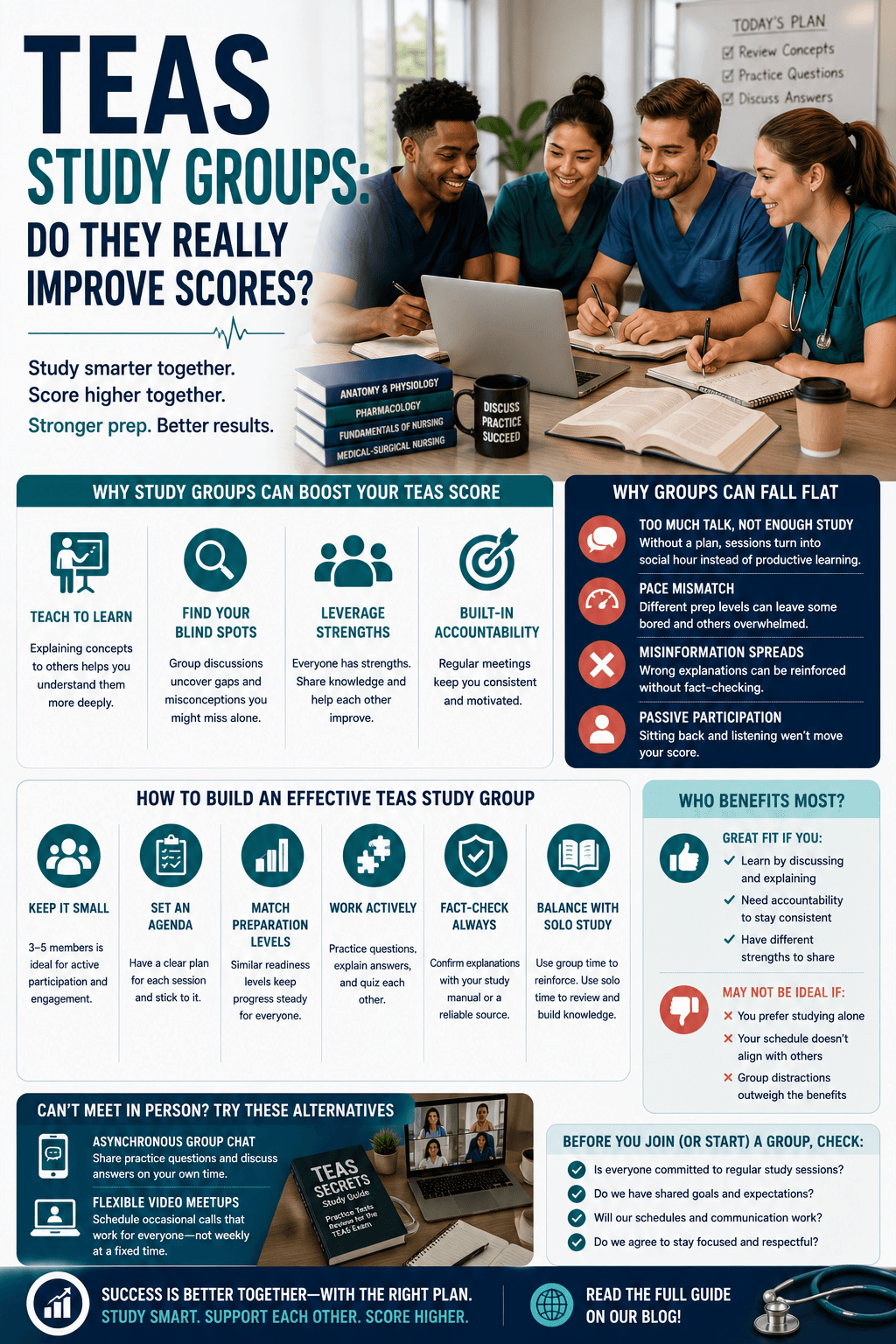
- Do I have to take a prep course or can I study on my own? Either is suitable for many students, with self-study OK for those who require it, or a structured course can help students who find themselves deficient in several areas and need accountability or assistance with those areas.
- Do full-length practice tests at home using realistic conditions and time limits, to familiarize yourself with the test format.
Registration and Test Day Basics
To register: confirm program requirements, choose between in-person or remote proctoring, create an ATI account, get a date with buffer time before the program deadline, pay the exam fee ($70-$120 typically), and have valid photo ID. Book appointments several weeks in advance as they tend to sell out close to the deadline for applications. On test day: arrive 15-30 minutes before the exam, present valid identification, leave personal belongings in a locker (generally not provided), be prepared for scratch paper and calculator (when allowed) to be supplied, but not your own.
If You Don't Get the Score You Wanted
Many successful nursing students did not achieve the desired score on the initial exam. Usually, you can take the test more than once, and there is a waiting period (typically 30 days) before retaking the test. Go through your point-by-point breakdown and pinpoint the things that dragged you down and create a plan of focus around them.
Key Takeaways
- The TEAS is an academic readiness test and not a nursing competency test.
- Specific program requirements and minimum scores differ; please check directly.
- The exam consists of four sections and is approximately 3.5-4 hours in length.
- There is no specific passing mark.
- The first step is always a diagnostic test.
Conclusion
At first the TEAS might seem frightening and overwhelming, but it is actually a clearly structured test that can be learned. Make sure your program has the requirements, take a diagnostic test, plan around the areas you are weak on, and allow yourself plenty of time. So, you understand what the TEAS is, why it's important, and what you should do next.