What Is the HESI A2 Learning Style Assessment?
The learning style assessment is a self-reporting section that is included in some versions of the HESI A2 exam. It is designed to help you discover how you prefer to learn and process new information. It does not test your academic knowledge, but asks you a series of questions about your habits and preferences when it comes to learning – for instance whether you tend to understand new concepts better through visual aids, listening or hands-on practice.
As with the personality profile section, there are no right or wrong answers here. You are simply thinking about your own learning habits and preferences.
Why Is This Part Of The Heist A2?
Nursing education is challenging, and success often hinges not only on academic ability, but also on how well a student can take in and retain large amounts of complex information. Nursing programs can benefit from adding a learning style assessment to gain further insight into how incoming students tend to learn best. This information can be useful for advising and support as students transition into a rigorous curriculum.
This section is indicative of a more general acknowledgement within nursing education that students do learn in different ways and that an understanding of these tendencies early on can help to support a smoother transition to academic study.
Common Learning Styles Measured Categories of:
- The framework might vary a bit depending on the precise version of the exam you take, but HESI A2 learning style assessments are likely to cover categories similar to prevalent learning style models, such as:
- Visual learning – a preference for diagrams, charts, written material and other information presented visually.
- Auditory learning — a tendency to learn best by listening, discussing and verbal explanation.
- Kinesthetic or hands-on learning – learning best through physical practice, hands-on activities or direct application.
- Read/write learning – preference for dealing with information through reading and written notes rather than visual diagrams or verbal explanation.
Many students find that they do not fit neatly into one category and it is common to show a mixture of preferences across a number of learning styles.
Is the Learning Style Assessment Scored?
The learning style assessment is similar to the personality profile in that it is not usually scored as pass or fail and usually does not affect your admission decision as much as your academic section scores. Nursing programs are not looking for one “right” type of learner, because successful nurses come in all varieties of how they learn and process information.
This section is not designed to evaluate or compare students to each other but to provide insight.
How to Use This Data in Nursing Programs
Some programs use learning style results in supportive ways once you are enrolled, even if it is not scored competitively.
- Academic advising — Advisors may use your results to recommend study strategies that match your natural learning preferences.
- Study skills resources some programs offer specific study skills workshops, which focus on the typical learning style patterns of incoming students.
- Personalized recommendations – some programs use this data to suggest which study formats (videos, reading materials, hands-on labs) might work best for a given student.
- How this information is used varies greatly between institutions. In fact, some programs may not use it at all other than to administer the assessment, as is the case with the personality profile.
Should you study for this section?
Since this is a self-assessment, not a knowledge-based test, there is no content to study or memorize ahead of time. That said, there are a few simple ways to get the most value out of this section. Answer honestly, not strategically. There is no point in wasting time trying to figure out which answer might look "better" as there is no competitive scoring in this section. Think hard about your own habits, do not just answer based on how you think you are "supposed" to learn. Do not get caught up on particular questions. This section is meant to register broad tendencies and not to be analyzed question by question. Use your results as helpful knowledge of yourself, even outside the exam itself, because knowing your own learning preferences can really help you build more effective study habits throughout nursing school.
Using Your Own Learning Style Insights
- Whatever way your particular nursing program uses this section, your own results can be very helpful in determining your own study approach moving forward.
- If you are a visual learner, try studying complicated subjects like anatomy or pharmacology using diagrams, charts and color-coded notes.
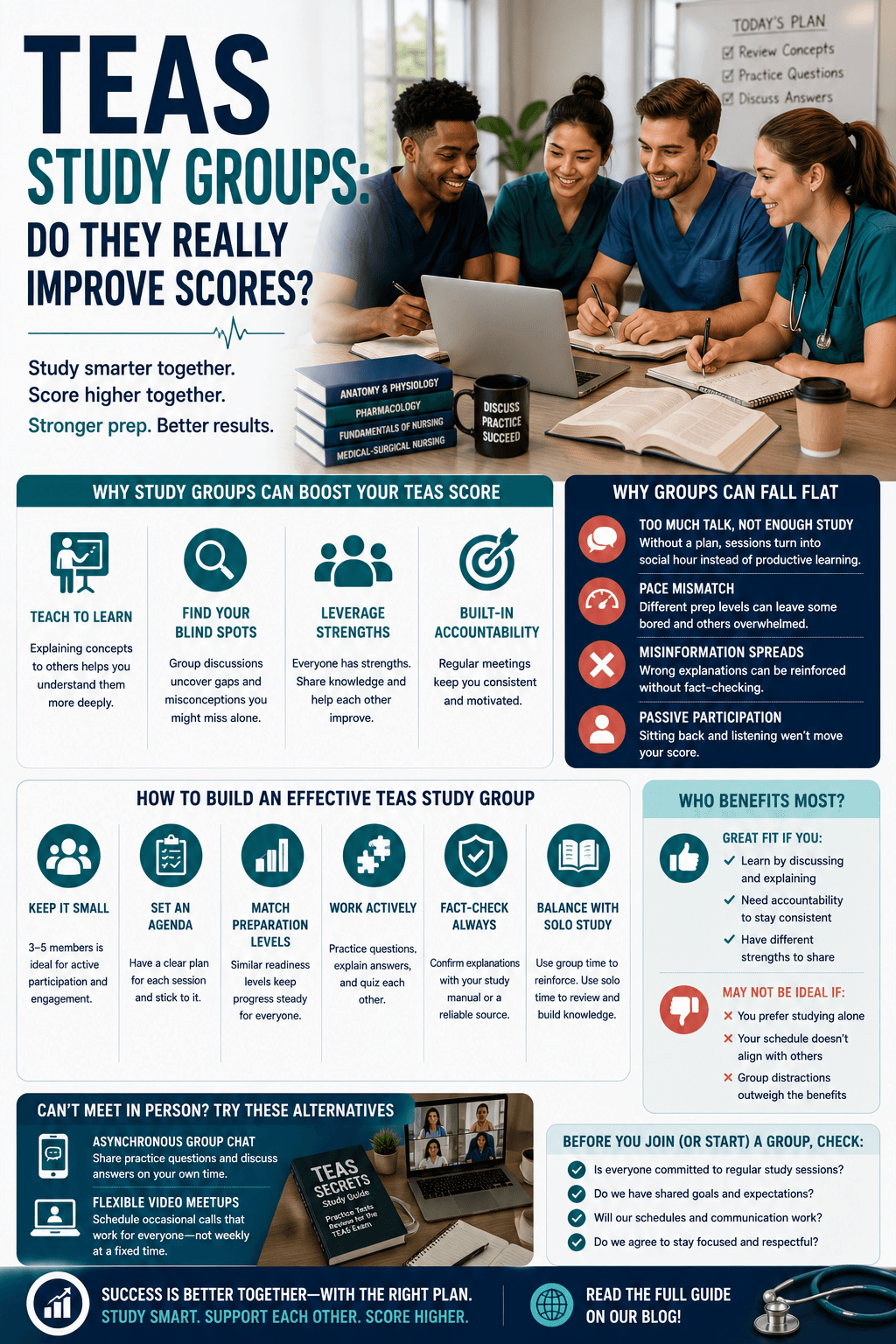
- If you are more auditory, try recording yourself, talking about the key concepts, or study with groups where the verbal discussion helps to reinforce learning.
- If you are a kinesthetic learner, seek out opportunities to practice hands on. For example, work through practice problems by hand, or use physical flashcards instead of passively reviewing.
- If you are more of a reading/writing person, focus on re-writing notes in your own words, and using written practice questions to review most of the material.
Popular Misconceptions worth Clearing Up
There are some common misconceptions among nursing students about this part of the exam.
- Myth: Nursing programs prefer a specific ideal learning style. Reality: Successful nursing students are found in every learning style category. There is no single “best” style.
- Myth: Your learning style test results determine whether you get into a nursing program. Reality: This section is often not scored competitively and therefore does not generally factor into admission decisions.
- Misconception: You need to study/make preparations only for this part of the exam. Reality: There is no academic content to review as a self-assessment because you are simply thinking about your habits and preferences.
Conclusion
The HESI A2 learning style assessment might seem like an odd inclusion in an otherwise academic-driven test, but it serves a very useful purpose—helping you and your nursing program better understand how you learn best. This is not a scored, competitive obstacle course. It is a valuable self-insight that you can use to inform your study strategies well beyond the exam itself. Answer honestly, do not overthink your answers, and consider using your results as a practical tool to develop better study habits for the remainder of your nursing education.