Myth 1: “You either pass or fail the TEAS”
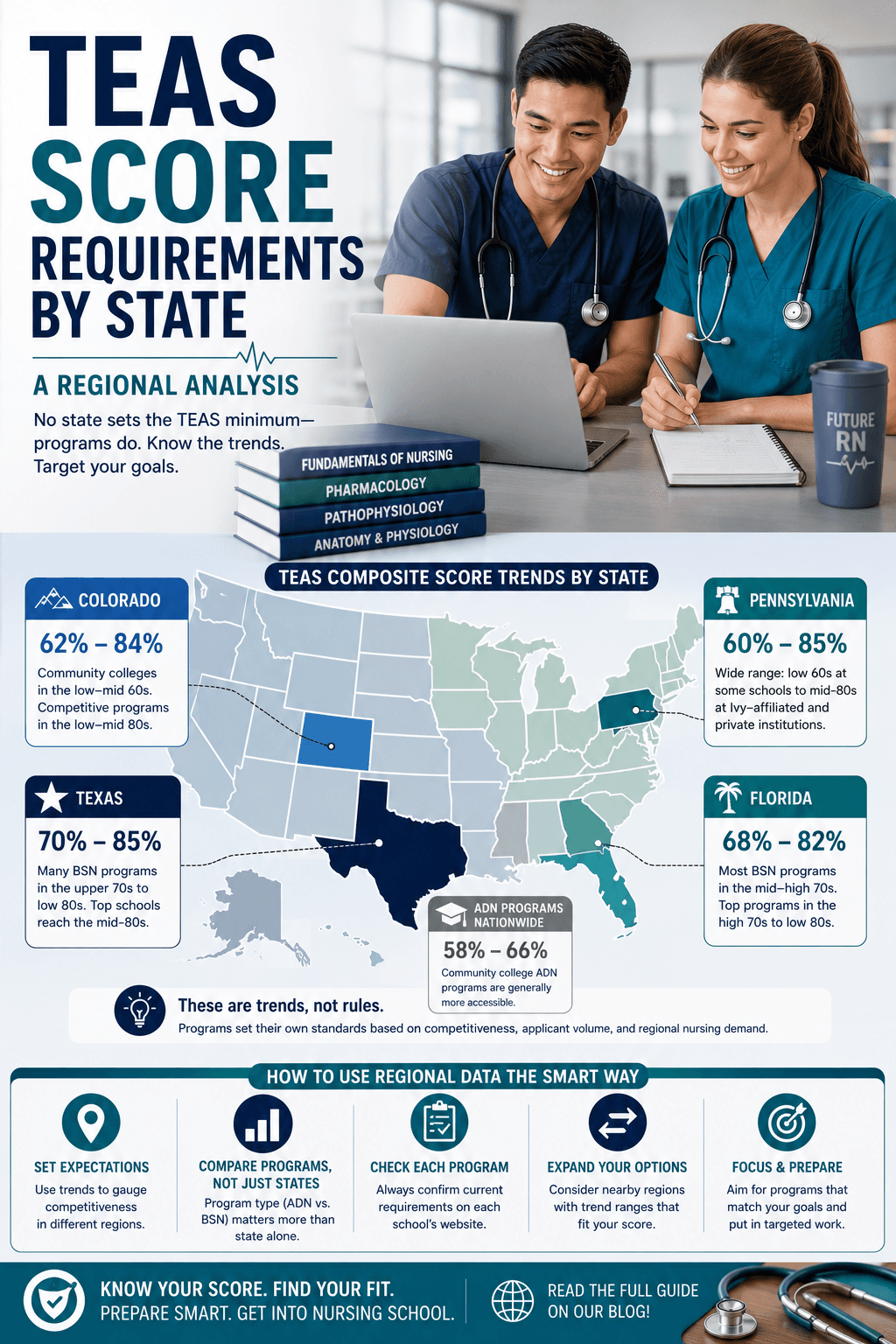
This is one of the most frequent misunderstandings that impacts the way applicants think about the exam long before they sit it. The TEAS does not have a pass or fail criterion determined by the test. Instead, each nursing program sets the minimum score criteria and those standards vary widely from program to program.
What is good enough for one program may be below the cutoff for another program. This implies there’s no one number you should aim for; the proper target varies largely on the programs you’re applying to. If the TEAS is treated as a binary pass/fail test, candidates might underprepare, thinking a small score is “good enough,” or nervously over prepare for a threshold that does not apply to their chosen institutions.
Myth 2: “You Can’t Be a Nurse with a Low TEAS Score”
One bad test attempt doesn’t mean you can’t succeed in nursing school or practice. The TEAS tests basic academic capabilities at a point in time, not clinical ability, bedside manner, critical thinking under duress or the many other attributes that make an effective nurse.
Many programs offer retakes, and many use holistic admissions processes that consider GPA, experience, and personal statements along with the TEAS. A low score is something to work with, not a judgment on your future in the profession.
Myth 3: “You Need to Take a Prep Course to Pass”
Formal prep classes can be a real assistance for some applicants, especially those with large knowledge gaps or trouble following a self-directed study plan. But we don't need them all. The test topic is covered in the official study manual and readily available academic material. Many successful test-takers prepare only by self-study using free or low-cost resources, a set timetable and consistent practice testing. And it’s not whether that prep was bought or not. It’s the quality and consistency of prep that usually makes a difference.
Myth 4: “You Need to Know Nursing to Read the Science Section”
It can be overwhelming for many applicants as the scientific section includes information that they will acquire in nursing school itself, before they ever begin studying. The scientific section actually evaluates basic content. This content is often at a high school or early college level. This includes basic anatomy and physiology, general biology, and basic chemical principles. It is not meant to test advanced clinical knowledge but rather to verify basic scientific literacy. That’s what nursing school is for.
Myth 5: “Your TEAS Score is the Most Important Part of Admission”
The TEAS matters, especially in competitive or expedited programs, but it is rarely the only thing admissions committees consider, and frequently not even the heaviest thing. Most programs additionally examine GPA (sometimes with additional weight given to prerequisite science courses), healthcare-related experience, letters of recommendation, and sometimes interviews or personal statements. If you focus all your concentration on the TEAS and ignore the other parts, then even if you do well on the test, your total application may be weaker.
Myth 6: “You Can Prepare for the TEAS in a Few Days”
The exam includes 4 different curriculum areas therefore you have to focus your studies across all of those. Meaningful improvement often involves persistent review over a period of weeks, not cramming at the last minute. While short-term cramming may help with familiarity with the format, it rarely fills up real gaps in content knowledge, especially in the science section where vocabulary and concepts benefit from spaced repetition rather than one-time memorizing. Applicants who begin preparing long in advance of their exam date tend to do better than applicants who leave their study until the week before the test.
Myth 7: “If you fail once, you’ll never improve enough”
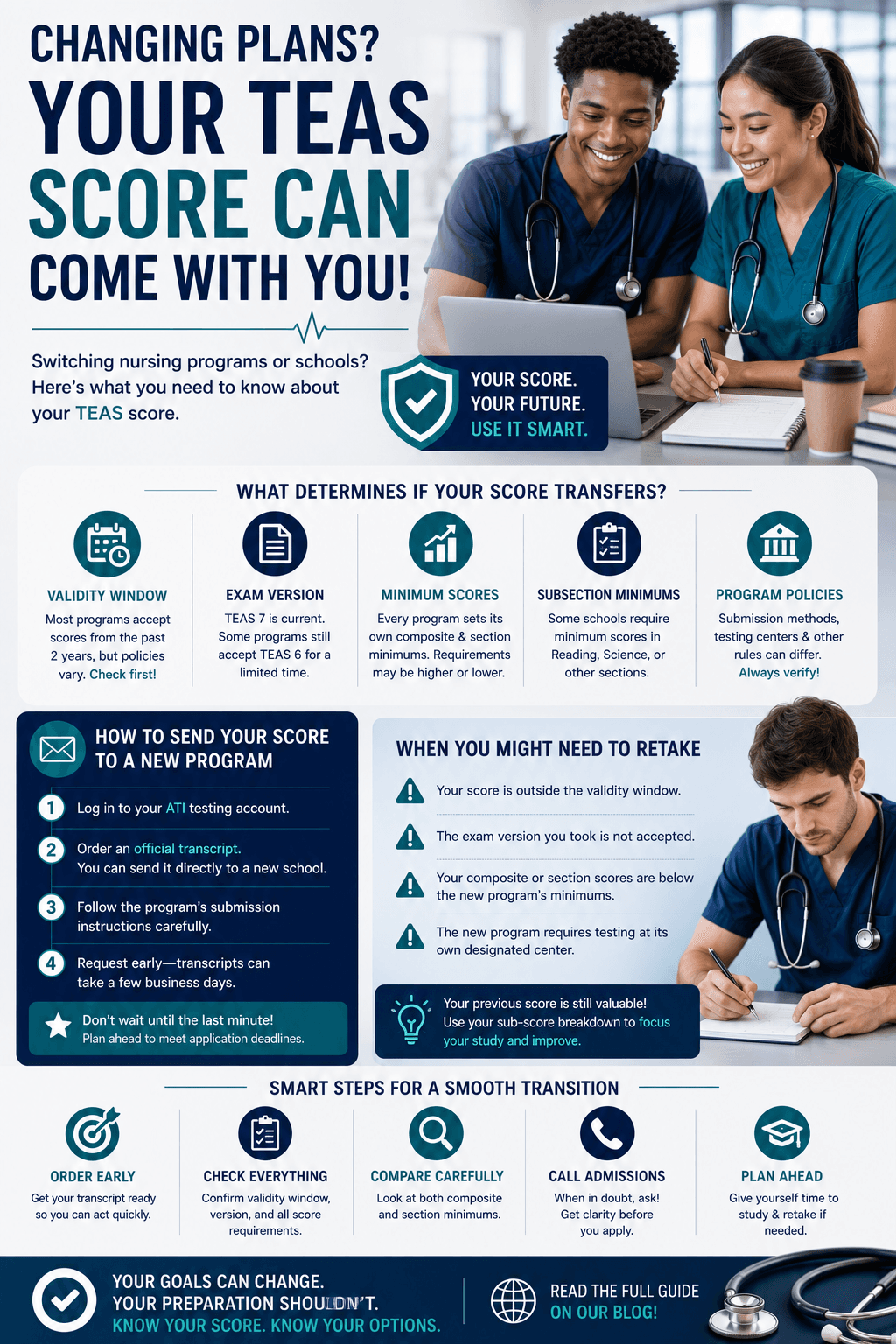
It's usual to raise your score on retakes, particularly for applicants who use their first try diagnostically, especially by looking at their subsection breakdown to see precisely where points were lost, instead of simply restudying everything. Many test takers see huge score improvements on a second or third try after they’ve worked on their specific weaknesses, and most programs realize that retakes are part of the admissions process and not a red flag.
Myth 8: “Native English Speakers Have No Difficulty With the TEAS”
ESL applicants may have other issues with language processing speed and vocabulary . But native English speakers are not necessarily off the hook. Native speakers have rusty math abilities, don’t know the scientific vocabulary, and are also subject to general standardized test anxiety, especially those who have been out of the academic setting for years, such career changers. If you think the exam is hard, it’s not because you’re not a native speaker. It’s about how long ago and how much you studied that particular subject matter on the test.
Myth 9: “There’s Only One Version of the TEAS”
Applicants frequently assume that all test-takers are presented with the same questions, so they lean too heavily on secondhand stories of “exactly what’s on the test” from those who took it before. (Actually the exam is drawn from a bigger pool of topics and exact questions change from administration to administration. Relying on someone else's description of specific questions they received is not a good way to prepare. A solid topic review is significantly superior to trying to guess specific questions.
Myth 10: “Once You Sign Up, You’re Stuck With That Date No Matter What”
Many testing companies allow you to reschedule if you meet certain conditions and time frames. However, policies vary between testing companies and exam formats, with some types of exams being more flexible than others in this respect. If the test date is looming and you don’t think you’re ready, it’s worth exploring your particular provider’s rescheduling policy instead of assuming you’re out of luck, as pushing yourself to take an exam you’re not prepared for frequently results in a less favorable result than a short, well-explained postponement.
The Final Word
A lot of the fear surrounding the TEAS is due to misinformation, not the test itself. Knowing what the exam actually measures, what flexibility you have in scoring, retakes, and scheduling, and where it fits into the larger admissions picture helps you to prepare better and with a lot less unnecessary stress. If you’re unsure about a claim you’ve heard, the best thing to do is to check it against the actual stated standards of your program or the official regulations of your testing provider—not someone else’s interpretation.