Who is eligible for Accommodations
TEAS testing accommodations are usually provided for test takers with a documented impairment or medical condition, consistent with provisions under the Americans with Disabilities Act (ADA). This often includes learning difficulties like dyslexia or dyscalculia, challenges related to attention like ADHD, physical or sensory disabilities, chronic health disorders, and some mental health conditions if they are substantially impacting test performance.
It’s important spelling out: general test anxiety or being a non-native English speaker lacking fluency are not usually considered disabilities that qualify for accommodation. If you are an ESL applicant, generally accommodations are not granted for language proficiency itself, the exam is designed to be given in English. Your preparation approach should focus on language-specific study techniques rather than an accommodation request.
What documents you will need
Getting approved isn’t automatic just because you ask – we assess each request individually depending on the documentation you provide. You should expect to be asked to provide at least a letter from a qualified, objective medical professional (someone who diagnoses this type of ailment and who is not related to you or your advocate) stating your diagnosis, and explaining why a particular accommodation is medically essential. This letter normally needs to be quite recent (often within the past 2 years of your test date) and should clearly indicate the diagnosis, how it impacts your test performance and the specific accommodation being proposed.
If you are a current high school student or a recent graduate, an existing Individualized Education Program (IEP) or 504 Plan may sometimes be used in lieu of a new medical letter, provided it is still active and clearly documents the relevant accommodation history.
Documentation requirements may vary depending on whether you are taking the exam directly through the testing organization, through a college testing center, or through an institution's own proctoring process, so you should check with the organization administering your specific exam session to confirm the exact requirements before submitting anything.
Types of Accommodations Available Common
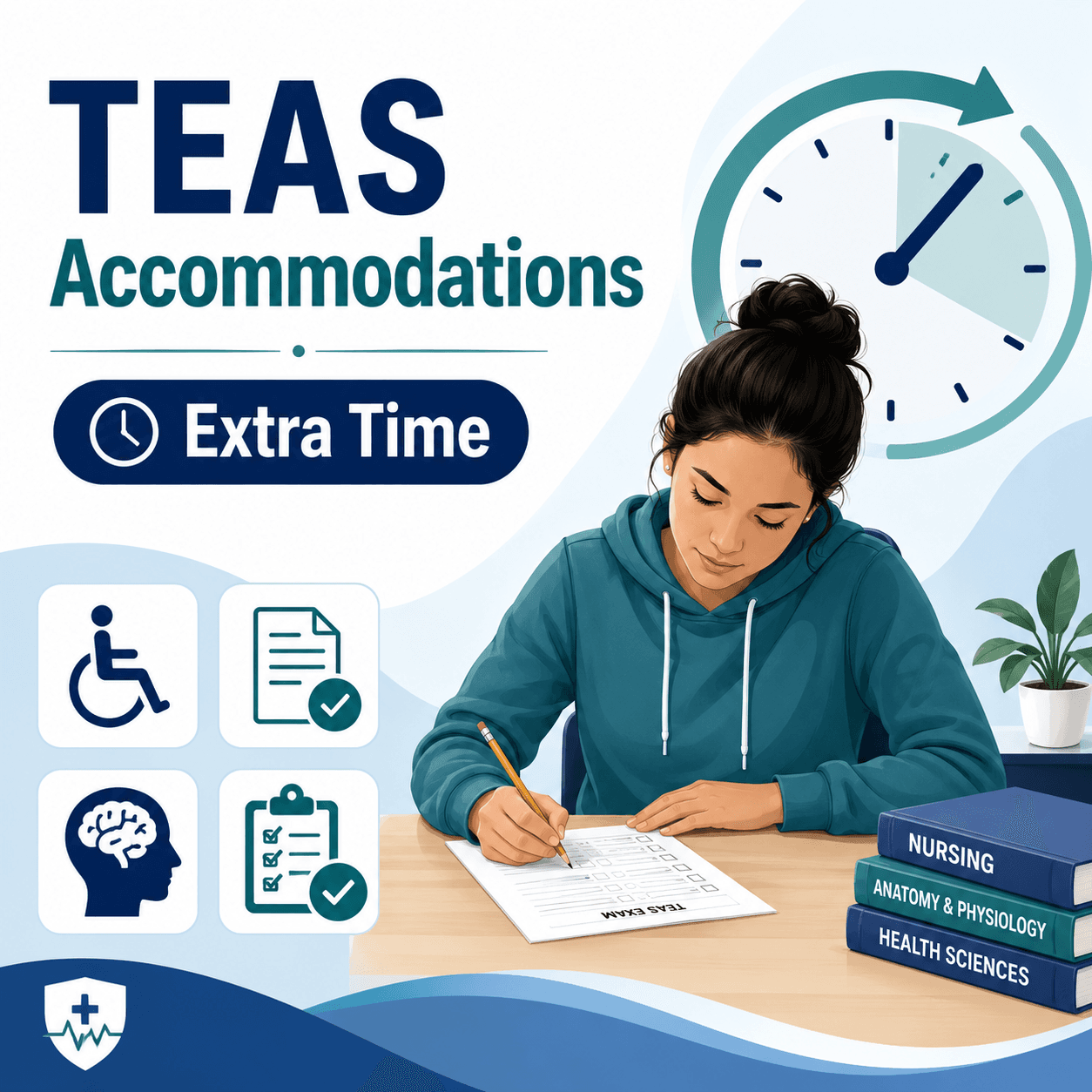
Extended time is the most common accommodation sought, although it is not the only one. Other common accommodations include modified seating or testing arrangements, testing in a separate or reduced-distraction room, the use of an electronic reader for candidates with certain visual or processing disabilities, and additional or extended breaks between test sections, depending on documented need.
Before you request, there are also limits worth knowing: extended time typically cannot be broken up across multiple days and certain accommodations such as the use of personal recording devices, outside prompts, or unauthorized electronic devices are generally prohibited regardless of documentation as they would compromise the integrity of the exam.
Submitting Your Request
Start well in advance of your target test date. Processing requests for accommodation can be lengthy, often taking at least a few weeks and perhaps more depending on how complicated the documentation is or if you have to provide extra information. A common reason that accommodations are not granted by the desired test date is that the request is submitted too close to the test date. Incorporate this into your overall application timeline instead of making it a last step.
Be sure you are submitting your kind of exam in the right place. The contact person, portal or email address to submit requests for accommodation may vary depending on whether you are testing directly through the national testing organization for the exam, through a designated testing location, or through the remote or in-person proctoring of your chosen nursing program. Submitting through the wrong channel can cause unnecessary delays, so be sure to check with your testing provider or the admissions or disability services office of your program before submitting.
At the first time, submit full documentation. Incomplete requests are common causes of delays or denials, for example, a letter without a date, a diagnosis without a clear explanation of functional impact, or a recommendation without details on the accommodation needed. Check the exact documentation requirements with your testing provider and make sure that your letter contains all required elements before submission.
If you don't get confirmation within the processing window shown, follow up. If it takes longer than the timeframe your testing provider gives you to get your accommodation approval, don’t assume it will just work itself out; follow up with them directly. Registration deadlines for your desired test date may not wait until accommodation processing catches up.
Avoid the Usual Pitfalls
- Waiting until almost the registration deadline. Accommodation requests take some time to process and you usually cannot register for or sit an accommodated exam session until your approval is complete. The most important thing you can do is start the process early.
- Assuming that accommodations automatically carry across between types of exams. If you switch from an in-person to a remote exam, or vice versa, or change testing providers, don't assume a previously approved accommodation carries over without confirmation — verify this directly, since policies on this vary.
- Generic documentation provided. Documentation that describes the impact of the functional testing explicitly, why standard circumstances are not adequate and what accommodation would fix it is more likely to be authorized than a general diagnosis statement with no apparent linkage to functional testing impact and a specific suggested accommodation.
- Not confirming policy with your specific institution. If you're testing through a college or nursing program's own testing center rather than directly through the national provider, that institution may have its own accommodation policy and process layered on top of, or distinct from, the general policy, so always confirm directly with them.
Bottom Line
Accommodations exist so that a documented disability doesn't stand between you and an accurate reflection of your academic readiness. It’s not a shortcut or a guarantee, and it takes real lead time and full documentation from a competent professional, but for candidates who need it, it’s a legitimate, well-worn path to a fair testing experience. Start early, check the exact requirements and submission channel of your specific exam type thoroughly and don’t hesitate to follow up if you don’t hear from within the period you expect.