How to Study Human Body Systems for the TEAS Science Section
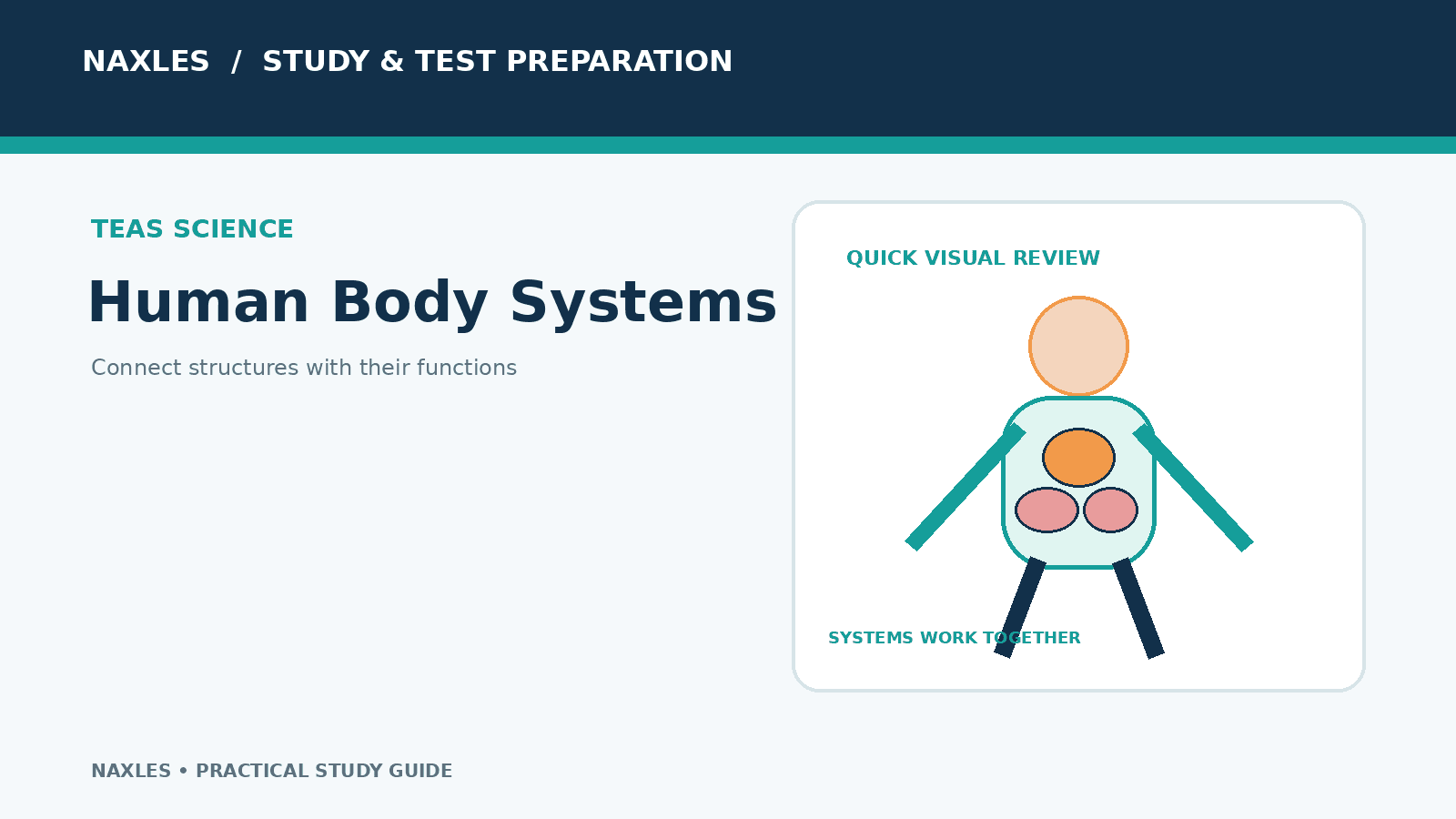
Human anatomy and physiology are important parts of the ATI TEAS Science section. Students preparing for the exam should understand the major body systems, the organs within them, and how those systems work together to keep the body functioning. Instead of trying to memorize every detail at once, begin by learning the main purpose of each system. Then study the organs and processes that support that function.
1. The Circulatory System
The circulatory system transports blood throughout the body. It delivers oxygen and nutrients to tissues and helps carry away waste products. The heart pumps blood through blood vessels. Arteries generally carry blood away from the heart, while veins generally return blood to it. Capillaries are tiny vessels where substances can move between the blood and surrounding tissues. When studying this system, focus on the heart's chambers, the basic path of blood flow, and the difference between arteries, veins, and capillaries.
2. The Respiratory System
The respiratory system is responsible for exchanging gases. It brings oxygen into the body and removes carbon dioxide. Air travels through the nose or mouth, down the trachea, and into the lungs. Inside the lungs, tiny air sacs called alveoli are where oxygen and carbon dioxide are exchanged with the blood. A useful way to study this system is to trace the path of air and explain what happens at the alveoli.
3. The Digestive System
The digestive system breaks down food so the body can absorb nutrients. Digestion begins in the mouth, where chewing and saliva help break food down. Food then travels through the esophagus to the stomach. The small intestine is a major site of nutrient digestion and absorption. The large intestine absorbs water and helps form stool. Review the function of the stomach, small intestine, large intestine, liver, and pancreas.
4. The Nervous System
The nervous system receives information, processes it, and coordinates responses. It includes the brain, spinal cord, and nerves. The central nervous system consists of the brain and spinal cord. The peripheral nervous system includes nerves outside those structures. For studying, focus on how the nervous system communicates with the rest of the body and how it differs from the endocrine system.
5. The Urinary System
The urinary system helps remove waste from the blood and regulate water and electrolyte balance. The kidneys filter the blood and produce urine. Urine travels through the ureters to the bladder and leaves the body through the urethra. Remember the basic path of urine and the role of the kidneys.
How Body Systems Work Together
Body systems do not operate independently. For example, the respiratory system brings oxygen into the lungs, while the circulatory system transports that oxygen to tissues. The digestive system supplies nutrients, and the circulatory system distributes them. The nervous and endocrine systems help regulate many body functions. Questions about these relationships may require you to apply what you know rather than simply identify an organ.
Study Tips for TEAS Science
- Use diagrams to label organs and structures.
- Explain each system aloud in your own words.
- Make flashcards for organs and their functions.
- Practice questions that ask how two systems interact.
- Review incorrect answers and identify what concept you misunderstood.
Final Thoughts
The human body systems can seem overwhelming when studied as one large topic. Break them into smaller sections and focus first on each system's main purpose. Once you understand the basics, practice explaining how the systems work together.