TEAS Science: The Respiratory System
The respiratory system is an important topic to review when preparing for TEAS Science. Understanding the path air takes through the body and how oxygen and carbon dioxide are exchanged can make anatomy and physiology questions easier.
Major Structures
The respiratory system includes structures such as:
- Nose and nasal passages
- Pharynx
- Larynx
- Trachea
- Bronchi
- Bronchioles
- Lungs
- Alveoli
- Diaphragm
Each structure contributes to moving air or supporting gas exchange.
The Path of Air
Air generally travels through the respiratory tract in a specific sequence. A simplified pathway is: Nose or mouth → pharynx → larynx → trachea → bronchi → bronchioles → alveoli Learning this sequence is useful when studying diagrams.
What Happens in the Alveoli?
Alveoli are tiny air sacs in the lungs where gas exchange occurs. Oxygen moves from inhaled air into the blood, while carbon dioxide moves from the blood into the alveoli so it can be exhaled. This exchange occurs because of differences in concentration across the thin respiratory surfaces.
The Role of the Diaphragm
The diaphragm is an important muscle involved in breathing. When it contracts, it moves downward, helping increase the volume of the thoracic cavity and allowing air to enter the lungs. When it relaxes, the volume decreases, helping air move out.
Connect the Respiratory and Circulatory Systems
Do not study the respiratory system completely separately from the cardiovascular system. The respiratory system brings oxygen into the body, while the circulatory system transports oxygen to tissues. Understanding this relationship can help with questions that connect multiple body systems.
Study With Diagrams
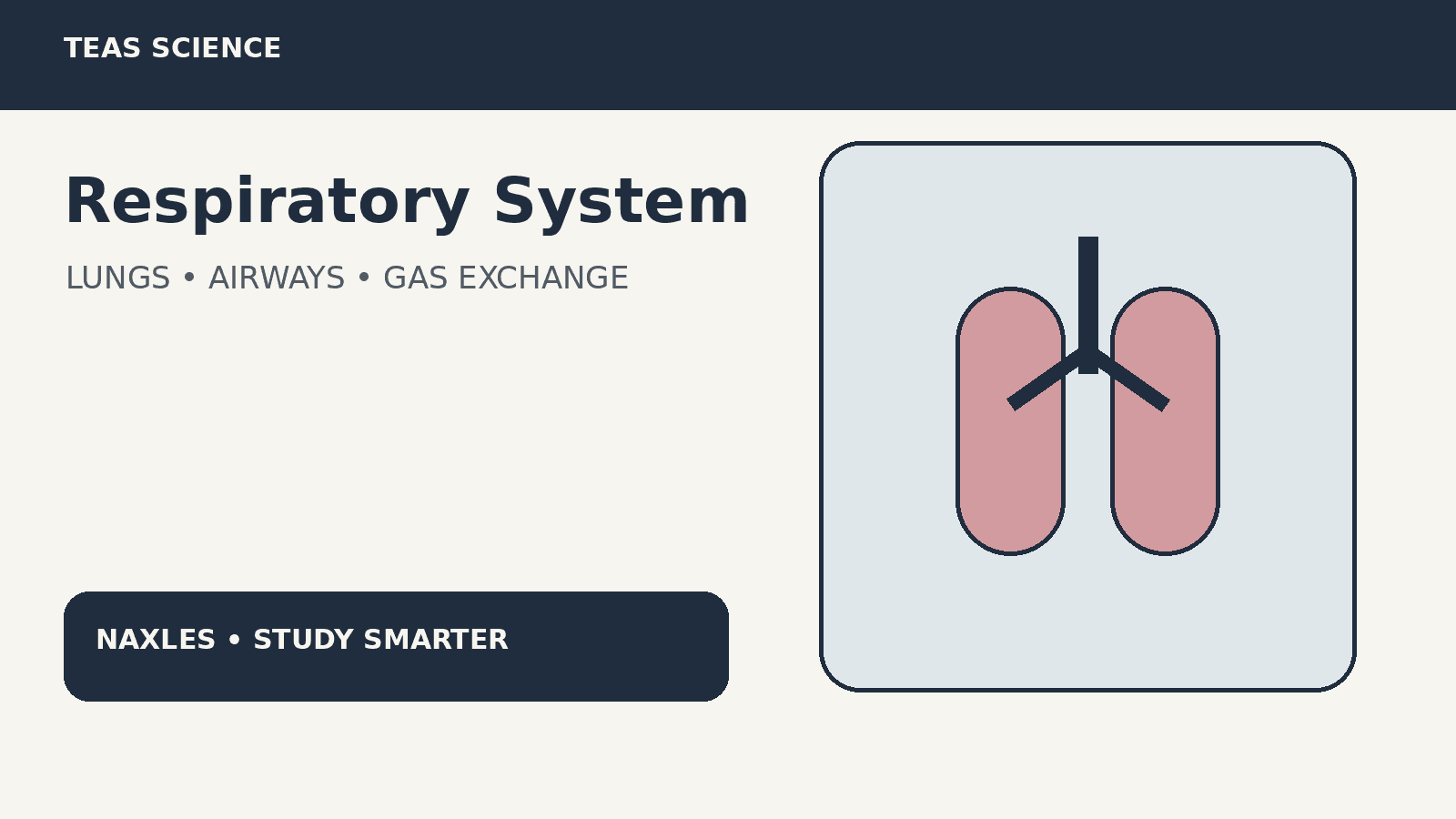
A labeled respiratory-system diagram can be especially useful. Practice covering the labels and identifying structures from memory. Then explain the path of air aloud.
Final Takeaway
For TEAS Science, focus on understanding the respiratory system rather than simply memorizing names. Know the path of air, the function of the alveoli, and how breathing connects with the circulatory system.