Chemistry Basics to Review for the TEAS
Chemistry is one part of the science knowledge you may encounter when preparing for the TEAS. You do not need to treat every chemistry topic as a completely separate subject. Start by understanding the basic building blocks of matter and how they relate.
What Is Matter?
Matter is anything that has mass and occupies space. Common examples include:
- Water
- Air
- Rocks
- Food
- Human tissues
Matter can exist in different states, including solids, liquids, and gases.
Understanding Atoms
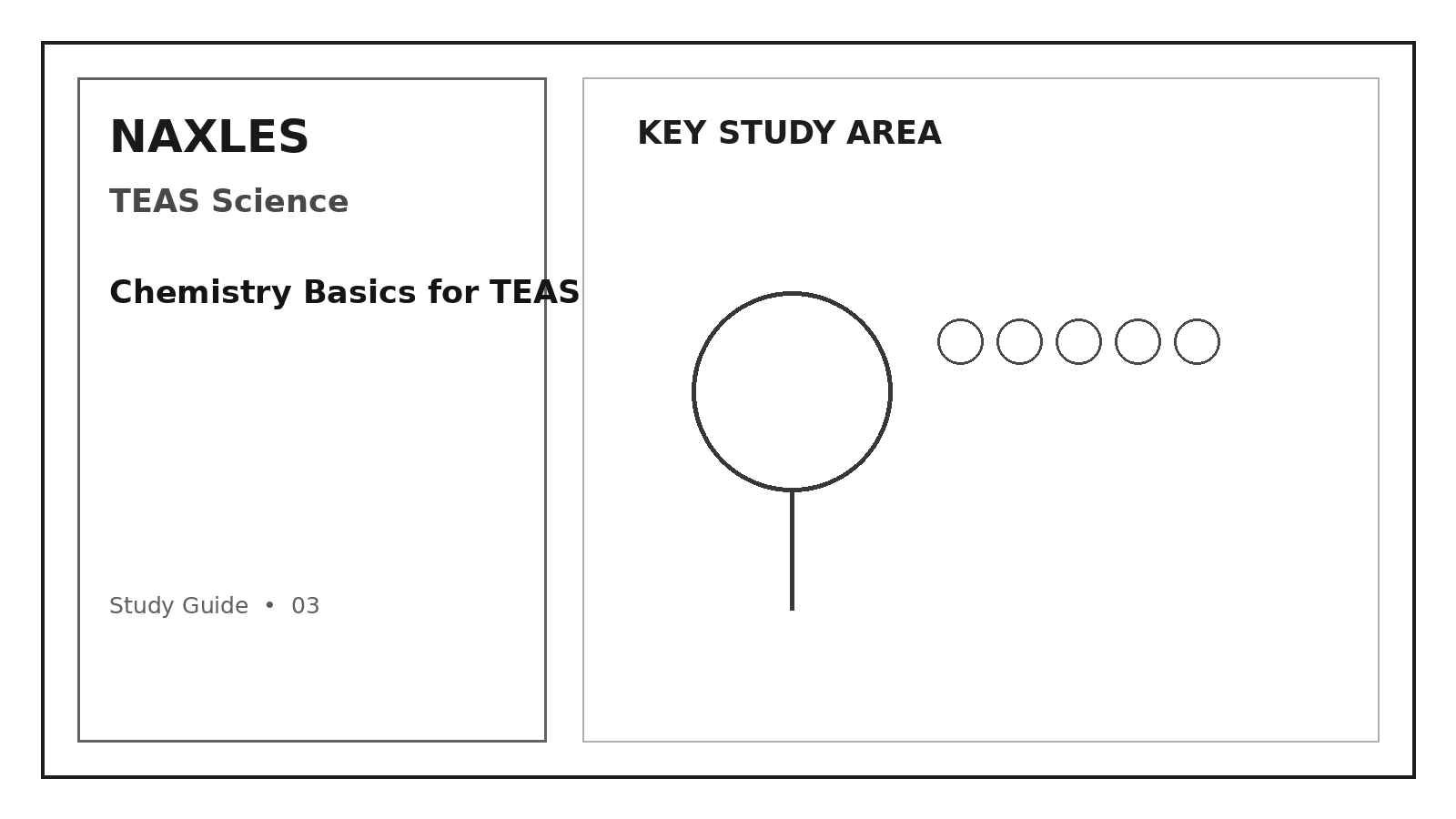
An atom is a basic unit of an element. Atoms contain three major subatomic particles: Protons — positive charge Neutrons — no electrical charge Electrons — negative charge Protons and neutrons are located in the nucleus, while electrons occupy regions surrounding the nucleus.
What Is an Element?
An element consists of one type of atom. Examples include:
- Oxygen
- Carbon
- Hydrogen
- Calcium
The periodic table organizes chemical elements according to their properties and atomic characteristics.
Compounds
A compound forms when elements chemically combine in specific proportions. Water, for example, is made from hydrogen and oxygen. A compound has properties that can differ from those of the individual elements that make it.
Mixtures
A mixture contains substances that are combined physically rather than forming a new chemical substance. Examples include:
- Salt water
- Air
- Trail mix
The components of a mixture can generally retain their individual properties.
Physical vs. Chemical Changes
A physical change changes the form or appearance of a substance without creating a new substance. Examples include melting ice or cutting paper. A chemical change involves the formation of one or more new substances. Examples can include chemical reactions such as combustion or certain forms of oxidation.
Final Takeaway
For TEAS Science, begin with chemistry fundamentals. Make sure you understand atoms, elements, compounds, mixtures, and the difference between physical and chemical changes before moving into more advanced chemistry concepts.