TEAS Science: Basic Genetics
Genetics explains how biological information is stored and passed from one generation to another. Understanding basic genetics concepts can help when reviewing biology for TEAS Science.
What Is DNA?
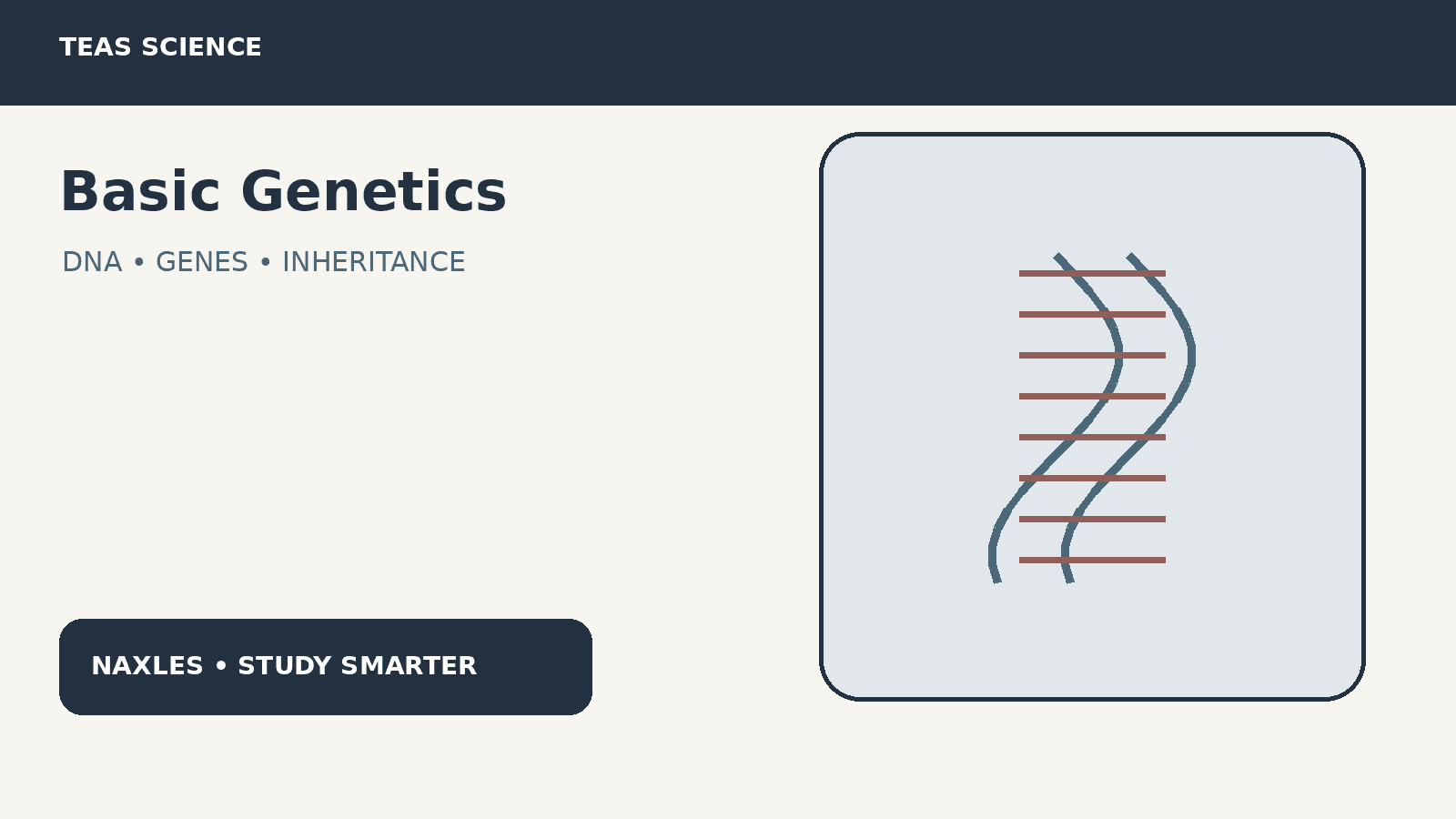
DNA, or deoxyribonucleic acid, contains genetic information. In eukaryotic cells, most DNA is located in the nucleus. DNA provides instructions that help cells produce proteins and carry out biological functions.
What Is a Gene?
A gene is a segment of DNA associated with a particular functional product or trait. Genes are located on chromosomes. You can think of the relationship as: DNA → genes → chromosomes More precisely, chromosomes are structures containing DNA and associated proteins, with genes located along the DNA.
What Are Chromosomes?
Chromosomes organize genetic material inside cells. Humans typically have 46 chromosomes in most body cells, arranged in 23 pairs. One chromosome of each pair is inherited from each biological parent.
Alleles
Different versions of a gene are called alleles. For example, a gene can have different versions that contribute to variation in a characteristic. Understanding alleles is useful when studying inheritance.
Genotype and Phenotype
A genotype refers to an organism's genetic makeup. A phenotype refers to observable characteristics. Phenotypes can be influenced by both genetic and environmental factors.
Genetics and Cell Division
Genetic information is copied and distributed during cell division. Understanding the basic relationship between DNA, chromosomes, genes, and cell division provides a foundation for more advanced biology.
Use Diagrams
Genetics is often easier to understand visually. Draw a simple diagram showing: Cell → nucleus → chromosome → DNA → gene Then explain what each level represents.
Final Takeaway
For TEAS Science, concentrate on the relationships among DNA, genes, chromosomes, and inheritance. Once these foundations are clear, more advanced genetics concepts become easier to understand.