TEAS Reading: How to Tell Fact From Opinion
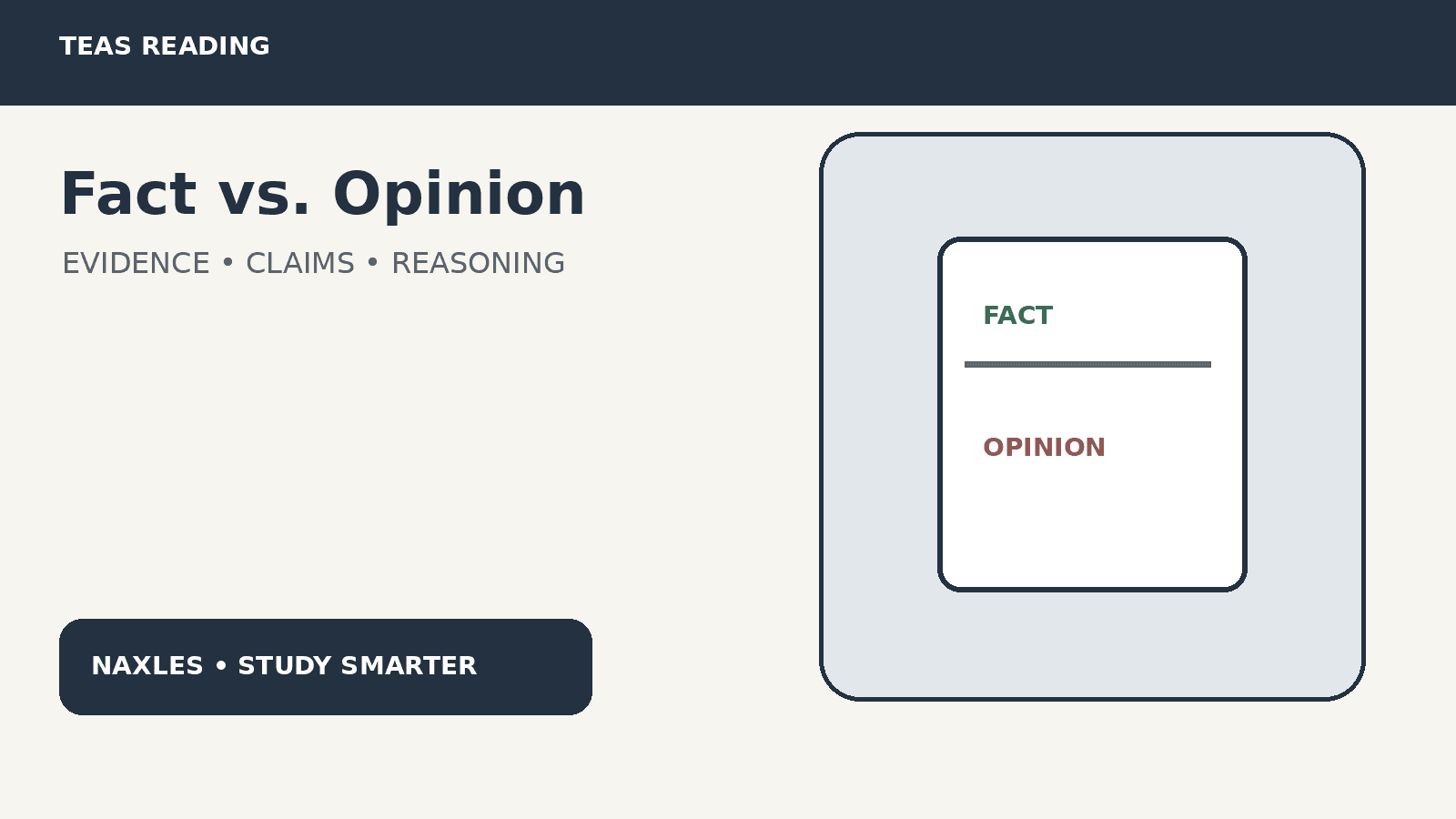
The TEAS Reading section requires more than simply understanding what a passage says. You may also need to determine whether information is presented as a fact, an opinion, or a claim supported by evidence. Knowing the difference can help you evaluate passages more carefully.
What Is a Fact?
A fact is a statement that can be verified or supported with reliable evidence. For example: Water freezes at 0°C under standard atmospheric pressure. This is something that can be tested or verified. When reading a passage, ask yourself: Can this statement be checked or proven?
What Is an Opinion?
An opinion expresses a belief, judgment, preference, or interpretation. Words such as:
- Best
- Worst
- Beautiful
- Important
- Should
- Unfair
can sometimes signal opinions, although the surrounding context still matters. For example: Online classes are the best way to learn. This is a judgment rather than an objectively verifiable fact.
Opinions Can Be Supported
An important point is that an opinion can still have evidence behind it. An author may make an argument and provide statistics, examples, or research to support that position. In these situations, separate the claim from the evidence supporting it.
Look for Evidence
When evaluating a statement, ask:
- What is the author claiming?
- What evidence is provided?
- Is the evidence directly related to the claim?
- Is the statement presented as an established fact or as an interpretation?
Be Careful With Strong Language
Strong words can sometimes indicate that an author is expressing an opinion. For example: Every student should study for at least three hours every night. The word every makes the statement very broad. Do not automatically accept strong statements simply because they sound confident.
Practice With Short Passages
Take a paragraph from a textbook or article and label individual statements:
- Fact
- Opinion
- Claim
- Evidence
Then explain why you selected each category.
Final Takeaway
For TEAS Reading, don't confuse confidence with factual accuracy. Look for evidence, examine the author's wording, and distinguish verifiable information from judgments or claims.