Why ATI Updated the Exam
The TEAS blueprint is updated approximately every four to six years, which is determined by research with subject matter experts in the areas of nursing, math, science, reading, and English. The redesign of the NCLEX (the exam that nursing graduates take to get their licenses) to the “Next Generation NCLEX”, in which more emphasis is placed on clinical judgment and question formats beyond multiple choice, also played a role in this particular update. This was a substantial change, rather than cosmetic — the TEAS 7 adds the same formats at a younger age.
What Stayed the Same
Reading, Mathematics, Science, and English and Language Usage (ELU) are the four sections. - This exam does not assess skills or knowledge that are specific to nursing practice; it assesses academic readiness for students, not nursing practice readiness. The overall testing time is within a similar general range, and is divided into timed sections plus a short break - A composite score and section scores continue to be used for admissions decisions in scoring
What Actually Changed
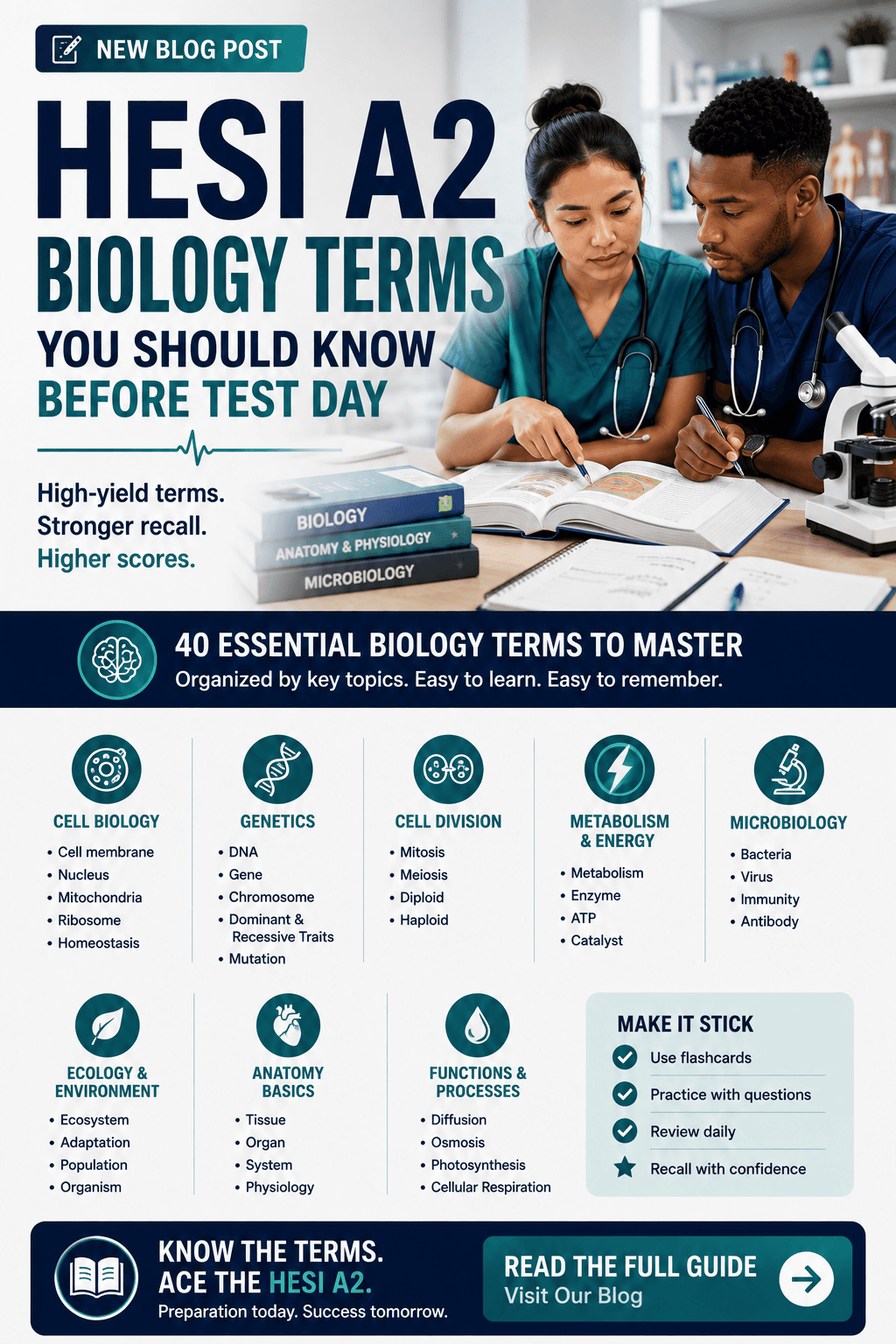
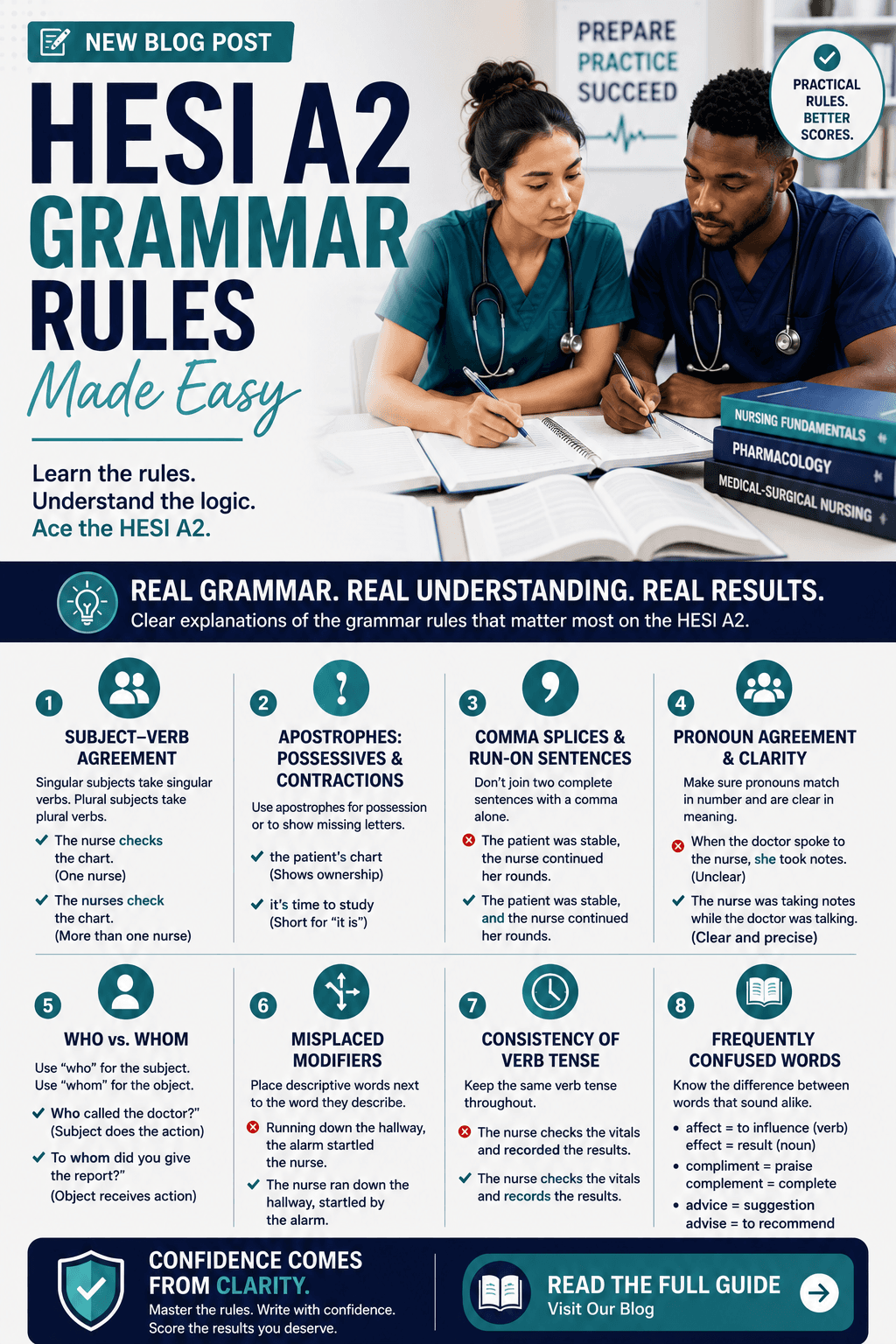
There were no changes in core skills but the number of questions and the time limits changed slightly to create a leaner, more tightly timed section. Don't use outdated times, practice in TEAS 7 conditions. It is no longer just abstract algebra that is emphasized, but also measurement and data interpretation (reading tables, charts, graphs and interpreting math in real-life contexts such as dosage conversions). Science (the greatest change): TEAS 6 combined general science into one category "Life and Physical Sciences". This is divided into two separate subcategories: Biology and Chemistry, each of which is tested with intentionality, and anatomy and physiology, with a slightly lower relative weight than in the past, still the largest single content area. They are now learning about the periodic table, bonding, reactions and equations in Chemistry. Biology includes genetics, DNA, macromolecules and cellular processes. Those who think that “Science” equals “mostly anatomy” are the ones most surprised. A true expansion (not an oversimplification) and greater emphasis on vocabulary and academic/medical terms in addition to grammar and punctuation beyond that which is taught in the standard curriculum.
New Question Types
The overall TEAS 6 was traditional, consisting of 61 out of the 62 questions on the exam being multiple-choice with only one option marked correct. TEAS 7 retained that as the predominant format, but also reinforced:
- Multiple-select questions, where more than one answer choice may be correct and you're instructed to "select all that apply." Partial credit isn't awarded — you must identify every correct option and avoid any incorrect ones to receive credit.
- Supply-answer (fill-in-the-blank) questions, where you type in a response rather than choosing from provided options, requiring you to arrive at and enter an exact answer.
- Additional alternate formats that move beyond simple recognition-based answering, requiring more active problem-solving.
Is TEAS 7 Harder?
Not in essence, but in a wider scope of content and demands more active problem-solving. The problem is that it is harder for the students who use obsolete materials - or don't take chemistry and biology because they think it is "mostly anatomy. It's an easy fix: anticipate what is being tested, not what was allegedly tested years ago by a friend.
Common Problems and Solutions
- Want to know what version of a free practice test you are getting? Look for the "TEAS 7" label and a "post 2022" date. If there are no select-all/blank questions, and it's all multiple choice, then it's probably outdated.
- Biology and chemistry are not separated in the study guide? As it is prior to the update — supplement with specific and up-to-date review of both.
- Do not know how to get ready to practise new types of questions? Look for multiple select and supply answer questions, not just multiple-choice questions that are specific to TEAS.
- If you aren't sure whether your program's score requirements have been altered? Don't rely on an old web page, contact admissions directly.
To help you get started, here's a quick study guide:
- Review materials – make sure all materials are labeled TEAS 7.
- Take a diagnostic test early that incorporates the newer forms of questions.
- Allocate chemistry and biology specific review time.
- Make some data interpretation a part of mathematics practice.
- Take multiple select and fill-in-the-blank questions in particular.
- Vocabulary/English review.
- Take one or more full-length, timed computer practice.
Conclusion
The change from TEAS 6 to TEAS 7 is not a minor update, but rather a reflection of the changes in the content emphasis, the way questions are asked, and how they are delivered. Focus on the materials currently being covered for the exam, pay special attention to chemistry, biology, data interpretation and vocabulary, and the TEAS 7 is just what it's supposed to be: a test that can be learned and a well-structured test of skills that will be used throughout nursing or health sciences education.