Why Is It So Difficult To Make This Decision
In addition, yes, postponing your exam may mean more prep time and a better score therefore. In contrast, delaying can mean losing momentum, missing application deadlines, or just prolonging your anxiety around testing instead of alleviating it. Each has real trade-offs, so it is worth thinking carefully about your own situation instead of just defaulting to either way out of anxiety or impatience.
Signs You Might Be Ready to Move On
- There are a few indicators that it is likely the right call to go ahead with your planned exam date.
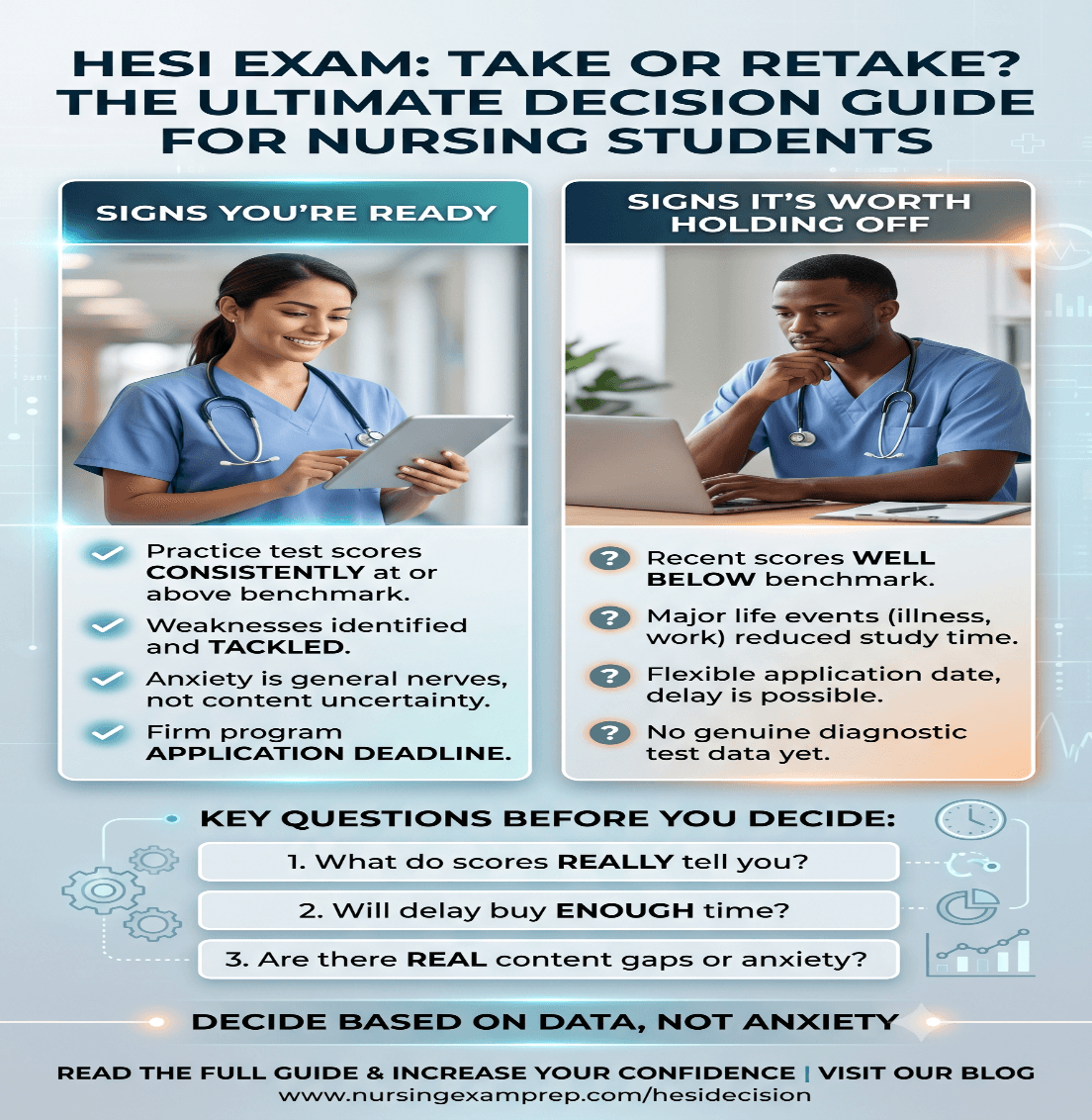
- Your recent practice test scores are consistently at or above the benchmark your program requires, which suggests that your current level of preparation is truly sufficient.
- You have recognized and tackled your main weaknesses rather than always finding notable gaps in your knowledge.
- The anxiety you feel about the exam is more about general nervousness than actual uncertainty about the content because normal pre-exam nerves do not necessarily mean that you are not ready.
- You have a hard deadline for your application and delaying could really be jeopardizing your admission timeline to your target program.
- You have been studying for a reasonable amount of time, and you have not been cramming in the last days before your scheduled date.
Signs It May Be Worth Holding Off
In contrast, some signals indicate that more preparation time could make a substantial difference.
- Your practice test scores are consistently well below the required benchmark for your program, not close enough to the benchmark to allow for last minute improvements.
- You have identified some areas of improvement but not had enough time to work on it yet. Especially in parts where there is a lot of material, like math or science.
- Such as illness, a family emergency or an unusually demanding work or clinical schedule. Major life circumstances have reduced the amount of time you could devote to your studies.
- You can change the application date, so a delay will not affect your chances of admission to the program you want.
- You feel like you have not taken a real diagnostic practice test yet, and you are just guessing at your level of readiness instead of working off real data.
Questions to Ask Yourself Before You Decide
Do not make this decision just on anxiety. Answer these specific questions to get clear on your actual situation.
- What do my recent practice test scores really tell me? Look at real data, not just, how confident/nervous you feel.
- What more time realistically would a postponement buy? A week or two of delay probably will not make much difference in your preparation, but a longer delay might allow for some real additional review.
- What are the real effects of the delay? Consider deadlines, program-specific policies, and whether a delay would create complications beyond needing to reschedule.
Am I hesitating due to real content gaps or just general test anxiety? These demand very different responses – content gaps respond well to more time studying, whereas anxiety often responds better to confidence-building strategies than simply putting off the exam.
The Risk of Delay, in perpetuity
Sometimes it is the right thing to delay an exam, but it is worth being honest about a common trap: some students use delay to avoid dealing with exam anxiety, rather than really using the time productively. If you’re putting off your exam date again and again with no clear, structured plan for how you’ll use that extra time, it may be worth looking at whether it’s anxiety, rather than a genuine need for more preparation, driving the decision.
If you do decide to delay, do not leave your timeline open-ended, but set a firm new date. If you have more time to prepare, do not assume that more time will automatically close your preparation gap. Instead, develop a detailed, organized plan for your extra preparation time. Reassess with another practice test midway through your extended timeline, verifying that your additional preparation is indeed translating into measurable improvement.
The Danger of Going Too Fast
There are real costs to moving forward without enough preparation at the same time. A low-test score might require a mandatory waiting period before you can retake the test, which can set your timeline back further than if you had proactively delayed. Retake fees are an unnecessary cost, especially when a little more study could have resulted in a passing score on the first try. A poor first effort can shake your confidence, even if you pass on a subsequent effort. Therefore, when it is realistically possible, it is generally better to prepare well the first time.
Guide to Confident and Informed Decision-Making
- Do not decide based on how ready or not ready you feel, decide based on real practice test data.
- Talk to an academic advisor, especially if you are feeling pressured by application deadlines in a way that is affecting your decision beyond real concerns about readiness.
- A middle ground may be a short, targeted delay of a week or two to address a clearly identified weak area rather than rushing forward or indefinitely postponing.
- Last minute nerves are normal even for students who are truly well prepared so trust consistent practice test results.
Conclusion
It does not matter how you feel about it. If you take a practice test and you see that you are not ready, then you are not ready. If you take a practice test and you see that you are ready, then you are ready. It is a matter of facing the facts, not a matter of “feeling ready.” Both paths have valid trade-offs, and the best option depends on your own individual circumstances — including how you did on your practice tests, your application timeline, and whether extra time would be used productively at all. Whatever you decide, it is much better to move forward with a clear, informed decision than to have uncertainty or indecision unnecessarily drag out the process.