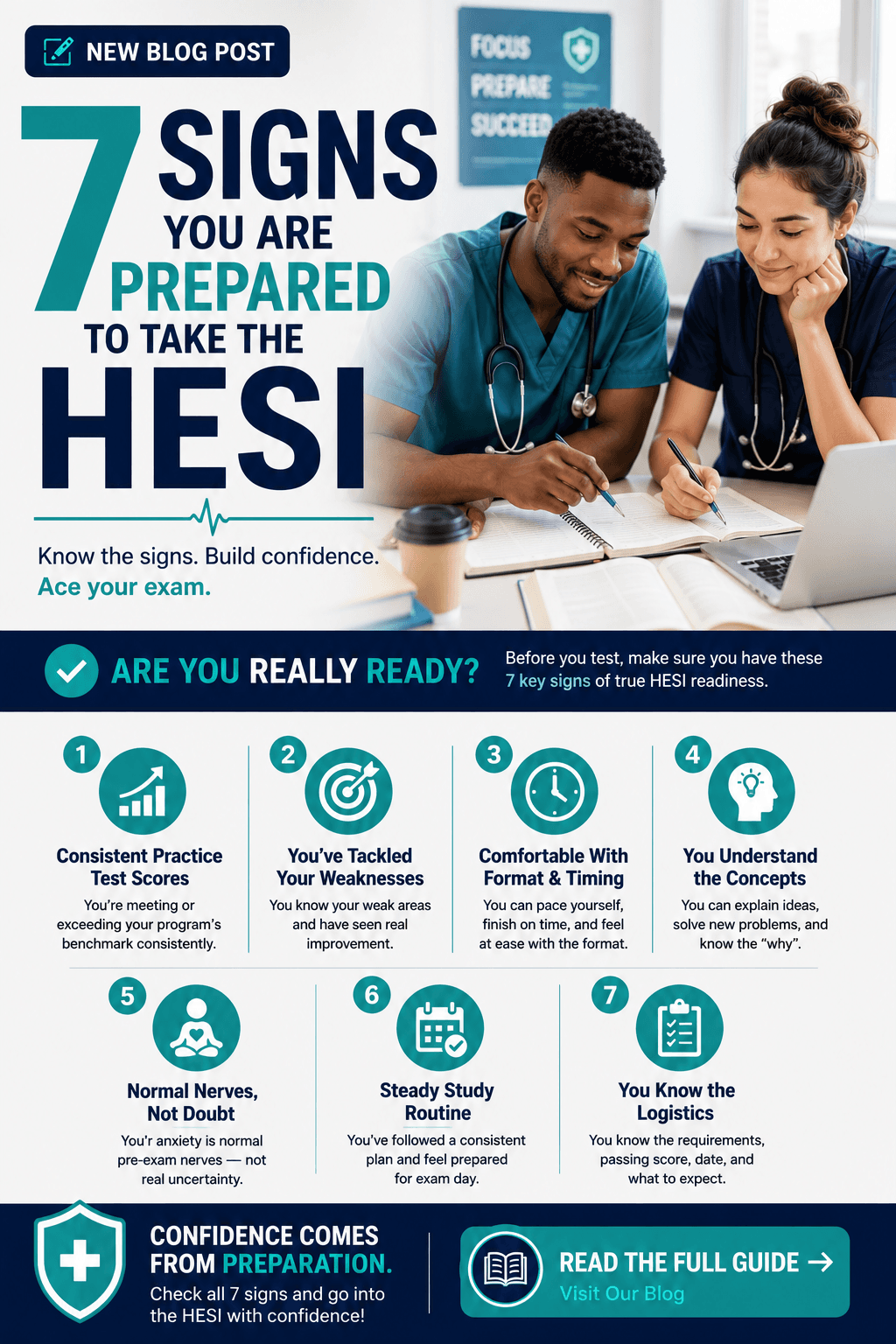
1. You are consistently hitting your mark on your practice tests.
- Consistent performance on full-length practice tests is one of the clearest, most objective signs of readiness.
- Be consistent, not one big hit. A single good practice test could be an easier question set or a lucky day, but consistent performance on multiple attempts is a more reliable indicator of true readiness.
- Compare your scores to your specific program's benchmark, not a general online average, because requirements vary by institution.
- Do not just look at your overall score, but also look at how you did on each section. Sometimes your strong performance on some sections can mask real weakness on others.
2. You Have Identified and Worked on Your Weaknesses
- Being ready means not just having no weak areas, but knowing what they are and having taken concrete steps to address them.
- You can list your weak subjects instead of just having an overall vague feeling of not being prepared.
- You have done targeted study in those areas, rather than just hoping that general review would take care of them organically.
- Your practice test scores in those areas have gotten measurably better since you first pointed them out as weak areas.
3. You are comfortable with the format and timing of the exam
- Content knowledge is not enough – true readiness includes comfort with how the exam is actually structured and paced.
- You have practiced with time pressure, and not just content review without time pressure.
- If applicable, you are familiar with the computer-based testing interface, lowering the risk of wasting time just navigating the screen on exam day.
- You do not find that you are constantly running out of time to finish all the questions in practice sections, but generally finish them in the time allowed.
4. You Can Describe Concepts, Not Just Spot Them
- If you can explain a concept in your own words, without referring to your notes, you are showing a meaningful sign of real understanding, not just superficial knowledge.
- You can teach a concept to someone else, or at least explain it clearly aloud, rather than just recognize it when you see it written down.
- You know the why of formulas and procedures, not just the memorized steps, such as in dosage calculations and other applied math content.
- You can practice questions on a familiar topic that you have never seen before, so you can apply your understanding flexibly, rather than just recognizing questions that look similar to ones you have seen before.
5. Your anxiety looks like normal nervousness, not real uncertainty
- It is quite normal to feel some nervousness before any major exam and this does not alone mean you are not ready.
- This is anxiety about the exam in general, not about whether you really do not understand the material.
- You look at your actual performance data, and you get more anxious. However, you look at your practice test results, and you are calmer.
- It is easier to think of concrete reasons you feel confident (like your scores on your practice tests or your improvement in weak areas) than it is to believe you cannot find any material evidence to prove you are ready.
6. You have a consistent, realistic study routine that you have stuck to
- True readiness is typically the product of a more organized longer-term preparation, not a last minute or haphazard one.
- You have been studying on a reasonable schedule, not cramming all of your preparation into the last few days before your exam.
- You have stuck with it, even if not perfectly, rather than studying in bursts with long periods between sessions.
- You feel like you have prepared well and have a reasonable basis for confidence going into your exam date.
7. You Understand Your Program’s Logistics and Requirements
- Readiness is more than simply knowing the content; it is also about being practically ready for the exam itself.
- You know exactly what sections you have to take. You do not have to wonder what your exam format is going to be.
- You know what the passing score for your program is, so you have something concrete to compare your practice score to.
- You have confirmed your exam date, location and identification requirements so there is no added stress of logistics on top of your academic prep.
What if you don’t have all of these signs?
If you see that, many of these signs do not apply to you right now, that is good information—not something to panic over. It might just mean you need more prep time, a more focused way to study, or more practice with the specific format of the exam before your scheduled date. Recognizing this in advance rather than test day allows you to make an educated decision about whether to stick with your plan or consider changing your timeline.
Conclusion
True preparation for the HESI Remember, and I exam is more than a feeling. It is reflected in concrete, observable signs such as doing well on practice tests, feeling comfortable with the exam format, and having a clear understanding of your strengths and weaknesses. Honest comparison of your preparation to these seven signs, rather than relying on your confidence or nervousness in the moment, allows for a more informed, data-driven decision about whether you are truly ready to move forward with your scheduled exam date.