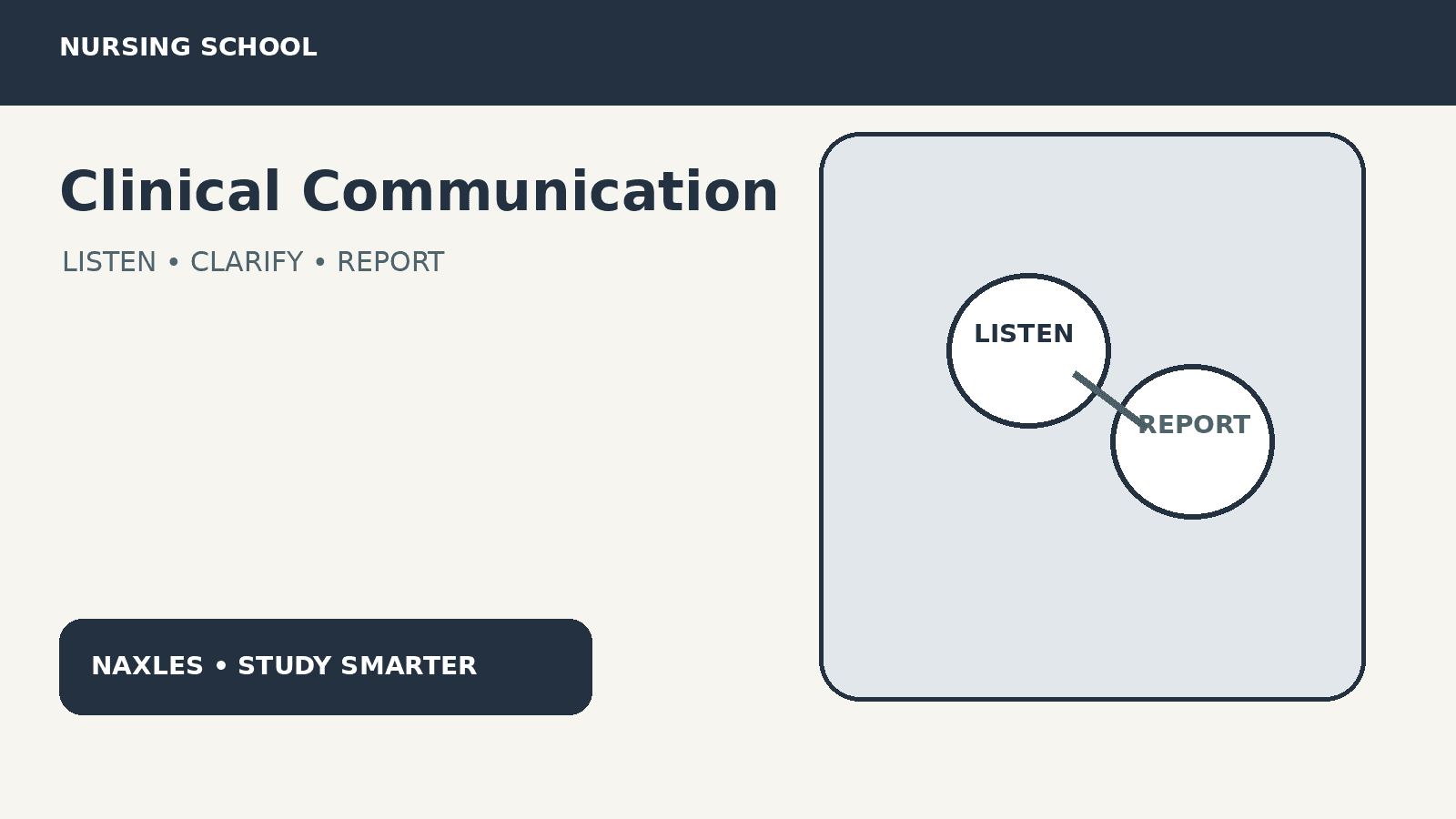
Nursing School: Improving Clinical Communication
Communication is an important part of nursing education and clinical practice. Students communicate with instructors, nurses, patients, families, and other members of the healthcare team. Clear communication can help reduce misunderstandings and support safe care.
Listen Before Responding
Good communication starts with listening. Avoid immediately preparing your response while another person is speaking. Pay attention to the information being provided and ask questions if something is unclear.
Clarify Instructions
If you do not understand an instruction, don't simply guess. Ask for clarification. For example: “Could you clarify which task you would like me to complete first?” This is better than making an assumption that could lead to an error.
Keep Reports Organized
When reporting information, focus on what is relevant. Depending on the situation and the framework taught by your program, you may use a structured communication approach such as SBAR. The important idea is to communicate:
- What is happening
- Relevant background
- Your assessment or observations
- What is needed or recommended
Be Specific
Avoid vague statements. Instead of: “The patient doesn't seem well.” communicate specific observations that are relevant to the situation. Specific information is more useful for decision-making.
Listen to Patients
Clinical communication is not only about reporting information to other healthcare professionals. Patients may provide important information about:
- Symptoms
- Concerns
- Experiences
- Preferences
- Changes in how they feel
Listen carefully and respectfully.
Maintain Professional Communication
Professional communication includes appropriate language, respect, confidentiality, and awareness of the clinical environment.
Practice Before Clinical
Students can practice reporting information using fictional scenarios. Take a short patient scenario and explain the important information in 30–60 seconds.
Final Takeaway
Strong clinical communication is clear, respectful, specific, and purposeful. Listen carefully, clarify unclear instructions, and organize important information before communicating it.