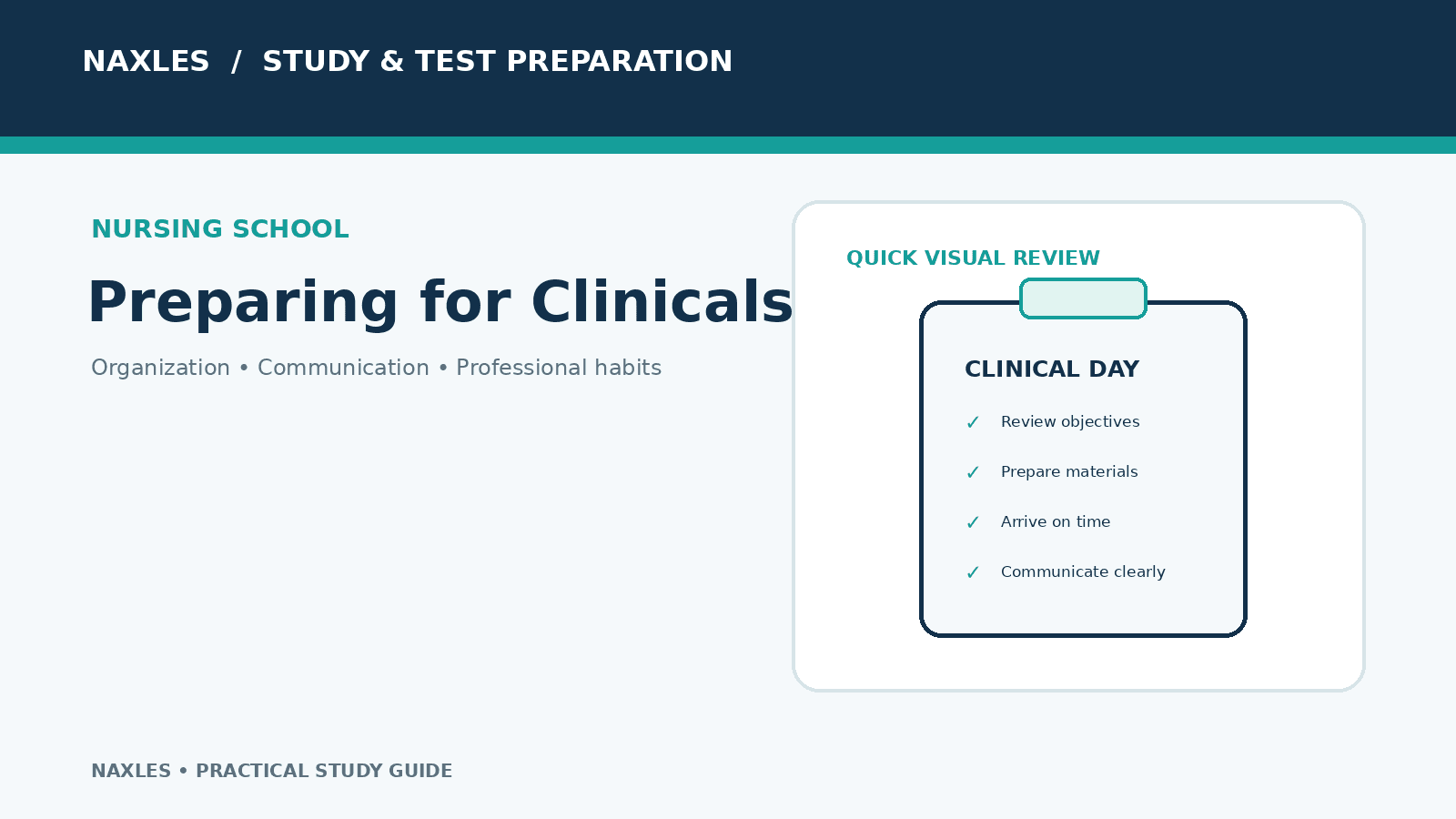
Preparing for Nursing Clinicals: What Students Should Know
Clinical placements give nursing students an opportunity to connect classroom learning with supervised patient care. For students approaching their first clinical day, the experience can feel unfamiliar because it involves a new environment, different routines, and professional responsibilities. Preparation can help you arrive organized and ready to learn. Your school and clinical instructor will provide the specific rules you must follow, so use their guidance as your primary reference.
1. Review Your Clinical Instructions
Before your first clinical day, read the information provided by your nursing program. It may include the placement location, reporting time, dress code, required identification, and instructions for contacting your instructor. Check whether you need to complete any online orientation or facility-specific training before arriving. If you are unsure about an instruction, ask your instructor before the clinical day rather than making assumptions.
2. Prepare Your Uniform and Supplies
Many nursing programs have specific uniform requirements. These may include a particular uniform color, approved shoes, an identification badge, or other clothing standards. Your school may also provide a list of supplies to bring. Depending on the program, students may be asked to carry items such as:
- A notebook and pen
- A watch with a second hand, if permitted
- A stethoscope
- A small reference guide
- Any required identification
Do not purchase expensive equipment until you have checked your program's approved supply list
3. Review Basic Nursing Concepts
You do not need to know everything before your first clinical placement. However, reviewing foundational concepts can help you follow instructions and understand what you observe. Consider reviewing:
- Hand hygiene and infection prevention
- Patient identification procedures
- Basic vital signs
- Therapeutic communication
- Patient privacy and confidentiality
- The importance of reporting changes in a patient's condition
Your clinical instructor will guide you through tasks that are appropriate for your level of training. Never perform a procedure independently if you have not been trained or authorized to do so.
4. Plan Your Journey and Arrival Time
Find out how long it takes to reach your clinical site. If possible, plan your route in advance and allow extra time for unexpected delays. Check the facility's entrance instructions. Large hospitals may have different entrances for staff, visitors, and students. Arriving on time gives you an opportunity to prepare before the shift begins and helps you avoid disrupting the clinical team's routine.
5. Understand Professional Conduct
Clinical placements involve working with patients, families, instructors, and healthcare staff. Professional behavior includes being respectful, listening carefully, following instructions, and asking questions when you are unsure. Patient privacy is especially important. Do not discuss identifiable patient information in public places or share it on social media. If you make a mistake or are uncertain about a task, inform your instructor promptly. Being honest about what you know and what you need help with is part of safe learning.
6. Prepare Yourself to Learn
You may not understand every situation you encounter during your first clinical experience. That is normal for a student who is still developing practical skills. Keep a small list of questions or topics to review after the shift, while avoiding any patient-identifying information. Reflect on what you learned and ask your instructor for feedback.
A Quick Clinical-Day Checklist
Before leaving home, confirm that you have:
- The correct uniform
- Required identification
- Approved shoes and supplies
- Your clinical schedule and location
- A plan for getting there on time
- Any required documents or completed training
Final Thoughts
Your first clinical day is an opportunity to observe, practice approved skills, and learn from experienced professionals. Preparation does not mean knowing everything in advance. It means understanding the instructions, arriving ready, respecting patients, and asking for guidance when needed.