Nursing School Prerequisites: What to Check Before Applying
Applying to nursing school involves more than submitting an application. Many programs require students to complete prerequisite courses, meet academic standards, and provide specific documents before they can be considered for admission. Requirements vary between schools and nursing programs. A checklist can help you organize your preparation, but always confirm the exact requirements with the school where you plan to apply.
1. Review the Required Prerequisite Courses
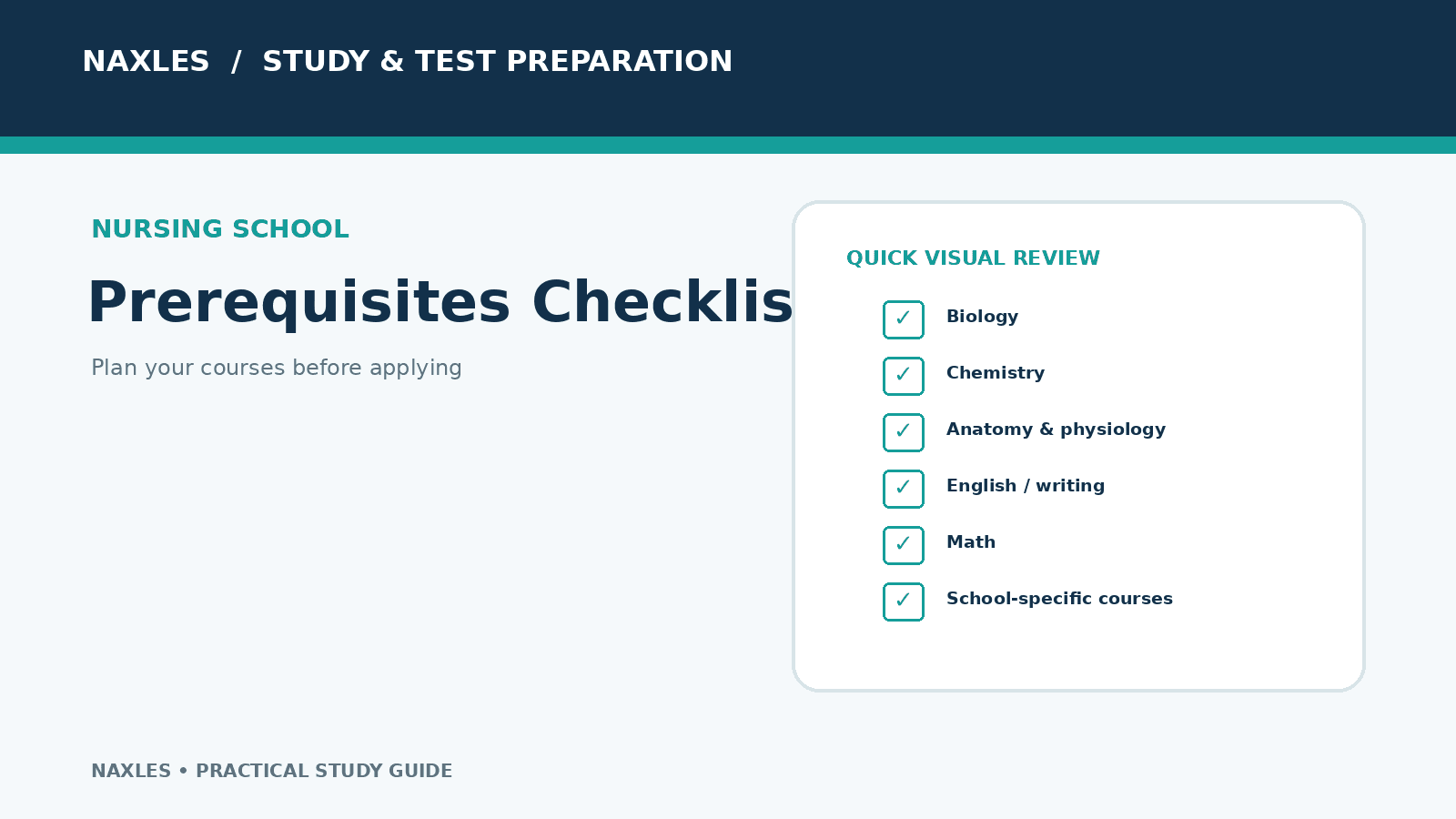
Some nursing programs require applicants to complete certain courses before starting the nursing curriculum. Common examples include:
- Anatomy and physiology
- Microbiology
- English composition
- Mathematics
- Psychology
- Nutrition
Not every program requires all these courses, and some may require additional subjects. Check whether courses must be completed before applying or whether you can take them after admission. If you have completed coursework at another institution, ask the admissions office whether those credits can transfer.
2. Check the Minimum Academic Requirements
Nursing programs may set minimum overall GPA requirements, prerequisite-course GPA requirements, or minimum grades for individual classes. Some programs use a competitive admissions process, meaning that meeting the minimum requirements does not necessarily guarantee admission. Review the program's current admissions page and note any academic requirements. If something is unclear, contact an admissions advisor before submitting your application.
3. Find Out Whether an Entrance Exam Is Required
Some nursing programs require an entrance examination as part of the admissions process. Depending on the school, this may include the ATI TEAS or HESI A2. Before registering for an exam, confirm:
- Which examination the program accepts
- Whether a minimum score is required
- Whether the school accepts scores from previous attempts
- How recent the exam score must be
- Whether the school has a deadline for receiving scores
Do not assume that every nursing school accepts the same exam.
4. Prepare Your Application Documents
Depending on the program, applicants may need to submit:
- An application form
- Official high school or college transcripts
- Entrance exam scores
- Identification documents
- Proof of prerequisite completion
- An application fee, if applicable
Some schools may also request a personal statement, references, or an interview. Create a folder for your application documents and keep track of which items have been submitted.
5. Check Health and Background Requirements
Some programs require students to complete health-related or background procedures before participating in clinical placements. These requirements may include immunization records, health screening, a background check, or CPR certification. The timing can vary. Some schools require documentation during admission, while others request it before clinical training begins. Read the program's instructions carefully, especially if you need to arrange appointments or obtain records from another provider.
6. Understand the Application Deadlines
Nursing programs may have different application periods, start dates, and deadlines for supporting documents. Write down the application deadline, the date by which exam scores must arrive, and any deadlines for prerequisite courses. If a program admits students only once or twice a year, missing a deadline may mean waiting for the next application cycle.
A Simple Application Checklist
Before applying, confirm that you have:
- Reviewed the program's prerequisite courses
- Checked the minimum academic requirements
- Confirmed whether an entrance exam is required
- Collected the required transcripts and documents
- Reviewed health and background requirements
- Recorded the application deadline
- Contacted the school about any unclear requirements
Final Thoughts
A clear application plan can help reduce last-minute problems. Start by choosing the nursing programs you are interested in, then check each school's requirements individually. Keeping a checklist for every program will make it easier to track what you still need to complete.