Why This Is a Truly Difficult Balance
Nursing students are in a unique bind of academic pressure, the physical and emotional toil of clinical work, and the pressure of knowing that exams such as the HESI have real consequences for their educational journey. That is a lot to carry around all at once, and it is understandable that that pressure can affect your mental and emotional health, particularly in a period of intense study.
Identifying When Pressure Is Getting Too Much
- It can be helpful to distinguish between everyday exam stress and pressure that is beginning to feel like it is getting out of control.
- Normal stress can be a little nervousness, sometimes being unable to focus, or a little bit of pressure that comes and goes based on how well prepared you feel.
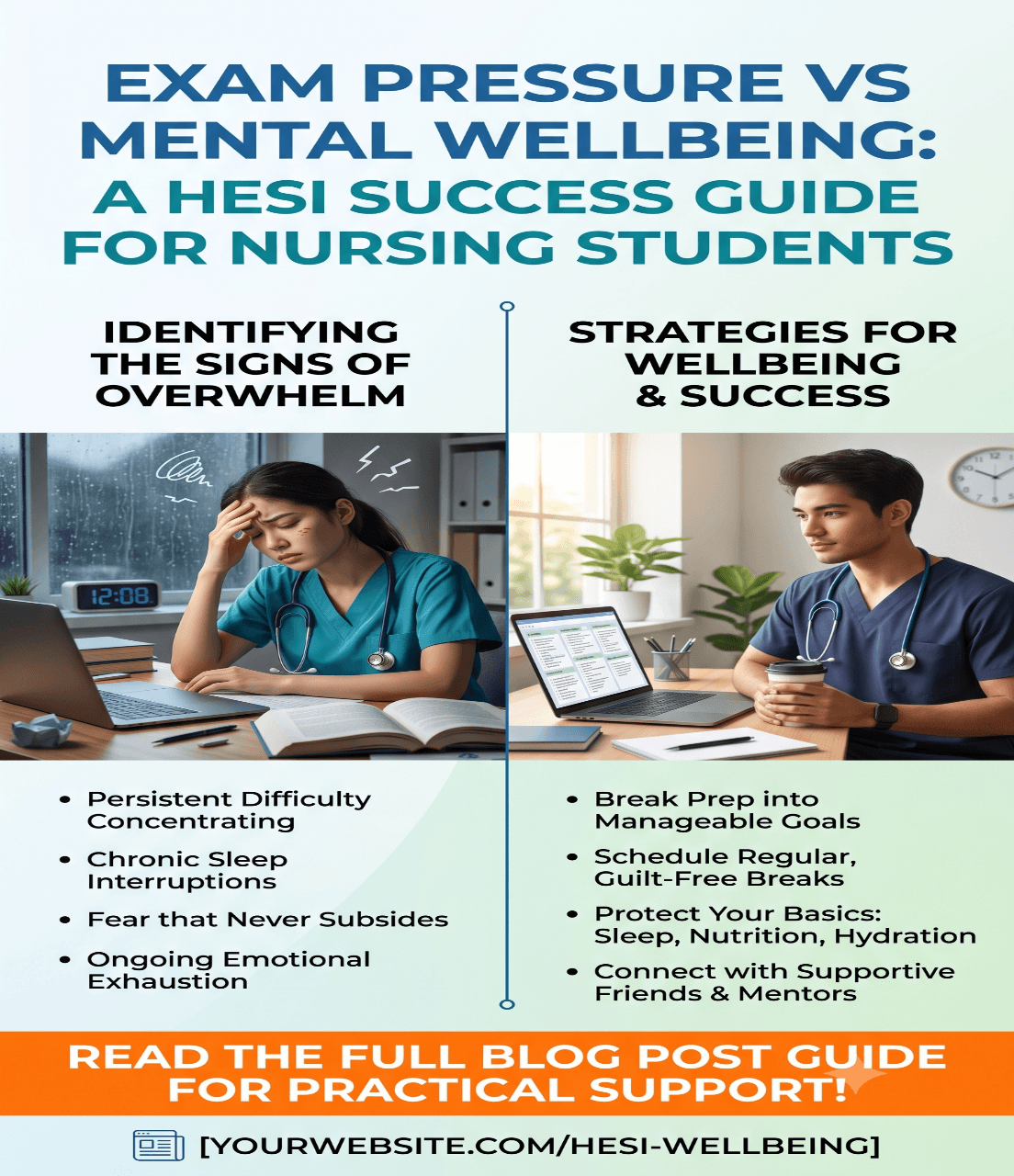
- Too much stress may be indicated by ongoing difficulty concentrating, ongoing sleep problems, a fear that does not go away even during breaks, or a feeling of emotional exhaustion that lasts long after a single exam would normally have been finished.
- The point of seeing the difference is not to label yourself; it is just a helpful way to be truly honest with yourself about how you are really doing, not how you think you should be doing.
Exam Pressure: How to Deal with It — Practical Tips
- Do not think of the whole exam as one big scary thing that you have to do. Break your preparation down into smaller, more manageable goals.
- Make sure to take regular breaks during your study sessions and do not feel guilty about taking them, rest is a real part of effective preparation.
- Avoid comparison when talking to your classmates about scores or study habits tends to increase your anxiety rather than motivate you, limit your exposure to comparison.
- Set limits on your study time, carving out specific hours for rest, meals and connecting with others, and not letting exam prep intrude on every free hour.
- If you find yourself becoming more anxious, try grounding techniques (slow breathing, etc.) or step away from your study materials for a moment during times of acute stress.
Looking After Your Basic Wellbeing during Times of Intense Study
- If you think you need to study more, you do not. You need sleep. Sleep deprivation worsens anxiety and makes you less smart.
- Keep up with regular meals and hydration, as these basics are easy to forget under pressure but have a direct impact on your mood and focus.
- Get as active as you can, even a little bit of movement is known to help mental health.
- Do not isolate yourself completely during your preparation period and stay in touch with people who support you, be it your friends, family members or classmates.
Reframe the Exam within Your Bigger Journey
It is also about the way you think about the exam itself, not just how you study for it. Remember, most programs offer remediation and retake opportunities, so a single exam attempt is almost never an irreversible outcome. Do not let one test score define your self-worth. You are a future nurse and your value is not decided by one exam result. It is normal to have a hard time dealing with the pressure. Do not think that means you are weak or that you are not cut out for nursing.
When to ask for help
If you’re finding the pressure around exams feels more than just normal stress – if it is persistent, overwhelming or affecting your day-to-day functioning to a significant degree – it’s worth reaching out for further support, rather than trying to push thru it. Many campuses have counseling services geared toward helping students deal with academic stress and mental health issues.
If pressure is seriously interfering with your preparation, academic advisors can sometimes help you to set new timelines or point you to other resources. Trusted friends, family members or mentors can provide emotional support and a helpful outside perspective during an intense period.
If you are experiencing persistent symptoms such as long-lasting sleep interruptions, appetite changes, or a feeling of hopelessness that does not go away with rest or common stress-reduction techniques, a health professional or counselor can provide more structured help.
A Word on Perspective
It’s worth remembering that the skills you’re developing now – managing pressure, looking after your wellbeing during busy times and knowing when to ask for help – are really valuable skills for your future nursing career as well as for passing this particular exam. Part of building the resilience and self-awareness that will serve you throughout your professional life is learning to navigate this balance now, imperfectly.
Last Words
There is no reason to sugarcoat how tough this time can be and it is a challenge to balance mental health and HESI exam pressure. Break down your prep into bite-sized pieces, protect your basic well-being and stay connected to the people around you who support you, and you can prepare to meet your exam goals without sacrificing your overall mental health. And if the pressure ever seems like more than you can handle on your own, seeking support from a counselor, advisor or trusted person in your life is a reasonable, responsible step—not a setback. If you are suffering from more than just exam stress, and your mental health issues are severe and chronic, you could try seeking out a campus counselor or health care provider—you do not have to go through this alone.