Why This Discussion Is Important
Academic advisors talk about HESI scores all the time. It is not uncommon for a student to not meet the required benchmark on the first try, it happens all over nursing programs. View this meeting as an opportunity to get resources, learn what the policies are for your particular program, and lay a concrete plan for moving forward, not as a confrontation or a strike against you.
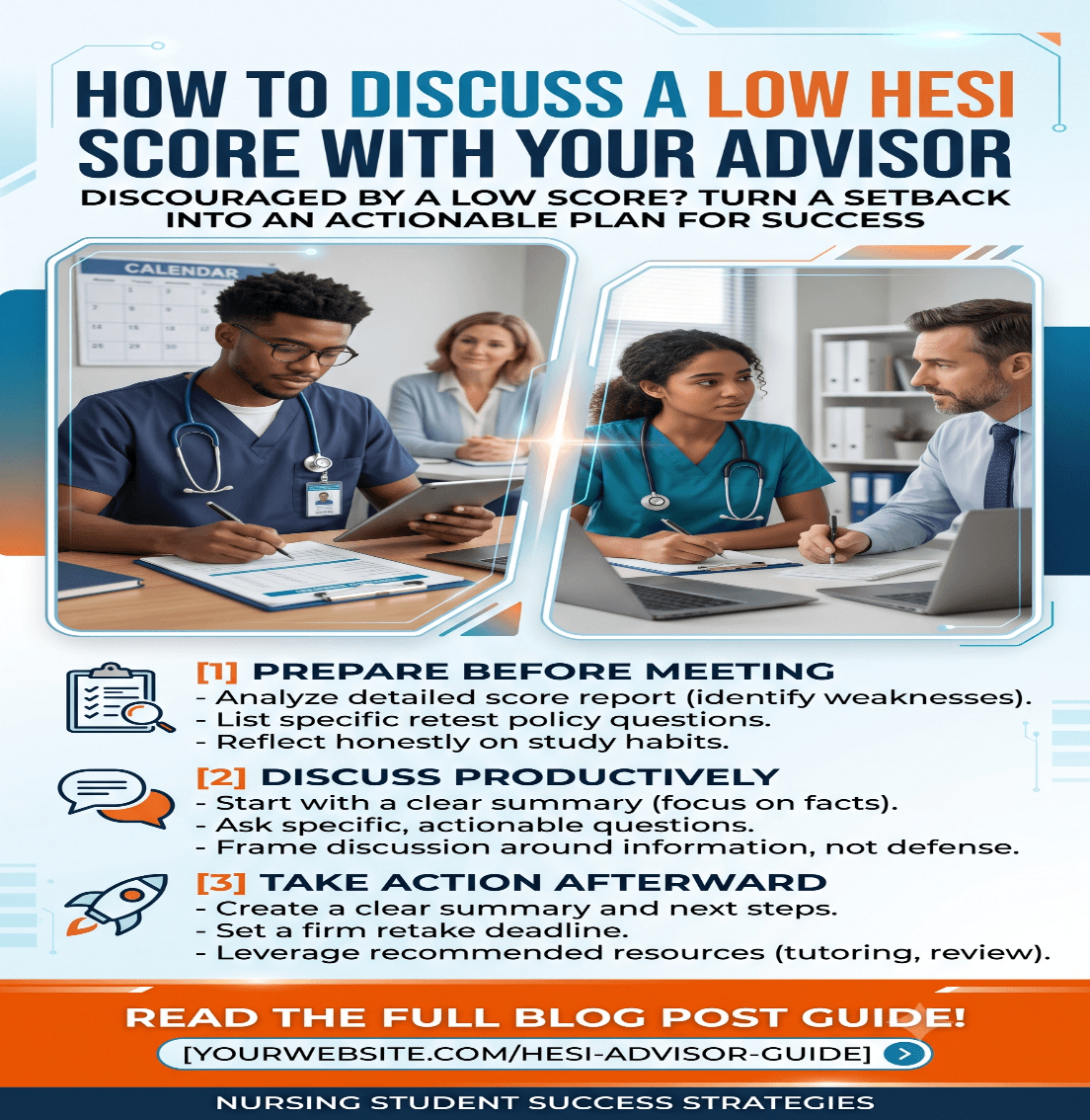
Get Your Info Ready Ahead of Your Meeting
- Coming into this conversation prepared makes the discussion more productive and less overwhelming.
- Review your detailed score report beforehand. Know precisely where you are weak, not just what your score is.
- Please list any questions you may have regarding your program’s retest policy, such as wait times, number of attempts, and remediation requirements.
- Be honest about the preparation process you went thru and what you think might have contributed to the result, without spiraling into over-criticism.
- Bring a notebook or device to take notes, as your advisor may mention specific resources or requirements that you will want to refer to later.
Speaking of it
How you frame this discussion can make a big difference in how productive it feels.
Start with a short, straightforward paragraph about your situation, e.g. 'I got X score and want to know what to expect next' rather than starting with long apologies or self-deprecation. Ask specific questions, not general ones. Broad questions like “What do I do now?” tend to get less actionable answers than specific ones, like “What remediation resources are available for the math section specifically?”
If appropriate, be honest about your circumstances, such as time constraints or specific challenges you faced during your preparation, as this context can help your advisor provide more tailored guidance. Think of the conversation as a chance to collect information, not a defense of your effort or ability. This can help keep the discussion productive and on track, rather than getting emotional.
Questions to Ask Your Advisor
Prepare yourself with specific questions to get the most out of this meeting.
- How long do I have to wait before I can retake the exam?
- How many times can you take it? Do you have to take the entire exam again or just part of it?
- Is there any tutoring, remediation or review offered thru the program?
- Will a low score affect my standing in the program or my ability to continue with other coursework in the meantime?
- Are there other students who have been in a similar situation, and what approaches helped them improve?
What to Expect from Your Advisor’s Response
- For the most part, academic advisors have these conversations in a genuine place of support, not judgment. Helping students succeed is central to their purpose.
- They can explain your program's retest policy and go over information that you may not have understood completely from written materials alone.
- They can refer you to resources like tutoring services, study groups, or prep materials they recommend based on your weak spots.
- They may ask clarifying questions about your past study approach – not to analyze your effort, but to help figure out what specifically may need to change for the future.
- Many advisors have advised students who did retake and pass after a low score, so they may have some insight into how often this happens.
Dealing with the Emotional Side of This Discussion
It's completely normal to feel some anxiety, embarrassment or discouragement going into this discussion and it's worth acknowledging that upfront rather than pretending those feelings aren't there. Just remember, one attempt at an exam does not define your future as a nurse, regardless of how it may feel like it at the time.
Know that advisors are there to help not judge, since guiding students thru setbacks is a normal and expected part of their role. Let yourself feel disappointed, but do not let that feeling take over the conversation. Instead, focus on getting the information you need to move forward productively.
After the Meeting: Putting Information to Work
The real value of this conversation is to apply once you have the info you need.
- Write up a clear summary of what you learned, including specific next steps, deadlines and resources available.
- Do not just say, “I’ll retake it when I’m ready.” Set a period for when you will retake the test based on what you were told.
- If they recommend resources (tutoring, study groups, etc.), contact these as early as possible and do not allow this step to fall by the wayside because of residual discouragement.
- Instead of trying the same less effective approach you tried before, create a specific, targeted study plan using your score report and the extra insight your advisor gave you.
Closing Thoughts
It can be intimidating to speak to your advisor about a low HESI score, but this is a conversation that is far more common and far less judgmental than many students expect going in. If you have your questions prepared in advance, treat the discussion as if you are seeking information rather than defending yourself, and follow up with a specific action item afterward, you can convert that first setback into a clear, productive course of action. Remember that most advisors want to see you do well. In addition, reaching out for advice after a disappointing grade is not a sign of failure; it is a responsible and proactive move.