Test Anxiety: An Overview
Test anxiety is a common experience, characterized by physical, emotional and cognitive symptoms that are triggered by the pressure of an exam setting. You might feel your heart pounding, your palms sweating, thoughts racing, or have trouble focusing, even if you studied hard and know the material well. It is also worth noting that some pre-exam nerves are normal, and can even sharper focus. The object is not to eliminate nervousness, but to keep it from interfering with clear thinking and doing your best.
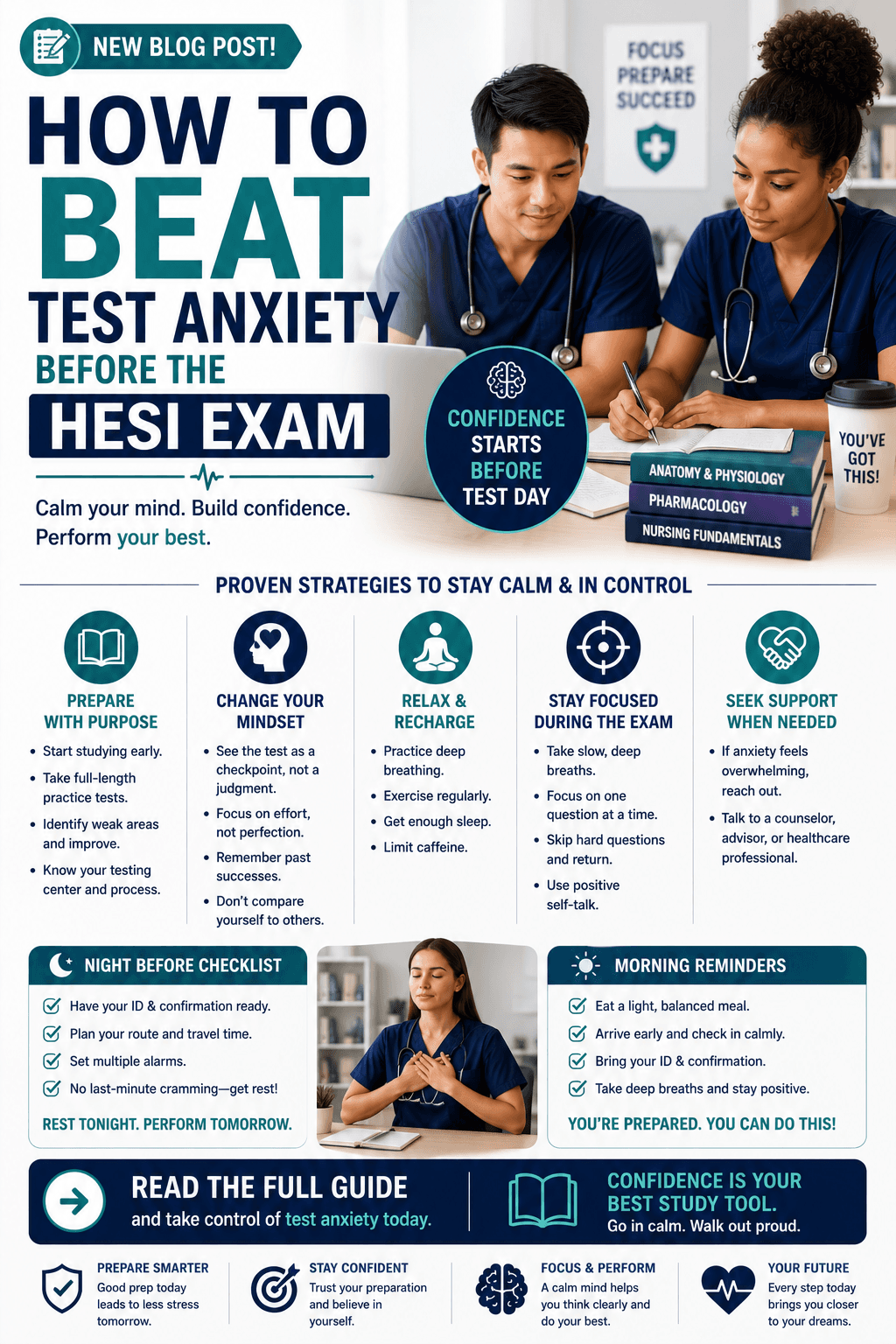
Preparation Strategies to Reduce Anxiety
Much of test anxiety comes from the unknown, so good, organized prep can help reduce anxious feelings before test day even rolls around.
- Begin studying early--cramming generally increases anxiety not decreases it.
- Complete several full-length practice tests under timed conditions to become familiar with the format and pacing of the actual exam.
- Recognize your weak areas early, as it is usually the unknown of certain subjects that causes you the most stress.
- Get to know your testing center’s logistics before test day, including its location, parking, and check-in procedures, so you do not have to deal with unnecessary uncertainty on test day.
Mindset Changes That Help
- Your feelings about the test can make you more or less anxious before you take it.
- Think of the exam as a checkpoint, not a judgment. Rarely does one exam decide your whole future. Most nursing programs have remediation and retake options.
- Focus on effort and preparation, not on perfection. Trying to do your best is more important than hoping for a perfect performance.
- Think of past successes. Think of other exams or challenges you have overcome in the past. Use these to help you build confidence in your ability to tackle this one too.
- Do not compare yourself to your classmates. We all have a different timeline to prepare and test.
Relaxation Methods for the Days before Your Exam
- In the days leading up to your exam, practice simple relaxation techniques to keep anxiety at bay.
- Try slow deep breathing exercises. This can help to calm your nervous system when anxious thoughts begin to build.
- Stick to your normal exercise routine, as physical activity has been shown to lower overall stress and anxiety.
- Prioritize sleep, because lack of sleep tends to make both anxiety and cognitive performance worse.
- Cut back on caffeine, especially in the hours before your exam, which can make you feel more nervous or give you a racing heart.
Handling anxiety during the exam itself
- Even if you have prepared well, some anxiety may still creep in once you are seated and the exam begins. Some on-the-spot tricks can help you get back in the zone quickly.
- If you feel anxiety rising during the exam, take a few slow breaths instead of continuing in a panic.
- Concentrate on one question at a time and avoid the urge to count how many questions are remaining.
- If the format allows, skip ahead and come back to hard questions instead of being stuck on one hard point.
- Use a short positive self-talk that reminds you that you are prepared and able to work through what is in front of you.
When Test Anxiety Appears to Matter Most
“Some students have test anxiety that goes beyond nerves, and can feel overwhelming or prolonged even with good preparation. If that sounds like you, speaking with a school counselor, academic advisor or healthcare provider could be beneficial, as they can offer further support and strategies tailored to your unique circumstances.
Summary
Test anxiety is common for many nursing students during exams, but it does not have to control how you do on the HESI exam. With good preparation, the right attitude and a few simple relaxation techniques to use before and during the exam, you can control feelings of anxiety and put yourself in the best position to do your very best and show what you really know. Remember, the most important thing is to show up as the best version of yourself, even if it is not perfect or anxiety-free. If test anxiety feels overwhelming or is prolonged beyond the usual pre-exam jitters, it may be helpful to talk to a school counselor or healthcare provider for extra support