Unlimited Attempts
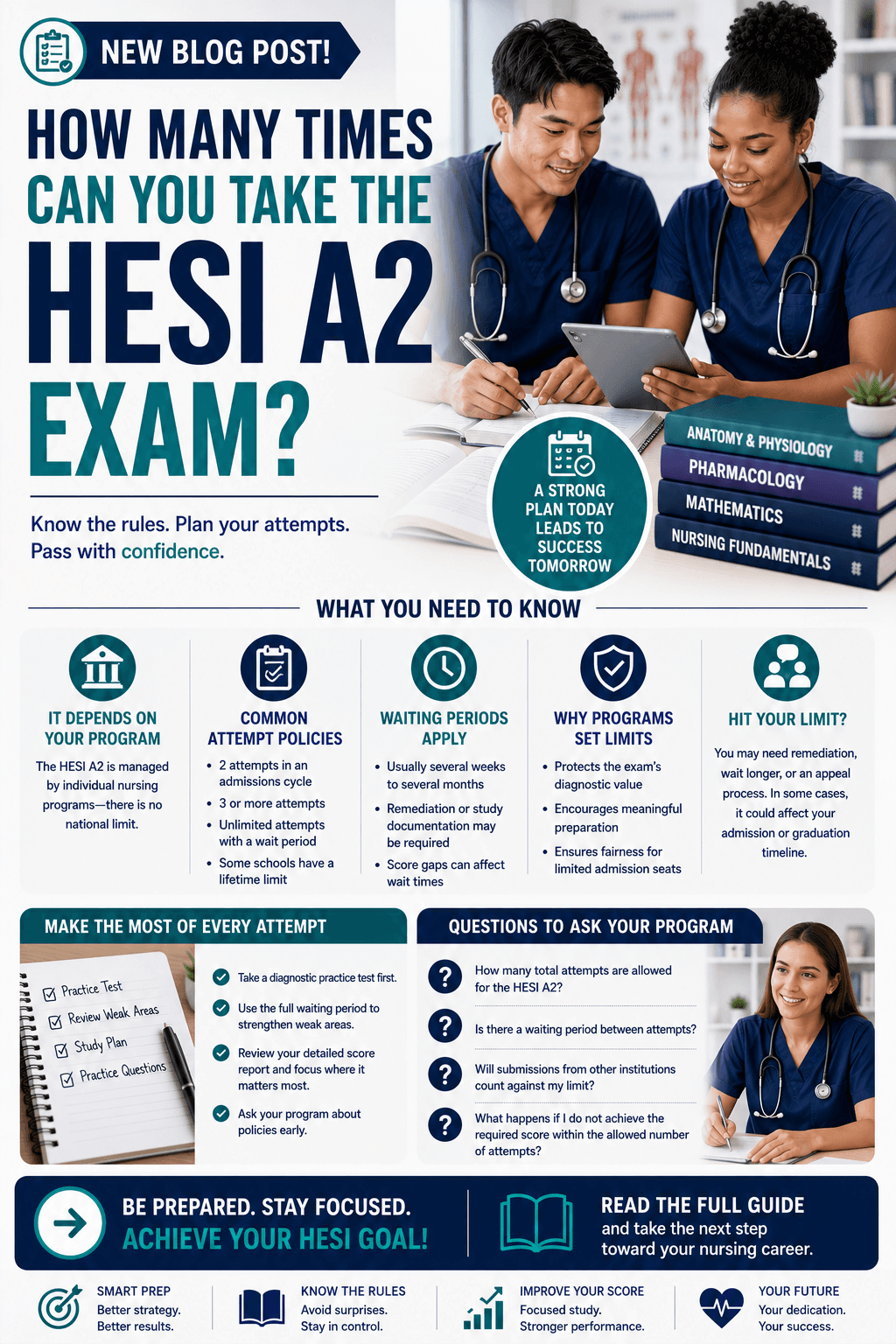
The HESI A2 is not administered by a national testing organization, but rather by individual nursing programs. Each school has its own policy on the number of times a student can take the exam. That means the truthful answer to “how many times can I take it?” always begins with a look at the admissions requirements of your particular program.
Common Attempt Procedures
Policies vary, but a few general patterns tend to emerge across many nursing programs.
- Some programs allow for two attempts in a given admissions cycle, usually with a waiting period between attempts.
- Other programs allow three or more attempts, sometimes over different testing windows or academic terms.
- Few programs may give unlimited attempts, provided a wait period is observed between each attempt.
- Some schools have a “lifetime” limit on total attempts, so previous attempts from years ago may still count against your current limit.
Why limit tries
There are a few practical reasons why nursing programs have attempted limits.
- Maintaining the exam’s diagnostic value — unlimited immediate retakes could undermine the exam’s purpose of measuring true academic readiness.
- Ensuring that there is some meaningful preparation between attempts, rather than just guessing again without further study.
- Fairly handling limited admission seats, especially for competitive programs that rank applicants by HESI A2 scores.
Standard time between attempts
- Most programs also have a wait period between attempts, in addition to attempt limits.
- The wait times are often several weeks to several months, allowing students time to meaningfully examine their weak areas.
- Some programs require documentation of study or remediation during the waiting period before allowing a retake.
- Smaller score gaps may mean shorter waiting periods, while larger score deficits may mean a longer wait before a retake is scheduled.
What Happens If You Hit Your Program Limit?
If you fail to attain the required score after all the attempts allowed, then what happens next depends entirely on your particular program. Some programs do have a formal appeal process especially if there were extenuating circumstances documented in a previous attempt.
Other programs may require you to wait longer, for example, a full academic year, before you become eligible again. IN some cases, reaching the limit may affect your eligibility to be admitted to that particular program, so it is worth understanding this policy well before your first attempt.
How to Make the Most of Every Attempt
You might as well treat each attempt as seriously as possible, rather than assuming you can retake it as many times as you want. Often the attempts are limited.
- Take a diagnostic practice test before your very first official attempt, so that you are not wasting an official attempt on avoidable, easily identified weak areas.
- Do not retake the exam as soon as technically allowed without sufficient further preparation. Use the full waiting period available.
- After each attempt, look at your detailed score report and focus your improvement efforts on the areas where you scored the lowest.
- Ask your program about attempt policies early, rather than finding out the details after a disappointing first score.
Questions to Ask Your Program
Before you even try, it is a good idea to sort out a few key details directly with the admissions office of your nursing program.
- How many total attempts are allowed for the HESI A2?
- Is there a waiting period between attempts?
- Will submissions from other institutions count against my limit?
- What happens if I do not achieve the required score within the allowed number of attempts?
Concluding remarks
The number of times you can take the HESI A2 exam depends on the policy of your specific nursing program, as there is no standardized limit across all schools. Some programs only give you a few shots and some are a little more lenient and allow for waiting periods in between. No matter what the specific rules of your program are, treating each attempt as serious preparation, rather than assuming unlimited retakes, gives you the best chance of meeting your required score as early as possible in the process.