The First Try: Self-assurance, No Plan
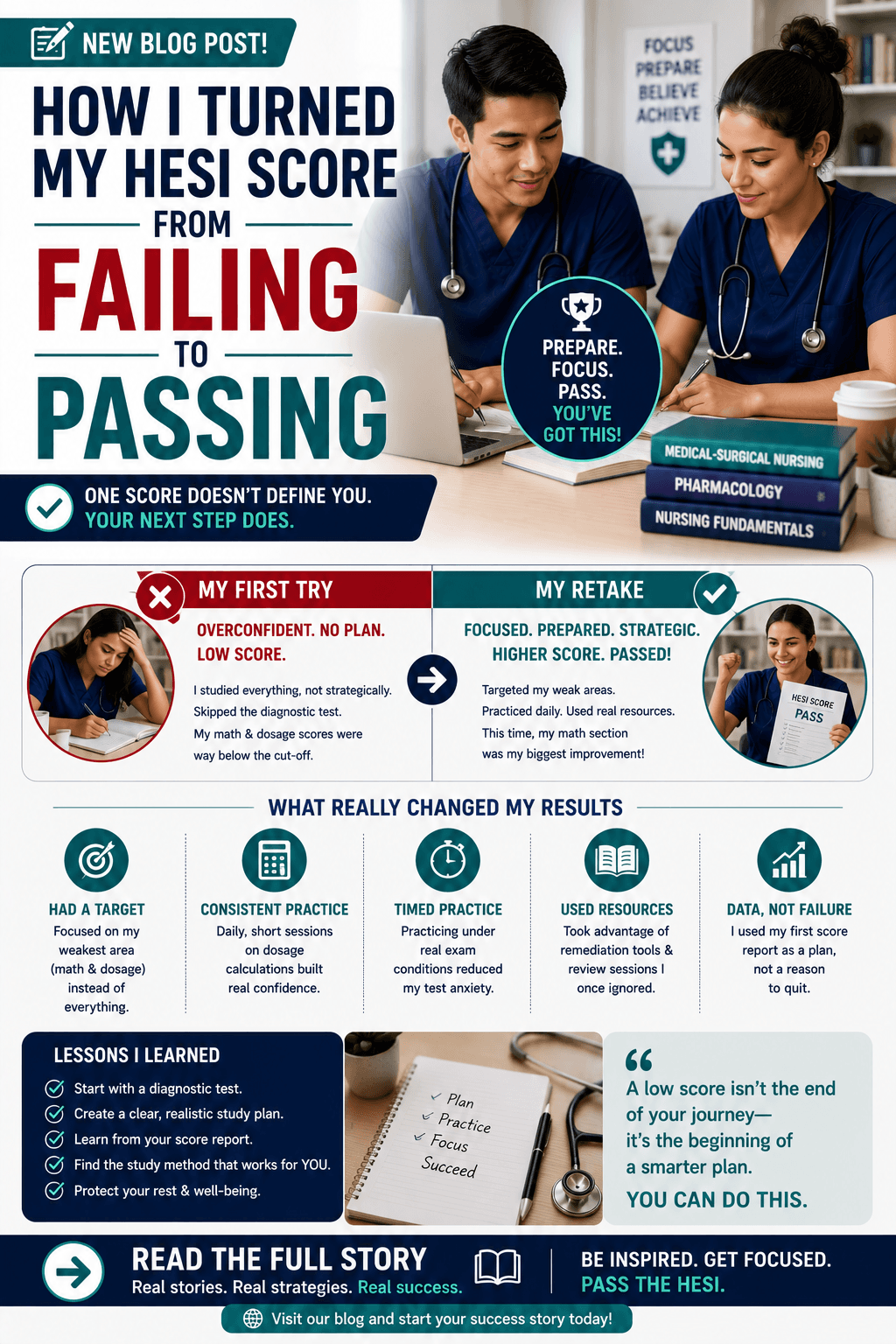
I felt good going into my first attempt at HESI. I had glanced over my notes, thumbed through a prep book and figured a general familiarity with the material would be enough to get me through. I did not take a diagnostic practice test before and I did not have a specific plan of which subjects needed the most attention.
When my scores were returned below the program’s cut-off, it was a real gut-punch. “In retrospect, it wasn’t a lack of effort; it was a lack of direction.” I studied widely not strategically and did not build in any way to measure whether my studying was actually working.
Honest Confrontation of the Results
The hardest part was not the actual score, but sitting down and looking at my detailed score report honestly instead of hiding from it in frustration. When I actually looked at the section-by-section breakdown, a clear pattern emerged: my math and dosage calculation scores were significantly lower than everything else was, dragging down my overall result.
This was the crucial turning point. I didn’t feel like I wasn’t good at the HESI, I felt like I had one specific area of weakness that was fixable and needed serious attention rather than the vague feeling I needed to study “everything” harder.
How to Make a Real Study Plan for the Retake
- Now that I had a clear target, the second round of preparation was a very different animal than the first.
- I immediately took a diagnostic practice test, which verified where my other strengths and weaknesses lay.
- I did dosage calculations specifically instead of just going over formulas and doing practice problems daily for most of my study time.
- I did timed practice because some of my original difficulty was not just knowing the math, but being able to do it fast enough under pressure.
- I used my program’s remediation resources, including a review session I had skipped the first time around out of overconfidence.
What Really Changed My Results
- In retrospect, a few specific changes had the biggest impact on turning my score around.
- Having a target to study, instead of just generally revising everything, really gave my preparation a direction.
- Actual comfort with dosage calculations was created by consistent practice in short focused sessions as opposed to the superficial familiarity I had before.
- It did not feel foreign anymore, so practicing under real exam conditions helped me reduce the anxiety I had when I first tried.
- Looking at my first score as data, rather than failure, changed my whole perspective for the retake. I was not trying not to fail again; I was striving toward a specific, identified goal.
The Retake: A Completely Different Ballgame
My second try felt so different walking into it. I knew exactly which section had cost me the most points the first time, and I had spent real, focused time tackling it head on. This time my results came back, I passed my program’s required score, and my math section was the category with the biggest increase of all.
What I’d Say to Any Student Who Faces a Similar Setback
If you are struggling with a HESI score that did not meet your program’s requirements, know that this experience is much more common than it feels in the moment. One try does not define your potential as a future nurse; it is just one approach to studying that may not have worked yet. In an honest appraisal of your results, figuring out your real weak spots and creating a specific plan around those can transform a discouraging first try into real progress for the second attempt.
Concluding Thoughts
While a failing grade on the HESI exam may seem like a huge setback, it is often simply a sign that more focused effort is needed. Many students take a poor score and turn it into a strong, successful retake by reviewing results honestly, building a targeted study plan, and practicing consistently under realistic conditions. If you are in this very position today, take your results as a guide, not a judgment — it can be just what brings you to your ultimate triumph.