Identification Requirements
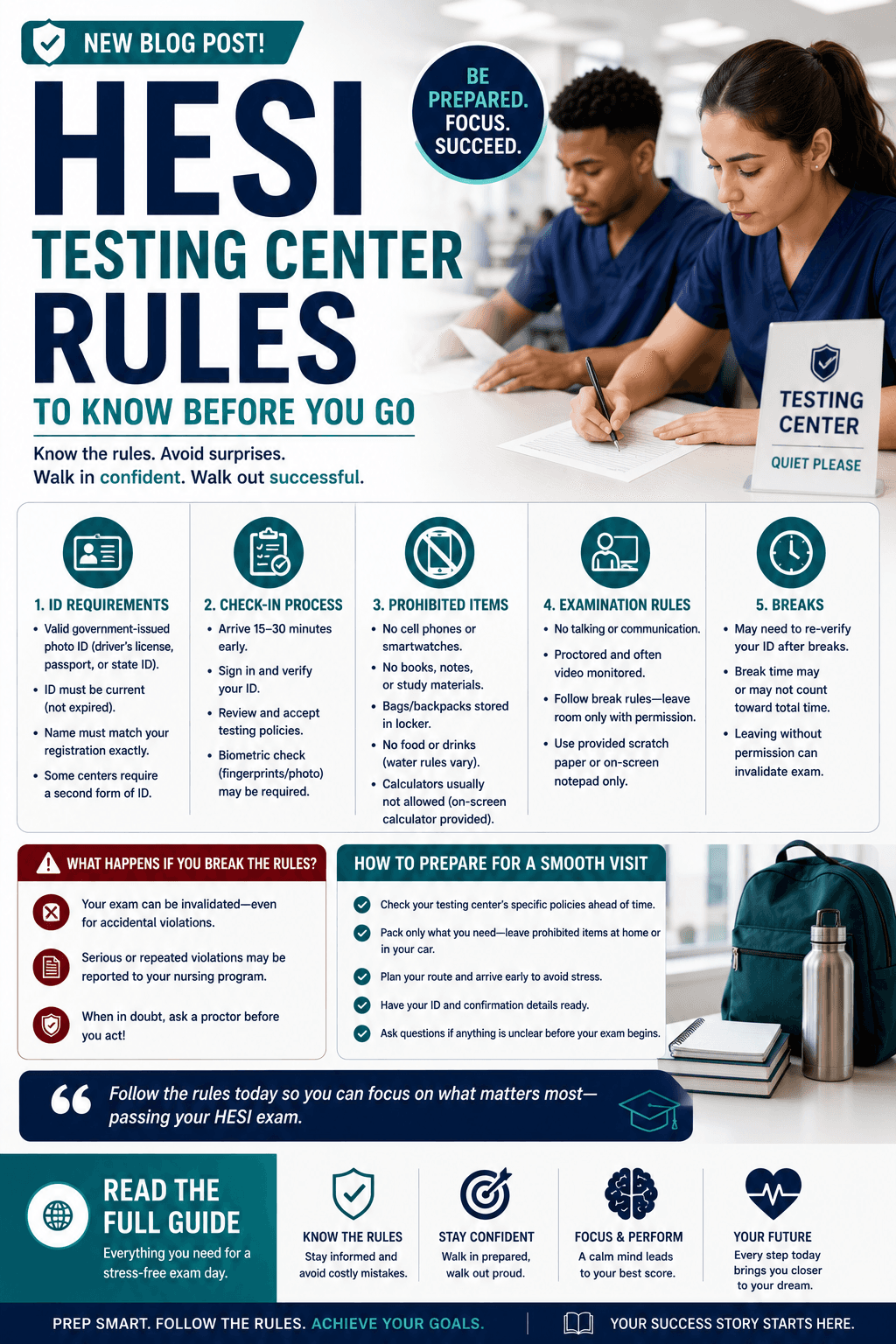
Testing centers take identity verification very seriously and if you do not meet ID requirements you could be turned away outright.
- Please bring a valid government-issued photo ID, such as a driver’s license, passport or state-issued identification card.
- Expired IDs are generally not accepted, so make sure to check the expiration date well in advance of your scheduled exam.
- Your name must match your registration exactly, as any discrepancies between your ID and your exam registration can lead to delays or denial of entry.
- Some centers will ask you to bring a second form of ID, so you may want to double-check your testing center’s exact requirements ahead of time.
Check in & Process
Most testing centers have a standard check-in procedure designed to verify your identity and prepare you to test.
- Arrive early. Arrive 15 to 30 minutes before your scheduled start time. Late arrivals may not be allowed to test.
- You will need to sign in and verify your identification at the front desk and then you will be escorted to the testing room.
- You may be asked to review and accept testing policies, such as rules regarding conduct and prohibited items, before you begin your exam.
- Additional security may include biometric verification like fingerprint scanning or photographs, which are also used by some centers.
Prohibited Items
Testing centers have strict rules about what you can bring in and cannot bring into the testing room.
- Cell phones and smartwatches are not allowed in the testing room and typically need to be placed in a locker or left outside.
- Once you have checked in for your exam you are not allowed to bring in books, notes or study materials.
- Bags, purses and backpacks usually need to be stored separately, often in a locker that the testing center will provide.
- Food and drink are generally not allowed in the testing room, though policies regarding water in a clear container may differ by location.
- Most HESI sections provide an on-screen calculator when needed, so personal calculators are usually not required.
Examination Rules
When testing begins, centers have a few rules to help make sure that everyone has a fair and safe environment.
- When the exam has started, no talking or communication with other test-takers is allowed.
- During the exam, in-room proctors and video surveillance will monitor you, often.
- Your version of the exam may include limited or structured breaks. Leaving the room without permission may affect your test session.
- You will usually be provided with scratch paper or an on-screen notepad for calculations, but you cannot bring your own paper or writing instruments.
Rules Regarding Breaks
If your exam has scheduled breaks, there are usually rules for them.
- You may be asked to re-verify your identity during breaks before returning to the examination room.
- Your time for breaks may or may not count toward your total testing time, depending on the type of exam you are taking.
- Any violation of testing policy can be punished severely. Even leaving the testing room without permission, even for a moment.
What happens if rules are broken?
Testing centers are strict about rules because testing integrity requires rules to be enforced consistently.
- If you break any of them - even accidentally - your exam can be invalidated.
- Any repeated or serious violation may be reported to your school of nursing and may affect your standing beyond the test itself.
- If you are unsure if something is allowed, it is always better to check with a proctor before risking an inadvertent violation.
How to Prepare for a Smooth Visit to the Testing Center
- Check the policies of your particular testing center beforehand, as little details vary between testing centers.
- Pack only what you need. If you have prohibited items, leave them at home or in your car rather than risk being caught at check-in.
- Arrive early, relaxed, with plenty of time to get through the check-in process without any rush.
- If you are unclear on any part of the process, ask questions before your exam begins instead of guessing at tests.
Concluding Thoughts
Knowing the HESI testing center rules before you get there takes away another layer of uncertainty from an already important day. These rules exist to make sure that the testing process is fair and secure for everyone—from identification requirements to prohibited items to expectations about behavior in the testing room. By researching your particular testing center’s policies ahead of time and coming prepared, you can walk in with confidence, focus only on the exam, and avoid any unnecessary complications along the way.