The reasons why study groups work so well for HESI prep
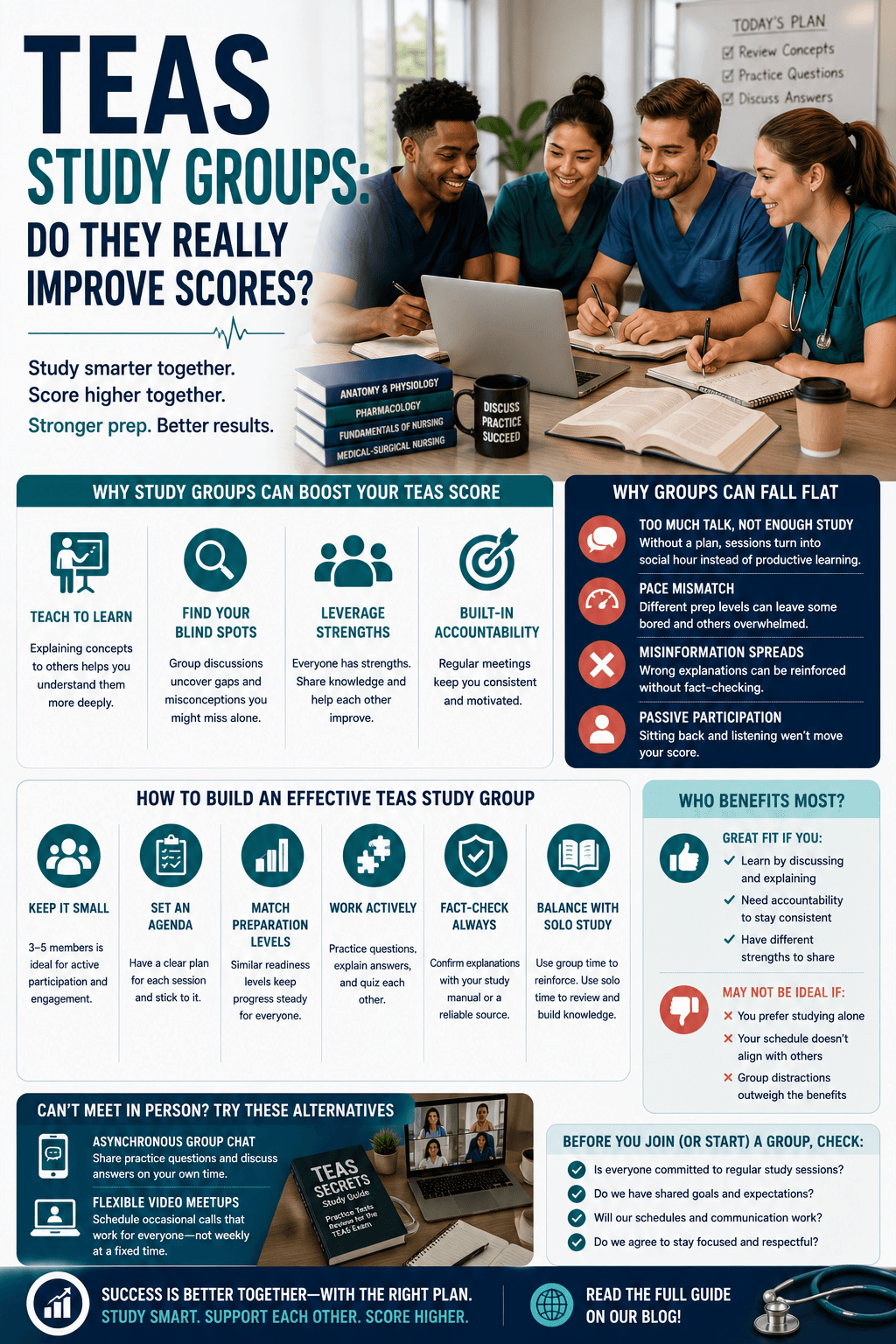
By explaining something aloud to another person, you find the holes in your own understanding that passive review would not reveal. Study groups also give classmates the opportunity to play to different strengths — someone who feels confident in chemistry might be able to help others through that section, while someone with strong grammar can return the favor elsewhere. This kind of mutual reinforcement is typically good for all parties involved, so long as the group can remain organized and focused.
How to Create a Successful Study Group
Before you begin to write content, some structural decisions can greatly affect the productivity of your group sessions.
- Limit the size of the group to a maximum of about five people (groups larger than this often have difficulty staying focused and allowing everyone to participate).
- Pick teammates with a similar level of commitment to you. Differing expectations about the level of effort and preparation can lead to frustration later on.
- Schedule meetings regularly instead of meeting irregularly and gain steady momentum throughout your preparation timeline.
- To prevent a session from straying into unrelated conversation, establish ground rules at the beginning of a session such as staying on topic and respecting everyone’s time.
Study Group Session Structured Activities
- Instead of a free for all “let’s all study together” type of session, add in specific activities to keep everyone on track and productive.
- Assign each group member a topic for that week, and each person will be responsible for teaching his/her topic briefly to the group.
- Do practice questions together, talking through why each answer choice is right or wrong, rather than just saying “correct”.
- Make a missed-question log for the group as a whole to collect questions they found difficult to review in your next few sessions.
- Do timed practice quizzes that mimic real exam conditions, then review the results together immediately after.
- Play flashcard quiz games and take turns quizzing each other on vocabulary, formulas, or key definitions.
Content Strategic Partition
One of the great benefits of a study group is to break content down based on strengths and weaknesses.
- Use the results of diagnostic practice tests to identify the strongest and weakest subjects for each member, and start early.
- Assign teaching responsibilities according to strengths so that each person can reinforce their own knowledge while helping others in that area.
- Rotate the weak areas as a group. Devote specific sessions to whatever subject the majority of the group finds most difficult.
Keeping Sessions Productive and On-Track
- Have a clear agenda for each session rather than deciding what to discuss once everyone is there.
- Set timer tasks, such as reviewing practice questions or discussing topics, so they do not go on forever.
- Rotate the person who leads each session so that the responsibility for keeping the group on track does not always fall to one person.
- End each session with a brief summary of the key takeaways and any follow-up review that needs to be done before the next meeting.
Options for Virtual Study Groups
- If meeting in person is difficult, virtual study sessions can offer similar benefits and added flexibility.
- Use video call platforms to maintain face-to-face engagement even when meeting remotely.
- Share digital flashcard decks or practice question sets in shared documents or apps, so that everyone can easily access and contribute.
- Share your screen to review diagrams, practice problems, or study guides together, in real time.
Common Mistakes to Avoid
- Allowing sessions to be social time, with no review of content in an organized fashion.
- Allowing one or two people to dominate the discussion, excluding quieter group members from participating fully.
- Not preparing for group sessions, attending a group session without having looked over the material by yourself first, which limits how much, can be accomplished in the shared time.
- Just group study without wasting individual time on your own weak areas not fully covered by the group format.
Last Thoughts
HESI study groups can be very effective and really boost your HESI prep in a good way. A study group can hold you accountable and give you a chance to solidify your knowledge by explaining things to others. The key is structure—clear goals, focused activities, and a manageable group size make the difference between a productive study session and an unfocused gathering. You can have the best of both worlds by combining your group sessions with dedicated individual study time as you prepare for your exam.