Why Pediatric Content Deserves Its Own Spotlight
Pediatric nursing content is different from many other nursing specialties because the norms are constantly changing based on the child's age and developmental stage. A normal vital sign in an infant may be abnormal in a school-age child. Developmental milestones can vary greatly over a few months in early childhood. This variability, which is dependent on age, is precisely why pediatric content deserves a dedicated, focused review and not just general nursing knowledge.
Typical Key Content Areas Covered
- HESI pediatric questions often cover growth and development, common childhood illnesses and nursing considerations for various age groups.
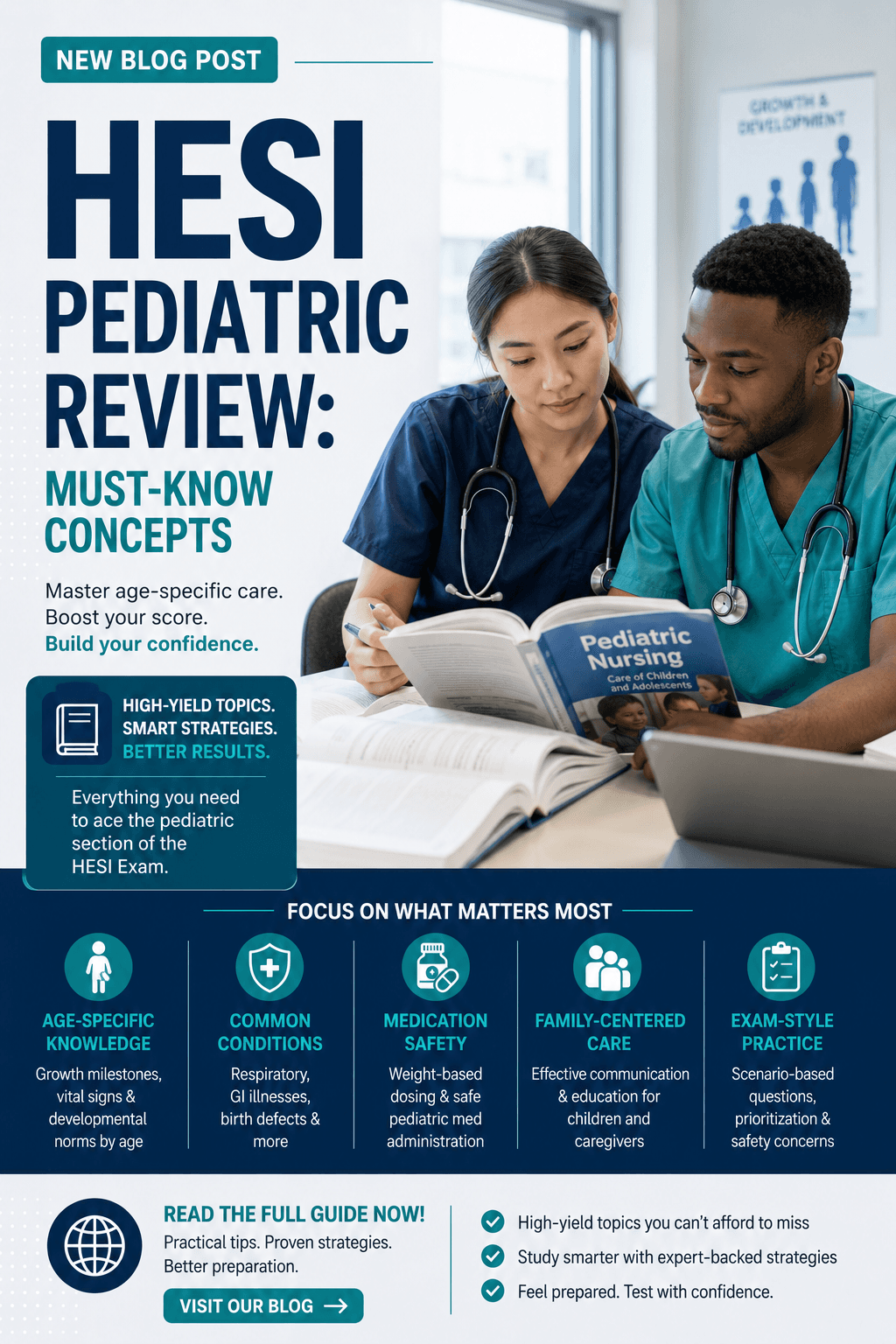
- Growth and Development Milestones Physical, cognitive, and social milestones from infancy through toddlerhood, preschool, school age, and adolescence.
- Age-specific vital sign norms – understanding how normal ranges for heart rate, respiratory rate and blood pressure vary significantly between different pediatric age groups.
- Common pediatric illnesses and conditions – respiratory infections, gastrointestinal illnesses and common birth defects.
- Pediatric medication administration—considerations in weight-based dosing and safe practices in children.
- Family-centered care concepts — involving parents and caregivers appropriately in a child’s care and education.
High Yield Topics to Review Again
- Pediatric nursing is wide in breadth of content, but a few areas tend to be present with particular frequency.
- Developmental milestones by age group because questions often test if a child’s development is in the expected range for their age.
- Immunization schedules, including general knowledge of which vaccines are given at what ages.
- Basics of growth chart interpretation - tracking and interpreting height, weight and head circumference over time.
- Watch for symptoms of breathing problems or dehydration in infants and young children.
- Assessment of pain in children, including age-appropriate pain scales for children who may not be able to describe their pain verbally.
Common Question Types You’ll Find
- Pediatric HESI exam questions are often not straight recall questions. They will test your ability to apply developmental and clinical knowledge together.
- Age-appropriate questions, such as whether a certain behavior, milestone, or vital sign is within the normal range for a child's age.
- Prioritization questions ask you to determine which pediatric patient or finding needs the immediate nursing care.
- Patient and family education questions that assess your ability to choose appropriate teaching points for parents or caregivers.
- Safety concerns, including childproofing, injury prevention and recognizing the signs of abuse and neglect.
Ways to Study Pediatrics Well
- Create age-based comparison charts. Place vital signs and developmental milestones side-by-side for different pediatric age groups for easy comparison.
- Use mnemonics for developmental milestones as they help you to recall age-specific expectations more quickly during the exam.
- Practice weight-based dosage calculations. Pediatric medication questions often involve a combination of math skills and pediatric-specific considerations.
- Review common pediatric illnesses by system, connecting respiratory, gastrointestinal, and other conditions to their typical presentations in children specifically.
- Practice questions are often in the form of scenarios as pediatric content is frequently tested as applied clinical situations rather than isolated facts.
Common Mistakes to Avoid
- Using adult norms for children, not recognizing the major differences in normal ranges between age groups.
- Underestimation of growth and development content often present in the pediatric questions
- No practice with weight-based dosage calculations, these require a bit of a different approach than your standard adult dosage problems.
- Ignoring family-centered care concepts, which are often raised in conjunction with more clinical, assessment-based questions.
Final Thoughts
Pediatric nursing content on the HESI exam requires a solid understanding of age-specific norms, developmental milestones, and how clinical care shifts across different childhood stages. By focusing on high-yield topics like developmental milestones, vital sign variations, and weight-based dosing, and by practicing with scenario-based questions rather than isolated recall, you can approach this section with focused, confident preparation. This foundational pediatric knowledge will also serve you well clinically, since these concepts remain directly relevant throughout much of nursing practice involving children and families.