HESI A2 Vocabulary: Using Word Roots and Affixes
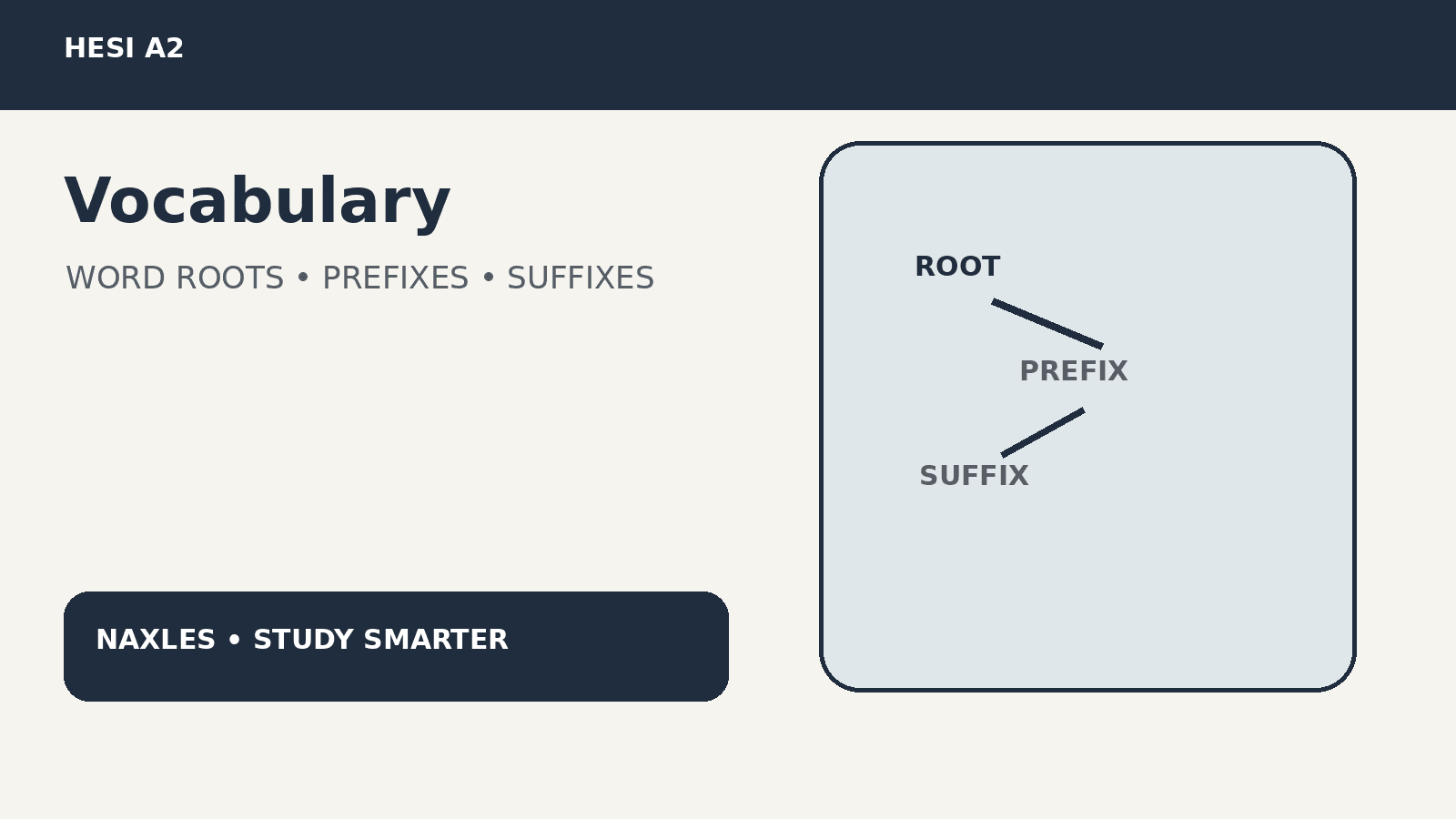
Vocabulary questions can be challenging when you encounter a word you have never seen before. Instead of trying to memorize every possible word, you can learn how to recognize word parts. Prefixes, suffixes, and roots can provide useful clues about meaning.
What Is a Prefix?
A prefix appears at the beginning of a word and can change its meaning. For example: Pre- can relate to something occurring before. Re- can indicate again. Sub- can relate to something under or below. Recognizing familiar prefixes can give you an initial clue about an unfamiliar word.
What Is a Suffix?
A suffix appears at the end of a word. Some suffixes can provide clues about the word's form or meaning. For example, -ology is commonly associated with the study of a subject. Understanding common suffixes can help you break unfamiliar terms into smaller pieces.
Word Roots
The root generally carries an important part of a word's meaning. Many academic and medical terms contain roots derived from Greek or Latin. Rather than memorizing isolated vocabulary words, learning groups of related terms can sometimes make vocabulary easier to remember.
Break Words Into Parts
Suppose you encounter an unfamiliar word. Instead of immediately guessing, ask:
- Do I recognize the prefix?
- Do I recognize the root?
- Do I recognize the suffix?
- How do those pieces fit together?
- Does the surrounding sentence confirm my interpretation?
Use Context Too
Word parts should not be your only strategy. Context clues remain important because the same word part can appear in many different words. Use the surrounding sentence to confirm whether your interpretation makes sense.
Build a Word-Part Notebook
Create sections for:
- Prefixes
- Roots
- Suffixes
- Example words
For each word part, write several examples rather than memorizing a definition alone.
Final Takeaway
Word roots and affixes can give you another way to approach unfamiliar HESI A2 vocabulary. Combine word-part knowledge with context clues and regular practice for a stronger vocabulary strategy.