How to Improve Your Vocabulary for the HESI A2
Vocabulary preparation is an important part of studying for the HESI A2. A strong vocabulary can help you understand written passages, recognize word meanings, and interpret questions more accurately. Trying to memorize hundreds of words in one sitting can be overwhelming. A more manageable approach is to study a small number of words regularly and practice using them in context.
1. Create a Vocabulary Notebook
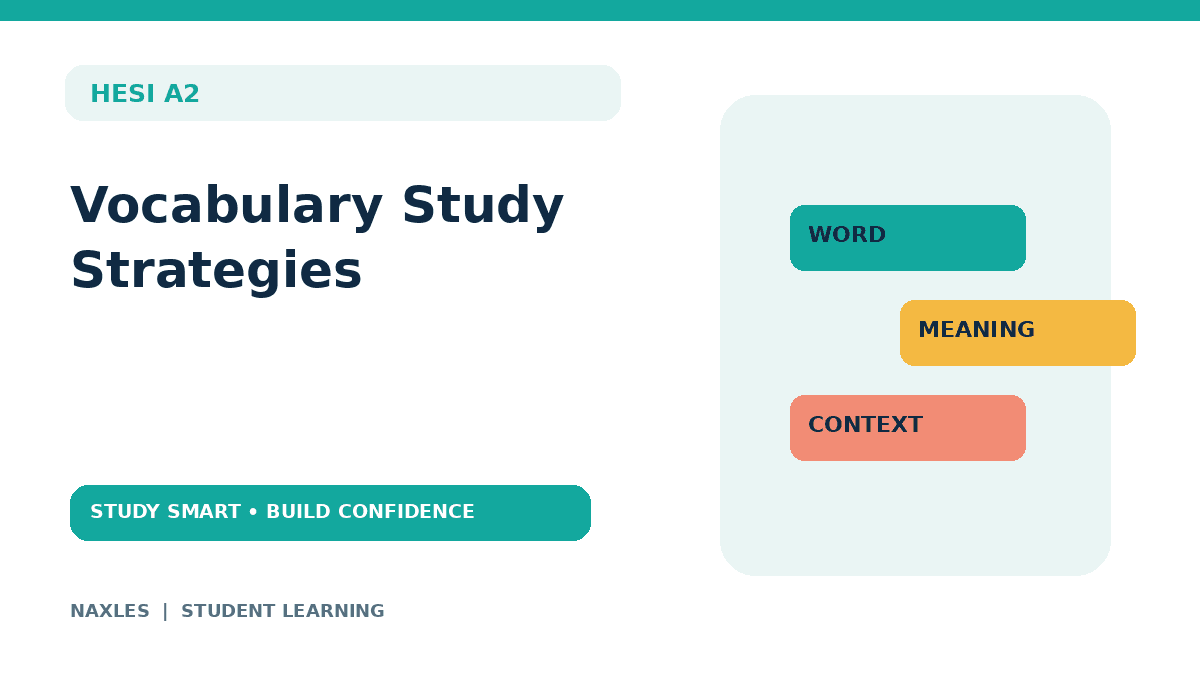
Keep a notebook or digital document where you record unfamiliar words. For each word, include: The word itself Its meaning A sentence using the word A synonym, if appropriate For example: Word: Reluctant Meaning: Unwilling or hesitant to do something. Example: The student was reluctant to ask a question during the lecture. Synonym: Hesitant. Writing your own example sentence can help you understand how a word is used.
2. Study Word Roots, Prefixes, and Suffixes
Many English words contain recognizable word parts. Learning common prefixes, suffixes, and roots can help you make sense of unfamiliar vocabulary. For example: Bio- relates to life. Pre- means before. Un- can mean not or the opposite of. -ology refers to a field of study. If you recognize a word part, it may provide a clue about the word's meaning. However, use context to confirm your interpretation because not every word follows a predictable pattern.
3. Learn Words in Context
A dictionary definition is useful, but understanding how a word functions in a sentence is equally important. Consider the word significant. In one sentence, it may mean important. In another, especially in a research context, it may refer to a result that meets a statistical criterion. Read example sentences and notice how the meaning changes with the context.
4. Use Flashcards for Regular Review
Flashcards can help you test whether you remember a word without looking at its definition. Write the word on one side and its meaning on the other. Try to explain the word before turning the card over. Review difficult words more often than words you already know. You can also mix older words with newly learned ones to avoid forgetting what you studied earlier.
5. Practice Synonyms and Antonyms
A synonym is a word with a similar meaning, while an antonym has an opposite meaning. For example: Rapid and quick are synonyms. Expand and contract are antonyms. Practice identifying these relationships. They can help you understand answer choices and recognize subtle differences between words.
6. Read a Little Every Day
Reading short passages, articles, and textbook sections can expose you to new vocabulary. When you encounter an unfamiliar word, try to understand it from the surrounding sentences before checking a dictionary. This helps you practice using context clues rather than relying entirely on memorization.
A Simple Vocabulary Study Routine
Try studying a small group of new words each day. Write down their definitions, use them in sentences, and review older words. At the end of the week, test yourself on the entire group. Focus on understanding each word rather than trying to memorize as many as possible.
Final Thoughts
Vocabulary preparation works best when it is consistent. Use a notebook, review words regularly, and practice identifying meanings from context. These habits can help you build a stronger vocabulary for the HESI A2 and other academic tasks.