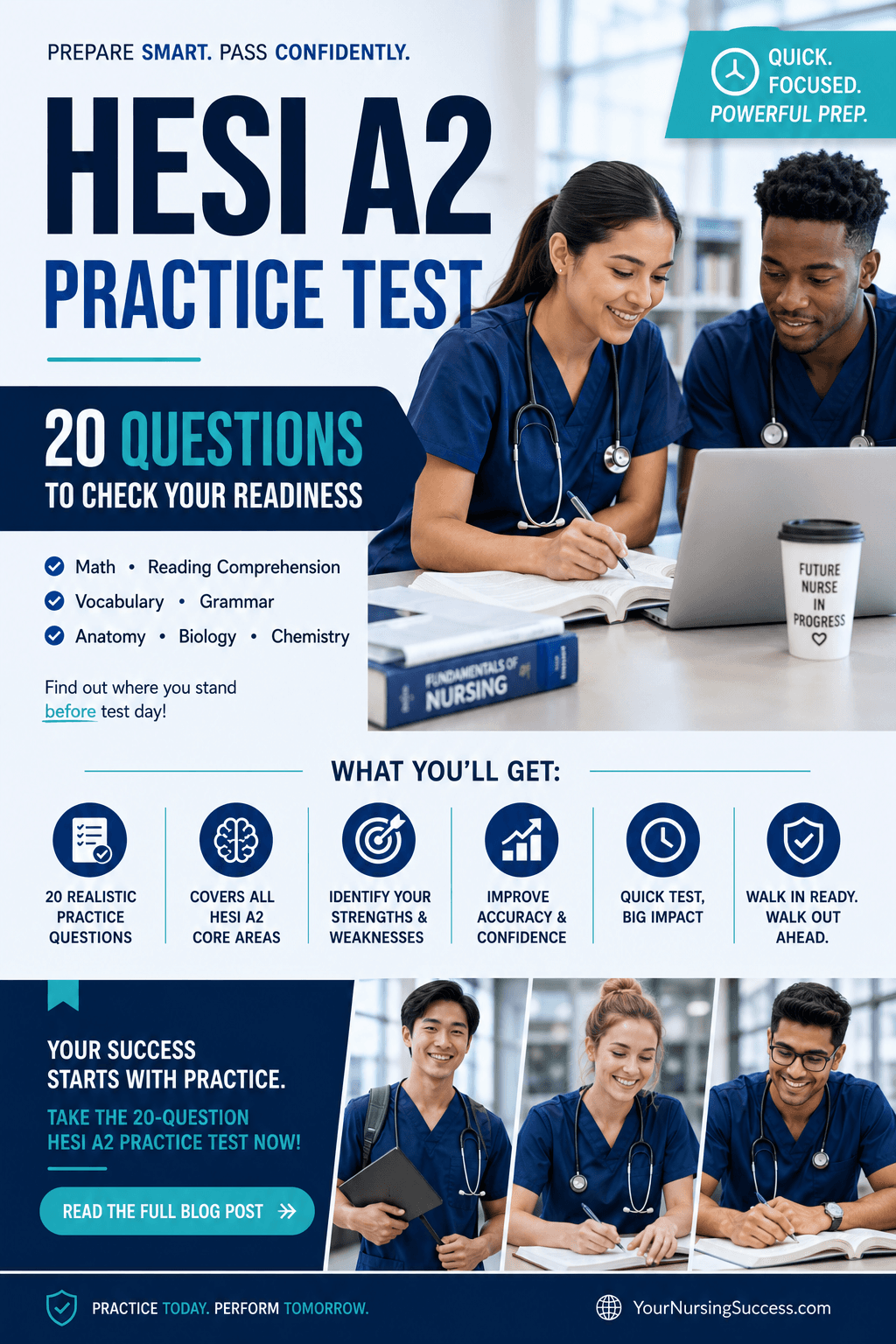
Math’s (Questions 1-5)
1. A patient is ordered 750 mg of medication. The concentration available is 250 mg/5 ml. How many ml do you give?
a) 15 mL b) 20 mL c) 25 mL d) 10mL
2. Convert 2.5 liters into milliliters.
a) 25 mL b) 250 mL c) 2,500 mL d) 25,000mL
3. One patient weighs 154 pounds. What is this weight in kilograms? (Round your answer to the nearest whole number
a) 65kg b) 70kg c) 75kg d) 80kg
4. How do you write 3/4 as a percentage?
a) 34.0% b) 43 per cent c) 3/4) 75% d) Eighty percent
5. The medication order is for 0.125 mg. The tablets are 0.25 mg each. In addition, how many tablets should be given?
a) 1/4 tab b) 1/2 tab c) 1 tab d) 2 tabs
Reading Comprehension (Q 6-8)
Passage: Frequent hand hygiene is one of the best ways to stop infection from spreading in healthcare settings. Yet healthcare workers’ compliance remains inconsistent, often because of time pressure or forgetfulness rather than a lack of knowledge.
6. What is the main point of this passage?
a) Teaching handwashing is difficult b) Healthcare workers are unaware of the infections c) Handwashing is effective but not always consistently practiced d) The only barrier to washing hands is time pressure
7. What is the reason for compliance problems, according to the passage?
a) Wrong training b) Time pressure and forgetfulness c) Lack of hand washing facilities d) Disagreement over effectiveness
8. In this passage, "compliance" most nearly means:
a) Protest b) Compliance c) Discombobulation d) Defiance
Vocabulary (Questions 9–12)
9. "Chronic" is closest in meaning to:
a) Sudden and severe b) Chronic c) Uncommon d) Easy to cure
10. Select the word that is spelled correctly:
a) Grab b) Find c) Receve d) Receeve
11. "Malignant" most nearly means:
a) Benign b) Harmful or Malignant c) Temporary d) Minor
12. “Ambiguous” most nearly means:
a) Clear b) Uncertain or unclear c) Confident d) Straight
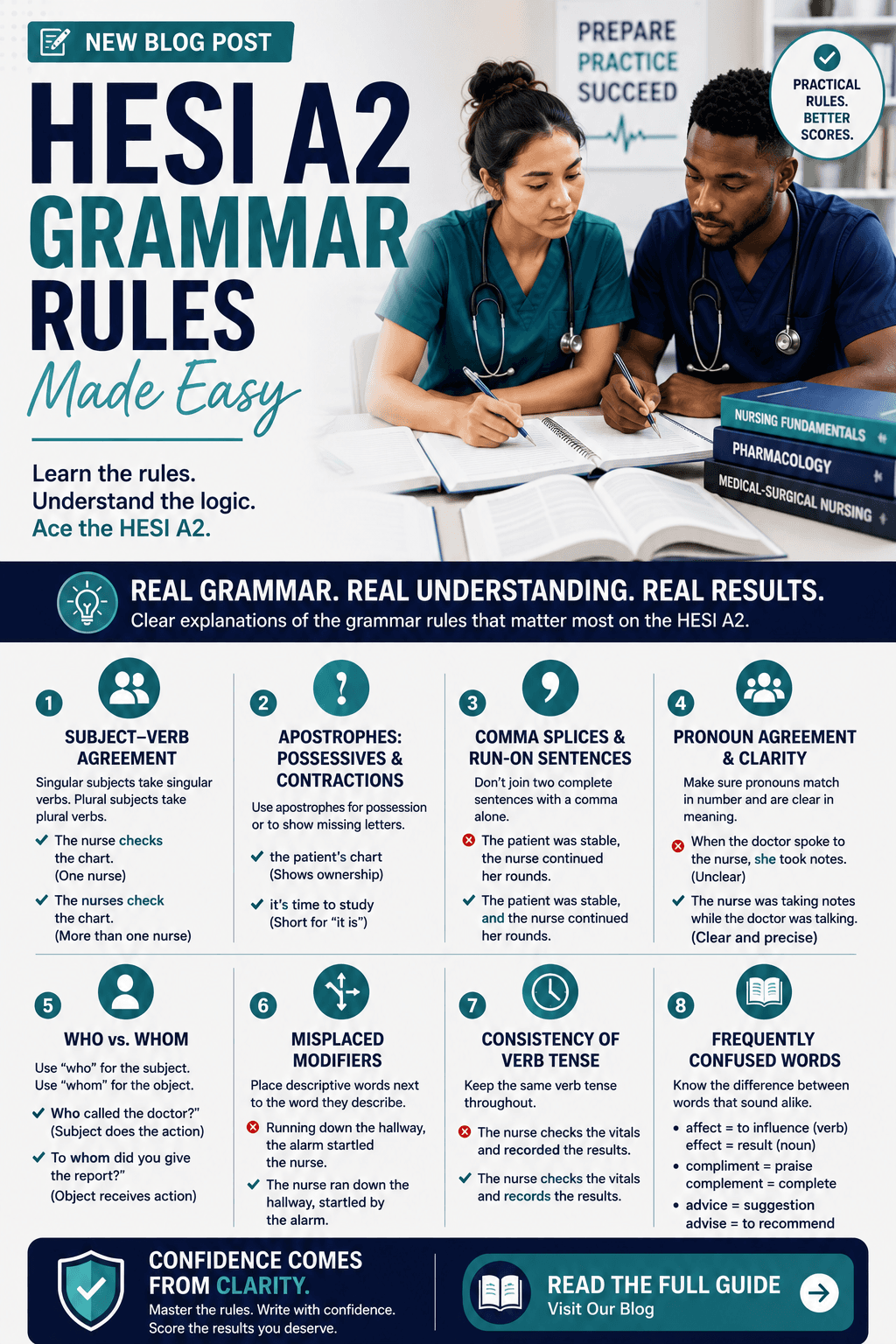
Grammar (Questions 13-15)
13. Select the correct sentence.
a) The nurse or doctor was not available. b) The doctor or the nurse was not available. c) The nurse and the doctor weren't there. d) The nurse and the doctor were not present.
14. Fill in the correct word: The patient’s condition ___improved since yesterday.
a) have b) has c) Having d) Had
15. Find the mistake: "It's important to check the patient's chart before giving medication."
a) It should be Its b) chart should be charts c) checking should be checking d) No mistake
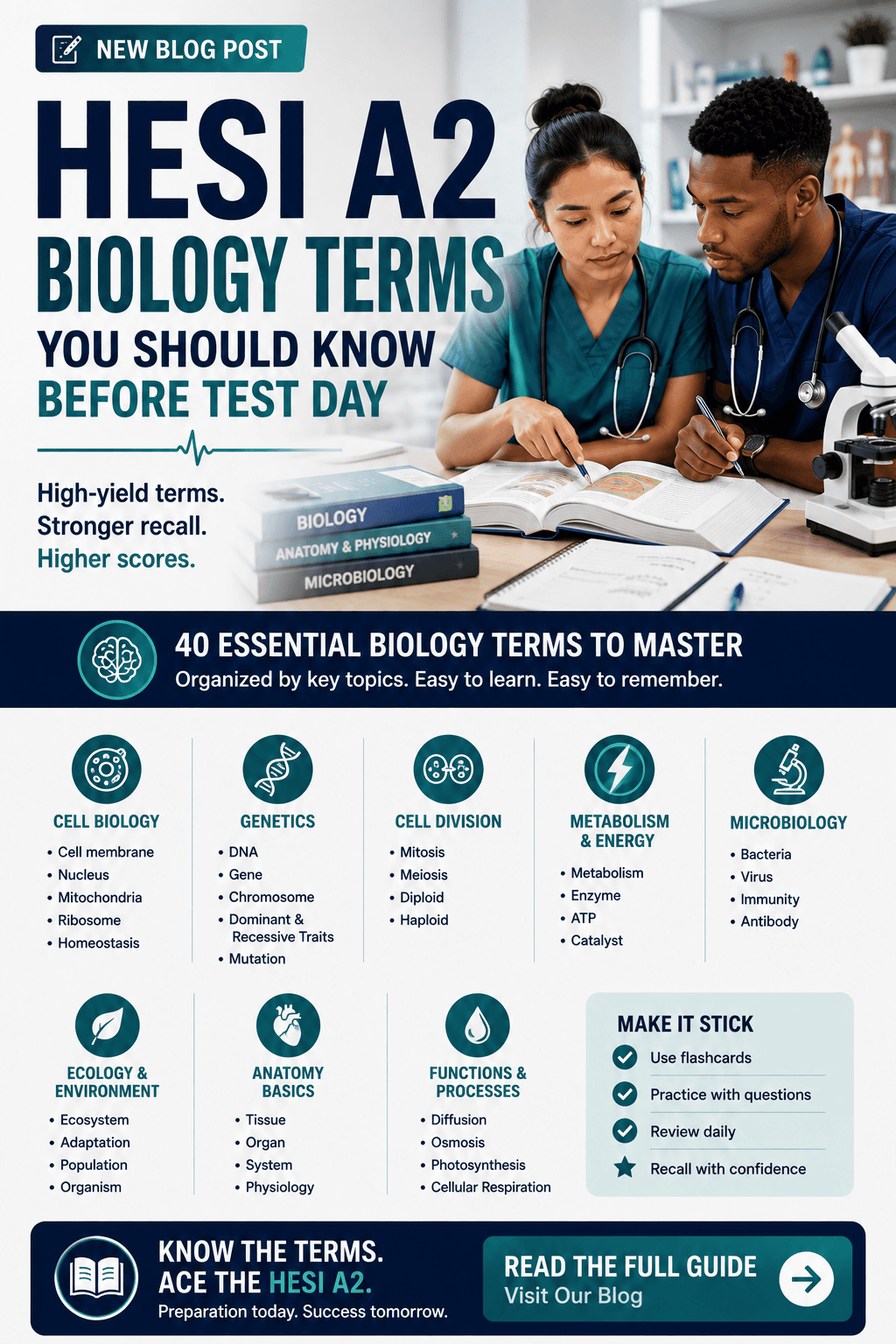
Anatomy, Biology and Chemistry (Questions 16-20)
16. Which organelle produces energy in a cell?
a) Nucleus b) Mitochondrion c) Ribosome d) Golgi body
17. Blood flows from which part of the heart to the lungs?
a) Left atrium b) ventricle left c) Right atrium d) Left ventricle.
18. A solution with a pH of three is:
a) Neutral b) Basic c) Acidic d) Unstable
19. What is the process in which one cell divides into two identical daughter cells?
a) Meiosis b) Mitosis c) Osmosis d) Spreading
20. What system is primarily responsible for filtering waste products out of the blood?
a) Pulmonary b) Digestive c) Renal/urinary d) Endocrine
Answer Key
B - 70 kg C - 75% B - 15 mL C - 2,500 mL B – 1/2 tablet C B B B B B B B B A B D C B C
How to Mark Yourself:
18–20 correct: You’re in good shape overall – concentrate on cementing any missed topics with your remaining prep.
14–17 correct: You are on the right track, but a few weeks of focused review would help solidify weaker areas.
Below 14 correct: Try a longer period of preparation, beginning with the subjects where you got the most questions wrong.
Conclusion
This short practice set is intended as a quick pulse check, not a full diagnostic – but it is a good place to start when trying to figure out which categories need more attention before your official HESI A2 exam. Use your results here to help plan your study time and combine this with full-length practice tests as your exam date approaches.