What Is the HESI A2 Personality Test?
Personality Profile (This is a self-assessment section that appears in some versions of the HESI A2 exam. This is not a test of your academic knowledge such as math or anatomy. These are a series of questions designed to uncover general personality characteristics and tendencies such as how you approach problem solving, how you deal with stress and how you behave in a group or team environment.
Unlike the academic portions of the HESI A2, there are no “right” answers here. You are just answering truthfully when asked or told something about your likes, dislikes, routines, and habits.
What is it on HESI A2?
This section is part of nursing programs for a very specific reason: nursing is a profession that requires much, much more than academic knowledge. This requires good interpersonal skills, resilience under pressure, effective teamwork and the ability to communicate compassionately with both patients and colleagues.
The personality profile provides nursing programs with a look at the typical tendencies and working style of a potential student, which can be helpful in advising. It does not directly determine admission as your academic scores typically do.
Why the Personality Profile Doesn’t Get Scored like the Other Sections
This is typically the most reassuring piece of information to nervous test takers. The personality profile is typically not graded pass/fail like the math, reading, vocabulary, and science sections, and it typically does not factor into your admission decision like your academic section scores do.
There are a few reasons for this differentiation
- There is no one ‘right’ personality type for nursing, as successful nurses come from a broad range of personality styles and work preferences.
- Self-assessments by definition are subjective and based on one’s perception of self, not an objective skill that can be measured or tested.
- The section is for insight, not evaluation – many programs use it as a tool to better understand incoming students, not as a gatekeeping mechanism.
- There is no reason to try to guess what personality type a nursing program is “looking for.” It is simpler and more useful to answer honestly than to try to strategically respond in a particular way.
What Does the Personality Profile Typically Include?
Although the precise formats may differ slightly between exam versions, personality profile sections usually look at things like:
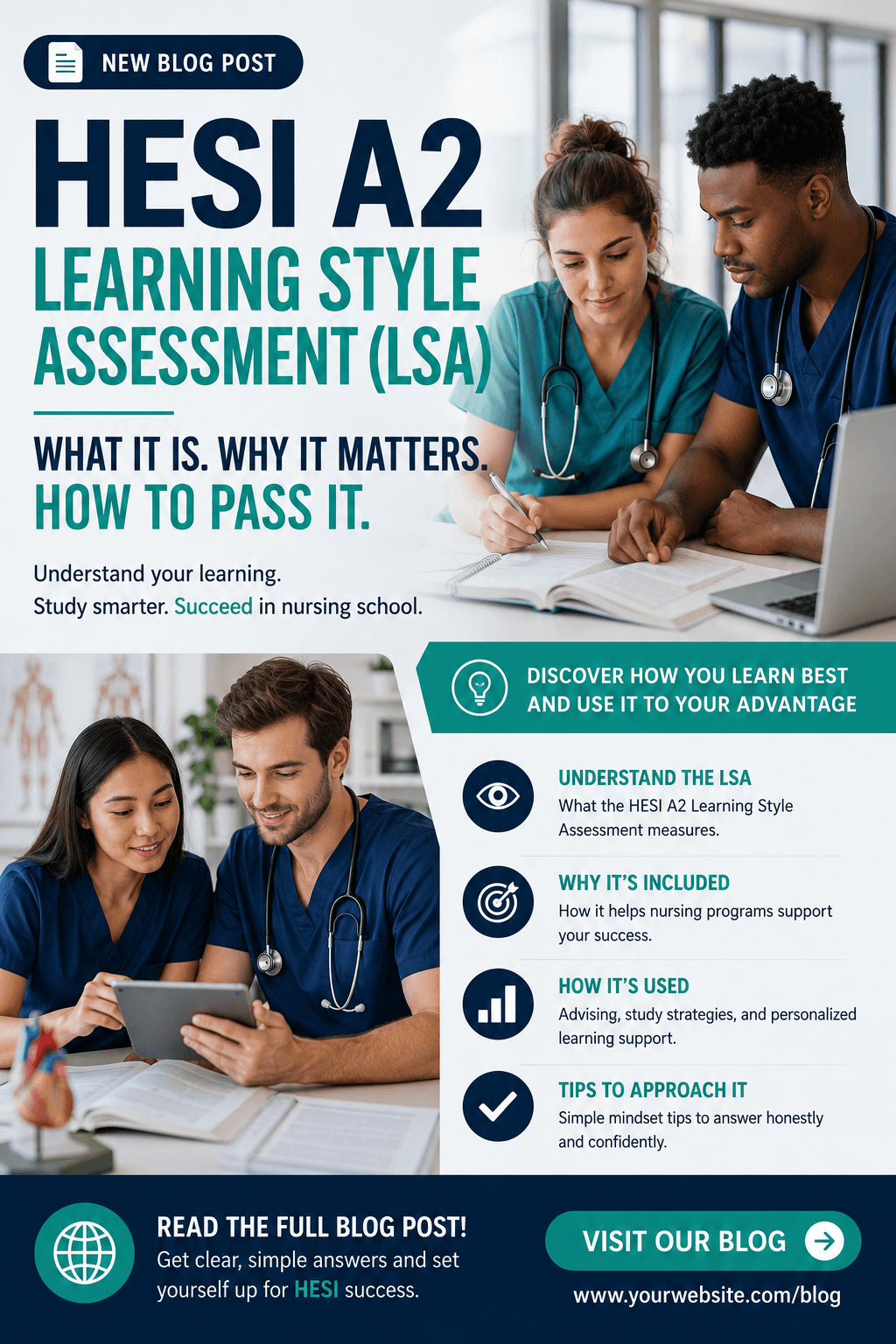
- Learning preferences – do you learn best visually, auditory or hands-on?
- Stress response tendencies - how you typically react to pressure, deadlines or unexpected challenges.
- Interpersonal style – do you prefer independent or collaborative, team-based work environments?
- Organizational and time management habits – general propensities to plan, structure, and follow through.
- Style of communication – how you normally speak and interact with people in professional or academic contexts.
How Nursing Programs Might Use This Data
The personality profile is not scored competitively. Some programs use the insights derived from the profile in non-punitive ways that support the student.
- Academic advising — personality and learning style results are used by some programs to make more personalized study strategy recommendations.
- Identifying support resources – If the results suggest that a student may need additional structure or stress-management resources, some advisors might be more proactive by identifying relevant support services for the student.
- General cohort insight — some programs use aggregated, anonymized personality data just to better understand the overall learning styles represented in an incoming class.
It is important to note that the use of this data varies widely from school to school and some programs may not be actively using it beyond simply administering it as part of the standard HESI A2 battery.
Should you prepare for the personality profile?
- There are no right or wrong answers, so you really do not need to “study” for this part of the test as you do for math or science material. A few simple mindset tips though can help you to approach it smoothly.
- Answer honestly, not strategically. There is no need to try to guess what a program “wants” to see, and in fact, this can create even more stress than just responding naturally.
- Do not overthink individual questions. This section is to catch general tendencies, not to be analyzed word by word like an academic question.
- Get it over with quickly. There is no chance of a “wrong” answer so do not spend too much time overthinking each answer.
- Keep in mind that it is not as important as your academic performance. Spend the majority of your mental energy and preparation time on the portions that are graded competitively.
A few misconceptions tend to circulate among nursing students regarding this section.
- Myth: If your personality profile result is "bad”, you will be rejected from a nursing program. Reality: This section is typically not compared competitively and therefore is usually not considered for admission decisions as academic scores are.
- Myth: There is a specific personality type to be in nursing you should try to emulate in your answers. Reality: Nursing is big enough for all kinds of personality styles and honest answers are more helpful than strategic answers.
- Misconception: You have to study or prepare specifically for this section. real life: this is a self-assessment not a test of knowledge, so there is no academic content to prepare for in advance
Final Thoughts
The personality profile section of the HESI A2 can feel like a surprise or a puzzling section on an otherwise academic exam, but understanding why it is included helps put it in perspective. It is not a scored, competitive hurdle but is intended to provide nursing programs with more information about how incoming students work and learn — information that is generally used in a supportive way rather than as a gatekeeping measure. Having this in mind, you can approach this section with a lot less stress than the rest of your HESI A2 exam, answering honestly and moving on to focus your energy where it really matters: the academically scored sections that directly impact your admission outcome.