GED Social Studies: Understanding Cause and Effect
History and social studies frequently involve relationships between events. One event may contribute to another, while a single event can have multiple causes or consequences. Understanding these relationships can help with GED Social Studies questions.
What Is a Cause?
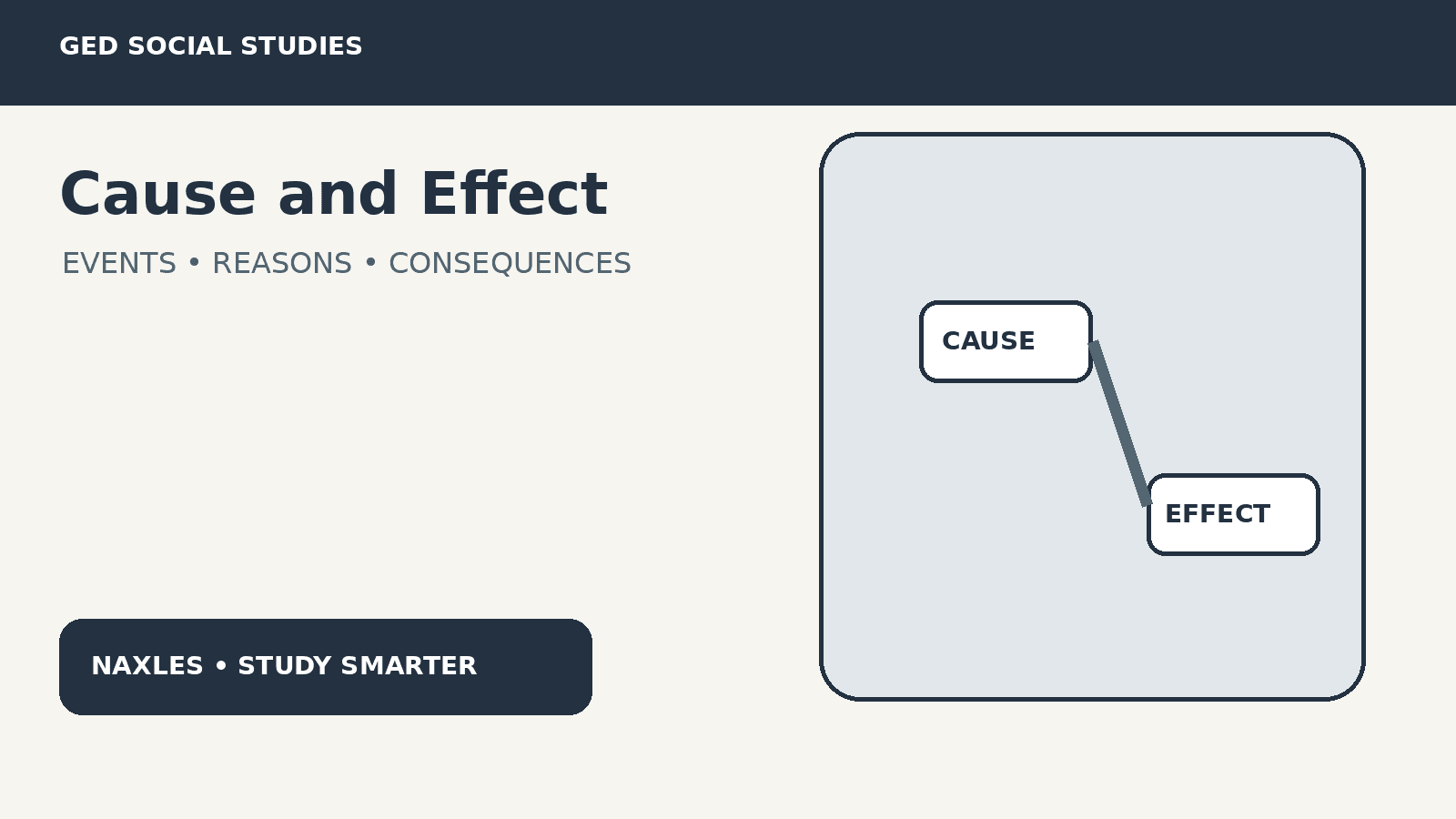
A cause is a factor that contributes to an event or outcome. For example: Cause → Economic conditions changed. This could contribute to another historical development.
What Is an Effect?
An effect is a result or consequence. In a simple relationship: Cause → Event → Effect The effect happens as a result of one or more preceding factors.
One Event Can Have Multiple Causes
Historical events rarely have only one cause. For example, a major political change might be influenced by:
- Economic conditions
- Political disagreements
- Social movements
- International events
- Public opinion
When reading a passage, look for all the factors the author identifies.
Effects Can Also Lead to More Events
A historical event can become the cause of something else. This creates a chain: Cause → Event → Effect → New Event Understanding this chain can help you organize complex historical information.
Look for Signal Words
Words that can indicate cause and effect include:
- Because
- Therefore
- As a result
- Consequently
- Due to
- Led to
- Caused
- Resulted in
These words can help you identify relationships within a passage.
Don't Confuse Sequence With Causation
Two events occurring one after another does not automatically mean one caused the other. Ask whether the passage provides evidence of a relationship.
Use the Passage
GED questions often provide enough information to identify the relevant relationship. Read carefully before relying on outside historical knowledge.
Final Takeaway
When studying GED Social Studies, look beyond simply memorizing dates. Practice identifying why events happened, what happened as a result, and how one event can influence another.