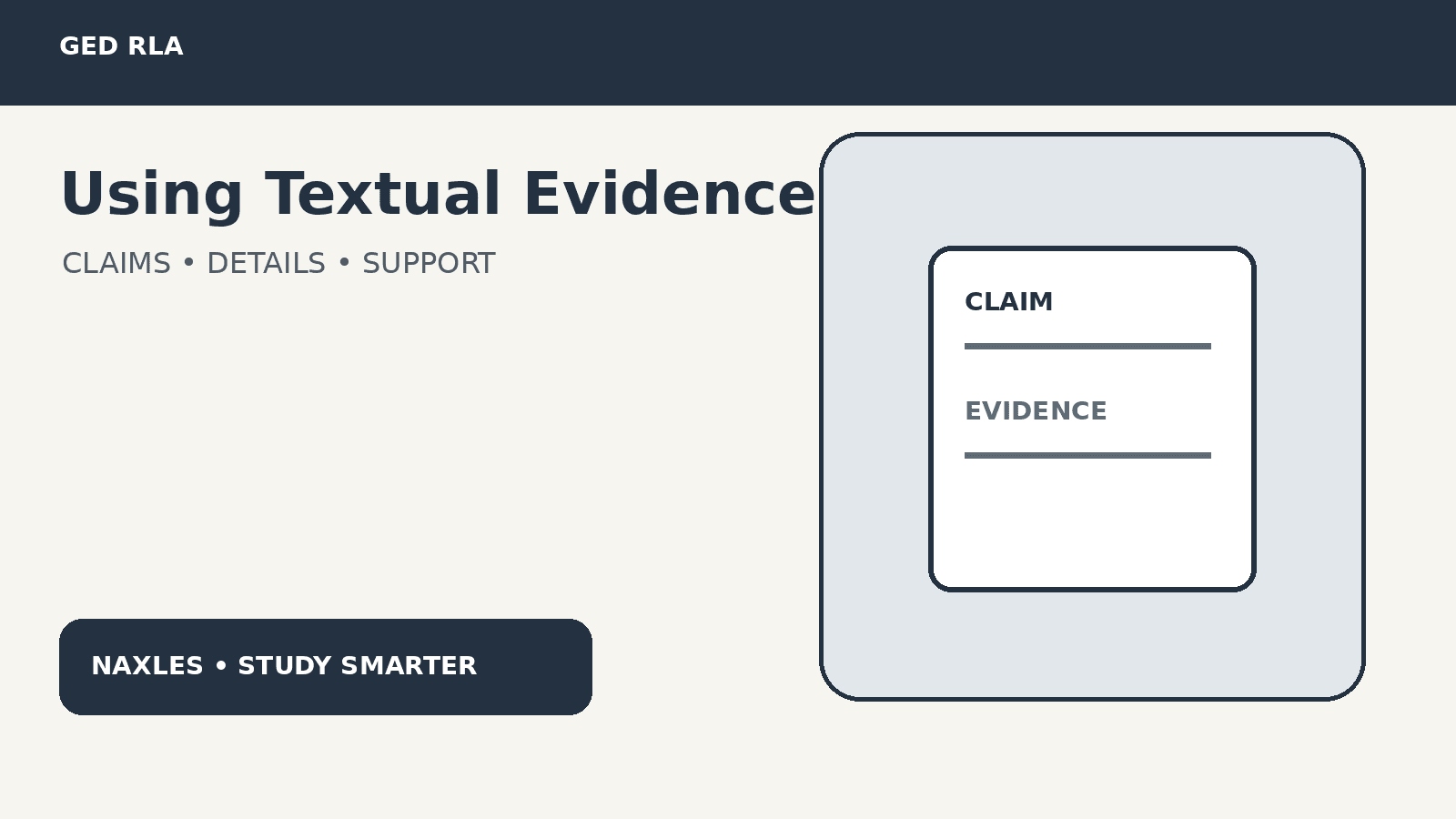
GED RLA: How to Use Textual Evidence
Many GED RLA questions require you to base your answer on information contained in the passage. That means you should avoid choosing an answer simply because it sounds reasonable. Instead, look for textual evidence.
What Is Textual Evidence?
Textual evidence is information from a passage that supports an interpretation or claim. It can include:
- Examples
- Facts
- Descriptions
- Statements
- Statistics
- Explanations
Identify the Claim
First determine what the author is arguing or explaining. For example: Exercise can improve overall well-being. That is a claim. You then need to look for information in the passage that supports it.
Find the Supporting Details
Supporting details might explain how or why the claim is true. If the passage provides research results, examples, or explanations connected to the claim, those details may serve as evidence.
Avoid Outside Knowledge
One of the most important habits for reading tests is separating what you know personally from what the passage actually tells you. You may know something is true in the real world, but if the question asks what the passage supports, your answer should be based on the text.
Compare Answer Choices With the Passage
For each possible answer, ask: “Where in the passage is this supported?” If you cannot identify supporting information, be cautious about choosing that answer.
Watch for Overstatements
An answer choice may contain part of an idea from the passage but make it much stronger. For example, a passage might say: Some students prefer online learning. An answer claiming: All students prefer online learning. would go beyond the evidence.
Practice With Evidence
After reading a passage, write down: Claim → Evidence → Explanation This helps you understand how the author's ideas are connected.
Final Takeaway
Strong GED RLA readers do not simply look for answers that sound correct. They connect answer choices directly to evidence in the passage and avoid claims that go beyond what the text supports.