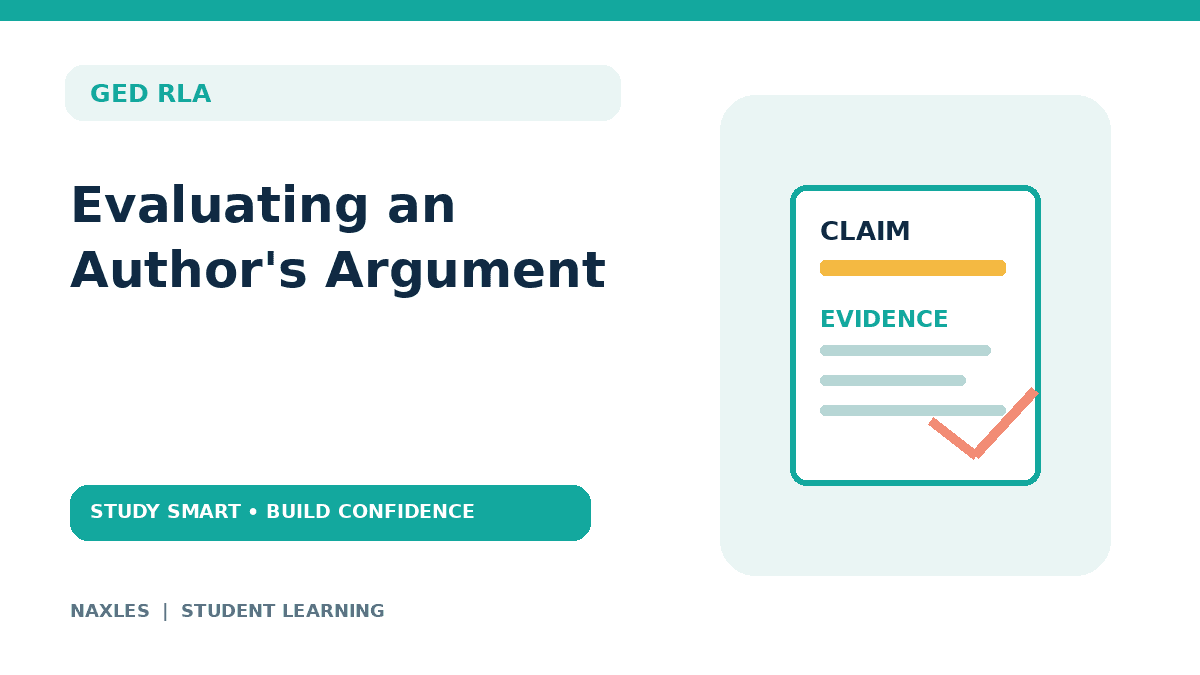
GED RLA: How to Evaluate an Author's Argument
The GED Reasoning Through Language Arts test includes reading and analyzing written information. Some passages present arguments in which an author makes a claim and supports it with reasons or evidence. To evaluate an argument, you need to understand what the author is saying and examine how the author supports that position. You should distinguish between the author's opinion, the evidence provided, and conclusions that the evidence actually supports.
1. Identify the Author's Main Claim
A claim is the main point an author wants readers to accept. For example, an author might argue that a school should extend its library hours because students need more time to study. The claim is that the school should extend library hours. The reason might be that students need additional study time. When reading an argumentative passage, ask yourself what the author wants the reader to believe or do.
2. Find the Supporting Reasons
Authors usually provide reasons to explain why their claims should be accepted. For example, an author supporting longer library hours might argue that students have different schedules, that some students cannot study at home, or that additional library access could help students prepare for exams. Identify the reasons that directly support the main claim. Not every sentence in a passage will have equal importance.
3. Examine the Evidence
Evidence is the information an author uses to support a claim. It may include statistics, examples, research findings, expert statements, or specific facts. Ask yourself whether the evidence is relevant to the claim. Also consider whether it is specific enough to support the author's point. For example, a statement that “many students prefer longer library hours” is not as informative as a survey that explains how many students were asked and what they reported.
4. Recognize Assumptions
An assumption is something an author accepts as true without fully proving it in the passage. Imagine an author argues that extending library hours will improve students' grades. The argument may assume that students will use the additional time to study and that the extra study time will help them perform better. When reading, consider whether the author has provided evidence for important parts of the argument or simply expects readers to accept them.
5. Distinguish Facts From Opinions
A fact is a statement that can be checked against evidence. An opinion expresses a belief, judgment, or interpretation. For example: “The library closes at 6 p.m.” is a factual claim that can be verified. “The library closes too early” is an opinion or evaluation. An argument may contain both facts and opinions. Identifying the difference can help you understand how the author builds a case.
6. Look for Relevant Counterarguments
Some authors acknowledge opposing views and explain why they disagree with them. For example, a school may be concerned that longer library hours would increase operating costs. An author supporting the change might respond by explaining how the benefits could justify the expense. When a passage includes an opposing view, pay attention to how the author responds. This can help you understand the structure of the argument.
7. Answer Questions Using the Passage
When answering GED RLA questions, avoid relying only on your personal opinion about the topic. Return to the passage and identify the claim, reasons, and evidence. Choose the answer that best reflects what the author actually states or what can reasonably be concluded from the text. If an answer introduces information that the passage does not support, be cautious about selecting it.
How to Practice
Choose a short opinion article or argumentative passage. Write down the author's main claim, two supporting reasons, and the evidence provided. Then ask whether the evidence supports the claim and whether the author has left any important assumptions unexplained.
Final Thoughts
Evaluating an argument involves more than agreeing or disagreeing with an author. Identify the main claim, examine the supporting evidence, and consider whether the reasoning is clear. Practicing these skills can help you read argumentative passages more carefully.