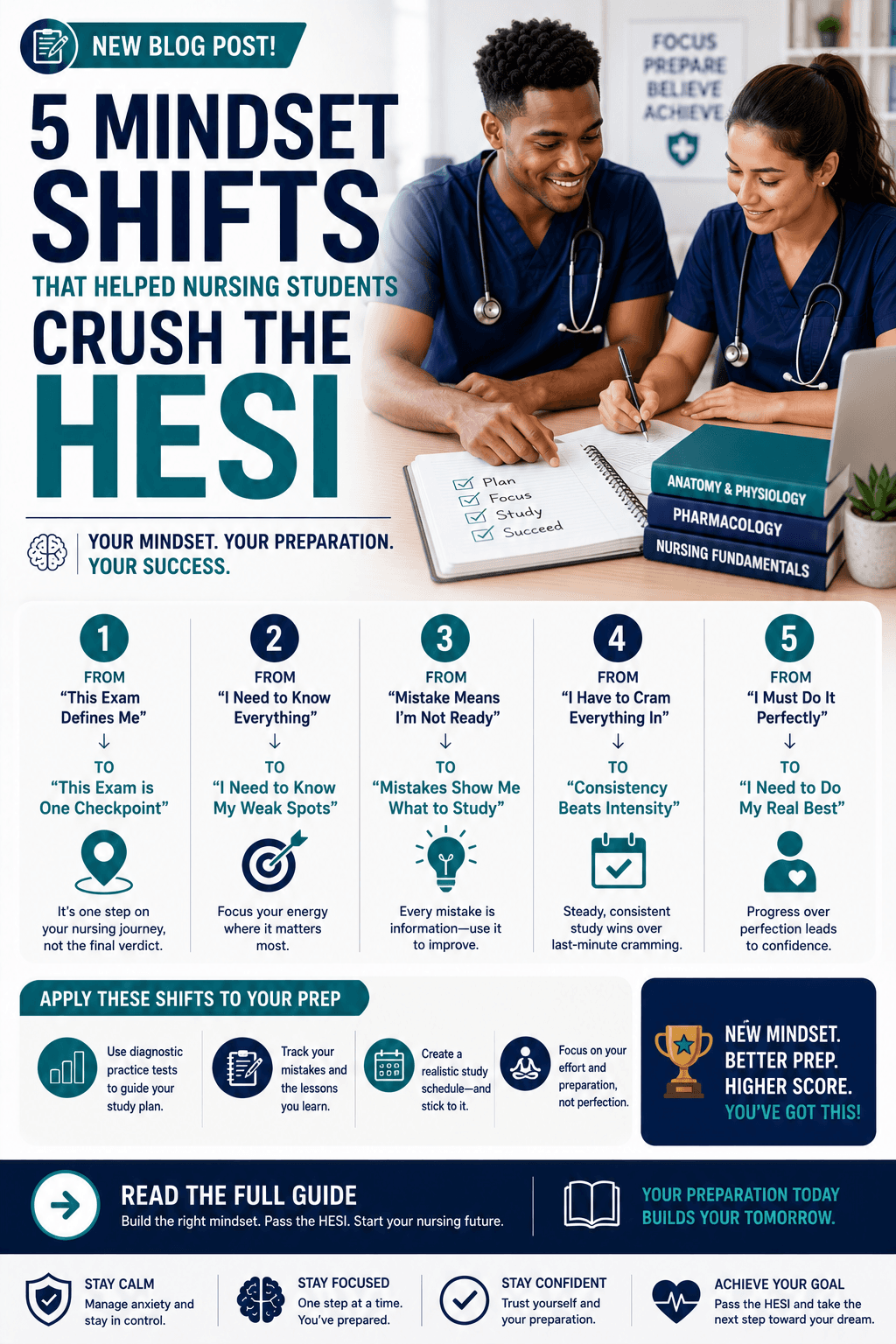
From “This Exam Defines Me” to “This Exam is One Checkpoint”
One of the most frequent sources of undue pressure is to view the HESI exam as one all-or-nothing judgment of your ability to become a nurse. Students who enter the test with more confidence are more likely to see it as one stop on a far longer educational road than as a final assessment of their ability.
This shift matters because most nursing programs offer remediation and retake options specifically because they understand that one test does not tell the whole story about a student’s potential. Knowing this can relieve unnecessary pressure and help you focus more clearly on the material itself, rather than the fear of one particular outcome.
“I Need to Know Everything” to “I Need to Know My Weak Spots
Many students make the mistake of trying to review everything equally. This leads to a shallow understanding of everything rather than a deep understanding of the topics that matter the most. Students who do well tend to move to a more targeted approach, focusing on their particular weak areas based on diagnostic practice test results, rather than treating all content as equally uncertain.
This change makes studying a clear, doable plan based on real data about where you need to improve most, instead of a daunting, unfocused chore.
Mistake Means I am Not Ready to Mistakes Show Me What to Study
It is normal to be a little disappointed after getting several practice questions wrong, especially on a topic you thought you had nailed. However, the students who eventually succeed usually do so because they reinterpret mistakes as information, not as signs of inadequacy.
A wrong answer does not discourage this mindset; instead, each mistake is taken as a particular clue that tells you what specifically needs to be studied more. This change reduces frustration in the process of study, and makes practice sessions actually more productive.
From “I Have to Cram Everything In” to “Consistency Beats Intensity”
It is tempting to think that success comes from longer, more intense study sessions, especially when time is short. Successful students tend to move from a focus on intensity to valuing consistency, realizing that consistent, focused study sessions are usually more effective for retention than infrequent marathon cramming sessions.
This also helps to prevent burnout, allowing students to keep a steady pace throughout their studying, and not risk exhaustion right before the exam itself.
From “I Must Do It Perfectly” to “I Need to Do My Real Best”
One of the most powerful mindset shifts is to let go of the pressure to perform perfectly. Thinking about doing perfectly can create anxiety and even cloud clear thinking on the test itself.
Students who are more comfortable coming to the HESI usually lean towards doing their real best with the preparation they put in; knowing that steady effort over time is what gets them a solid result, not expecting every question to be perfect.
How to Apply These Changes to Your Own Prep
- Check your diagnostic practice test results often. Base your study plan on real data, not the general anxiety of “everything.”
- Maintain a simple journal of mistakes made and what lessons were learned from them, emphasizing the fact that mistakes are instructive, not demoralizing.
- Instead of cramming in a few last minute study sessions just before your exam, create a regular and realistic study schedule.
- Prior to the exam, remind yourself of the preparation you have done. Focus on the effort you have put in, not the expectation you will perform perfectly.
Concluding Remarks
Subject knowledge is obviously critical but your attitude going into your HESI prep and on test day can play a huge role in your overall experience and performance. Think of the exam as a checkpoint. Pay attention to your weak points. Use errors as information. Steady studying is better than last minute cramming. Drop the pressure to be perfect. Approach your HESI exam with the same confidence that has helped countless nursing students succeed before you.