Why this is more complex than it seems
Admission policies for nursing are decided at the institutional level, not by a single national standard. That implies two schools in the same location, or even in the same university system, can have completely different entrance exam policies. Some institutions need only the TEAS while others accept the HESI A2 as a substitute, some utilize both depending on the particular track (ADN vs. BSN, for example), and a smaller number of programs dismiss standardized testing altogether based on GPA or previous coursework. Much of the confusion here arises from treating " nursing school " as a monolithic entity .
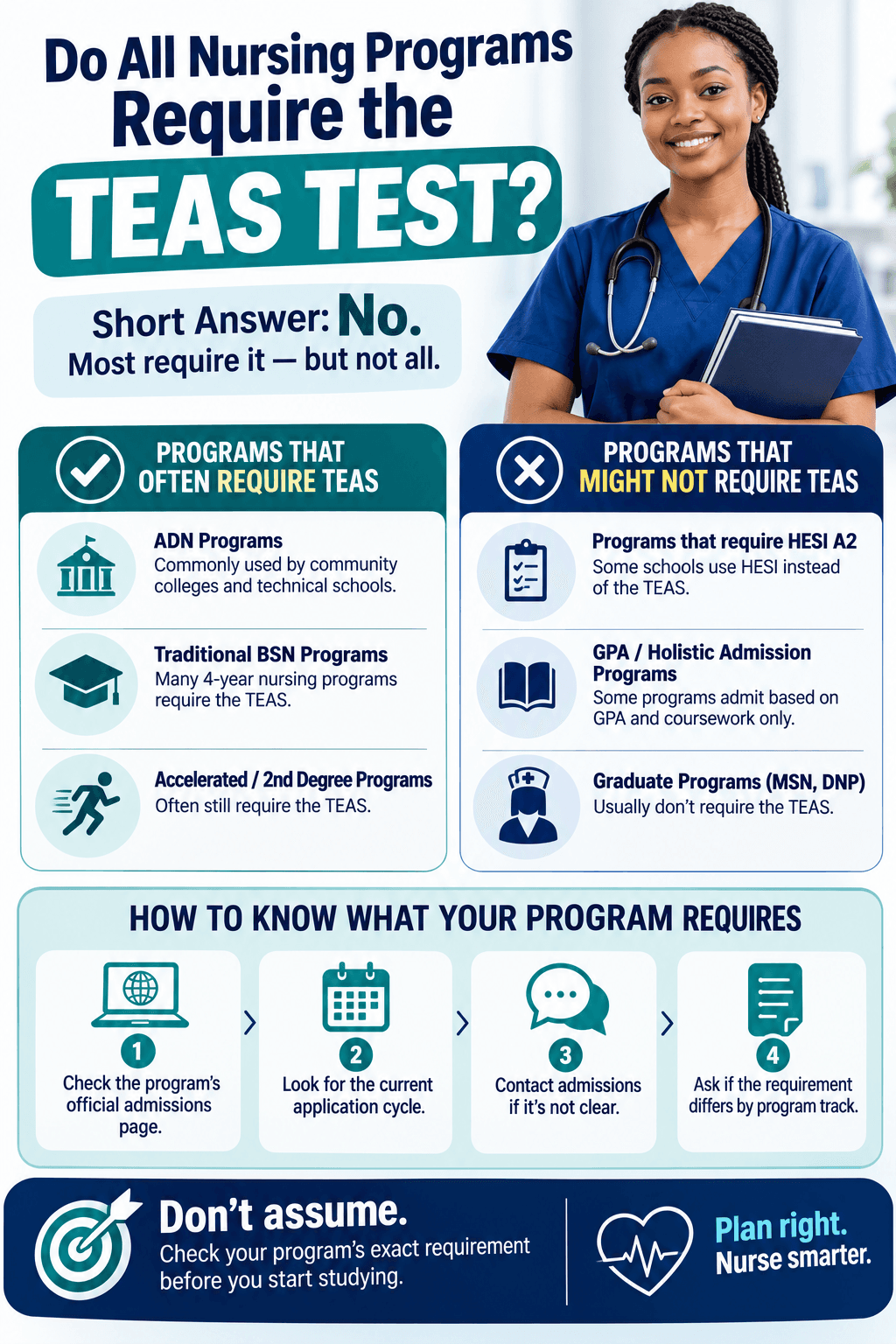
Programs That Require the TEAS
The TEAS continues to be one of the most popular entrance exams used in nursing admissions, particularly by:
- Associate Degree Nursing (ADN) programs. Many community college and technical school ADN programs use the TEAS as a routine part of their admission process and often post a minimum composite score.
- Traditional BSN programs Many four-year Bachelor of Science in Nursing programs also require the TEAS for entrance into a competitive admissions process that may include GPA and necessary coursework requirements.
- Accelerated and 2nd Degree programs. Applicants for an accelerated BSN program after completing a prior bachelor's degree in another discipline often still must take the TEAS despite completing previous undergraduate coursework.
Programs That Might Not Need the TEAS
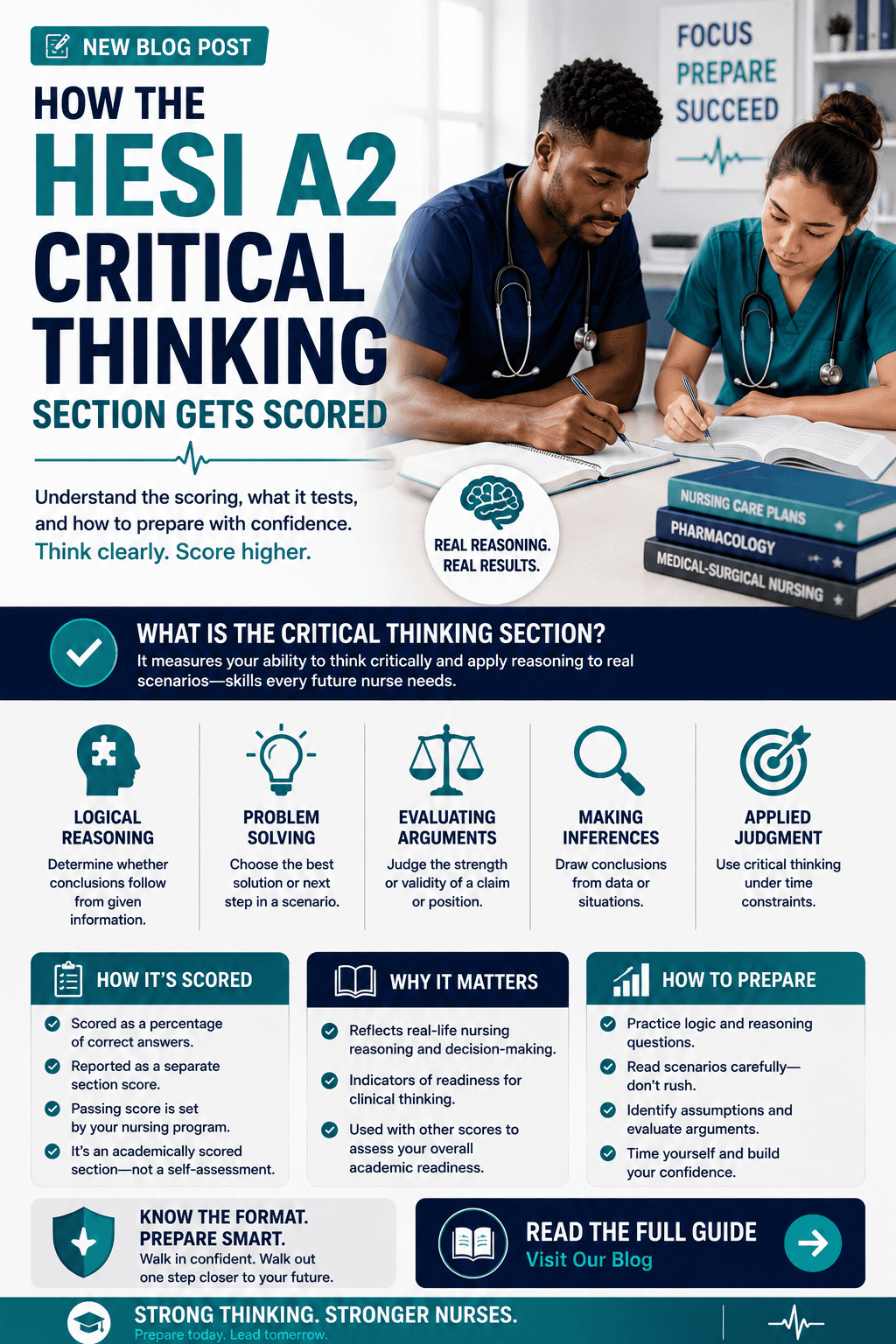
Some programs require the HESI A2. Some schools use the TEAS as their standardized entry exam instead of the HESI A2. A lesser number permit applicants to submit either score, depending on which test they have already taken.
- Admission programs based on GPA or holistic. the nursing programs, especially the RN-to-BSN bridge programs, or those with very strict GPA and prerequisite criteria, do away with standardized testing altogether, using academic transcripts and prior performance.
- Graduate entry and advanced practice programs. Typically, programs beyond the entry-level – such as MSN or DNP tracks for already licensed nurses – won’t require the TEAS, because admittance is determined by professional licensure, clinical experience, and graduate-level academic qualifications.
- Programs with policy changes in recent years. Entrance exam requirements are not fixed forever. In recent admissions cycles, some institutions have begun to shift away from standardized testing in favor of a more holistic assessment process, while others have added or revised criteria. Some policies that were in place a year or two ago may be no longer in place.
How to Confirm the Need for Your Specific Program
- Go straight to the program’s admissions or requirements page. This is the most dependable source as it reflects the program's current, official policy and not secondhand information from forums or general search results.
- Specifically look for the current application cycle. Requirements fluctuate from year to year, so be sure you’re looking at information for the admissions cycle you’re really applying for, not an archived or obsolete page.
- If you have questions, contact an admissions advisor. If the test requirement is not stated directly, or if the page states TEAS and HESI without specifying which exam is required for your particular track, a straight query will steer you away from preparing for the wrong exam.
- Ask about differences in the track. Multiple entry points If a school offers traditional, accelerated, or LPN-to-RN bridge programs, inquire if the exam requirement is different for each track—it often is, even within the same school.
If you are applying to many programs with varying requirements
- Many nursing applicants apply to many nursing programs simultaneously to increase their chances of being accepted, which may necessitate managing different exam requirements simultaneously.
- Make a comparison list early on. Before your study plan starts, write down each school you are applying to, the exact exam criteria, minimum score, and application date. This prevents the typical problem of discovering a mismatch of requirement too late to plan for it adequately.
- Focus on the test required for your first choice or earliest-deadline program. If your programs have several examinations, concentrate your initial studying on the exam you need to take first, but you may then always change your study schedule as later deadlines come up for other exam needs.
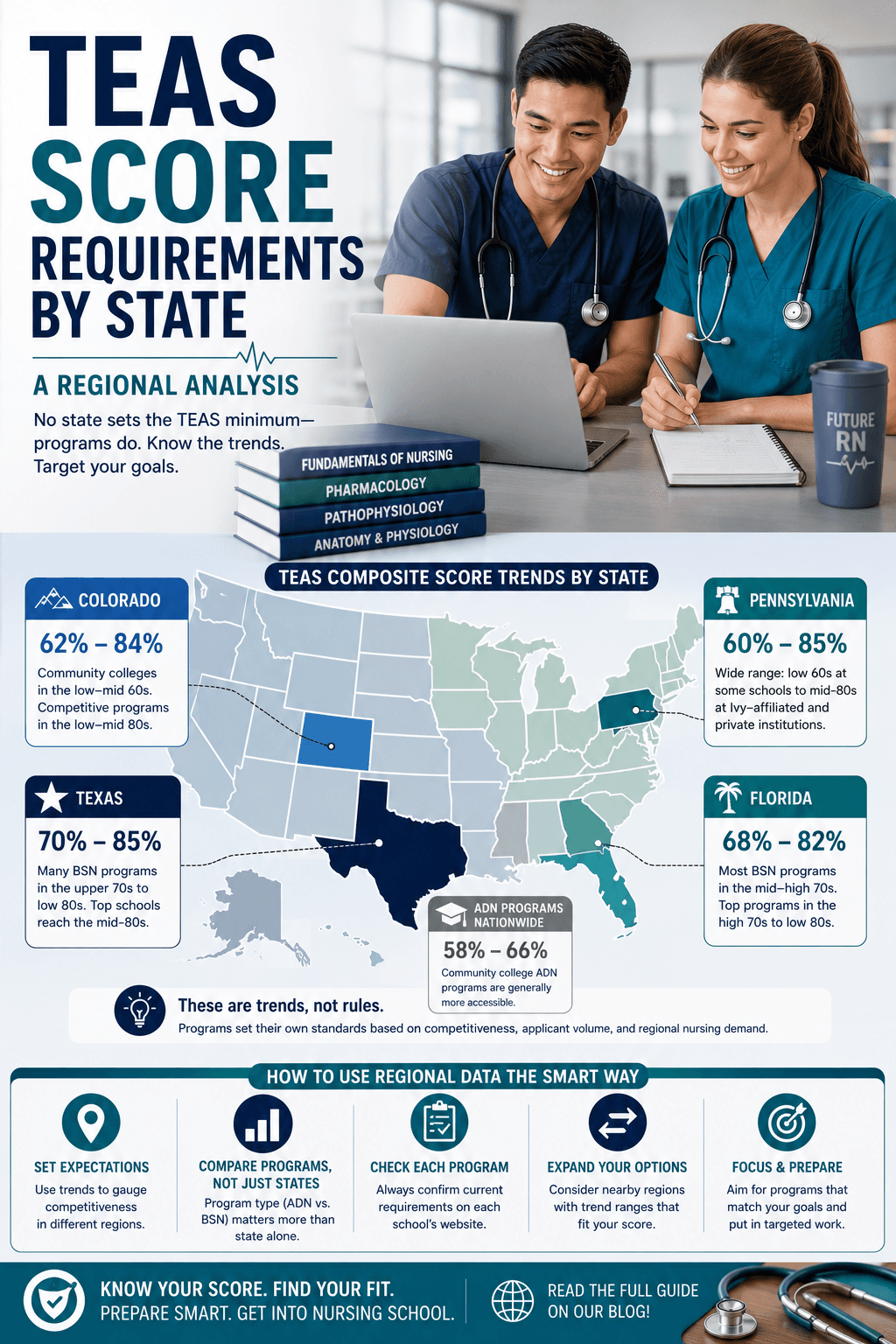
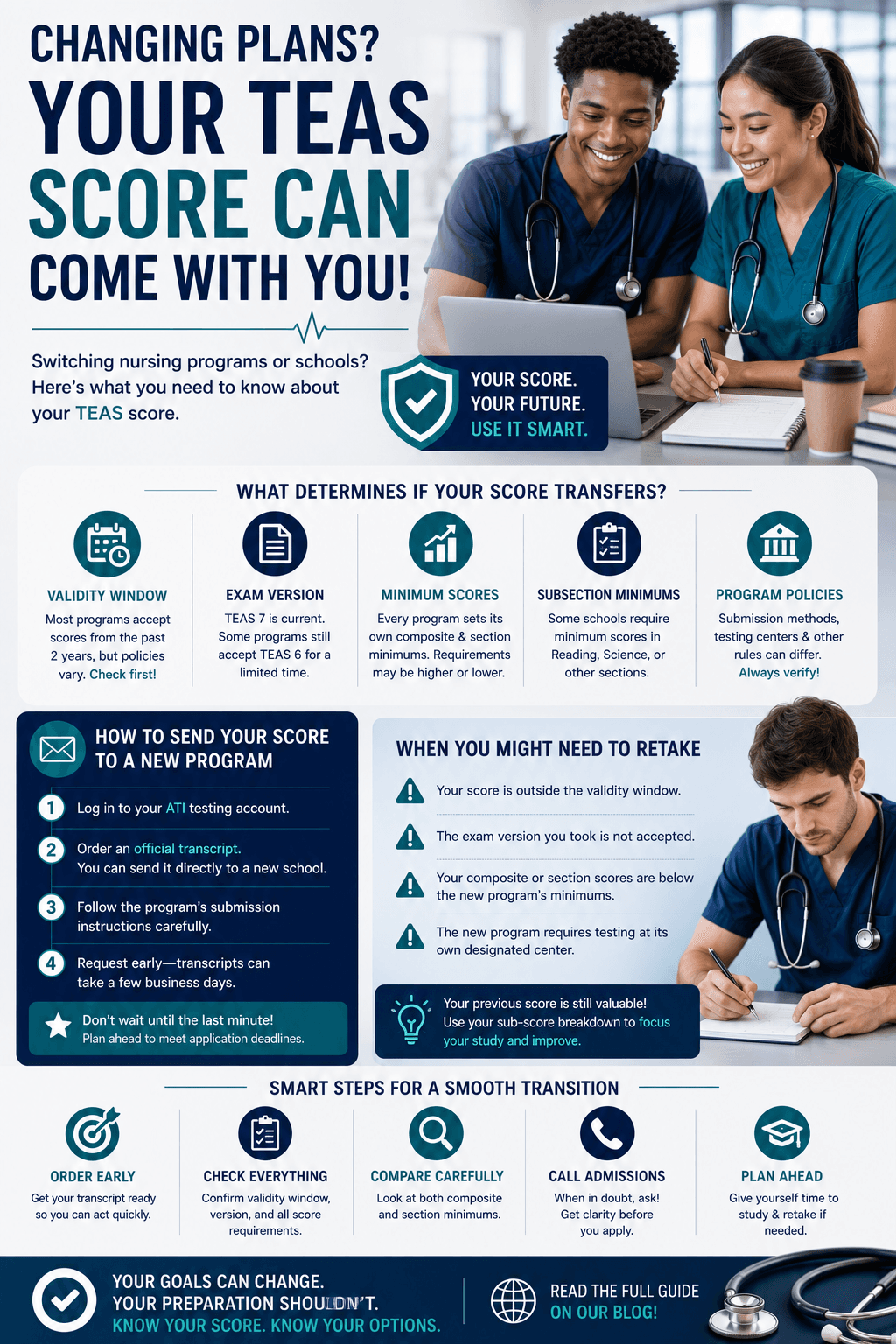
- Don't assume one score fits several programs. Even if two programs both need the TEAS, they could have different minimum scores or different weighting in their admissions process. You cannot assume that passing one program immediately makes you eligible for another.
A Check List for Simple Verification
Before signing up to a study plan, check:
- Regardless of whether your program needs the TEAS, the HESI A2, another standardized examination, or no test at all
- If the requirement varies by track (ADN, BSN, accelerated, bridge)
- The lowest score, assuming a low score is reported, for the current application cycle
- If the requirement has changed recently, simply reviewing the most recent version of the admissions page
Don’t Let an Assumption Define Your Study Plan
The TEAS is widespread but not universal. But thinking every nursing program requires it — or assuming that your program’s requirement hasn’t changed since you last checked — can result in wasted preparation time, or worse, an incomplete application. A simple step that saves you a major and completely avoidable setback later in the admissions process is to take the time to check what the current requirement is for your specific program.