Why mental health nursing study feels different
Mental health nursing content is not like medication calculations or anatomy questions where there is a clear right or wrong answer. Often it is a nuanced judgment call about therapeutic communication or an appropriate nursing response. This makes it feel less like memorization and more applied reasoning. This can require a different study approach than fact-based sections of the exam.
Commonly Covered Major Content Areas
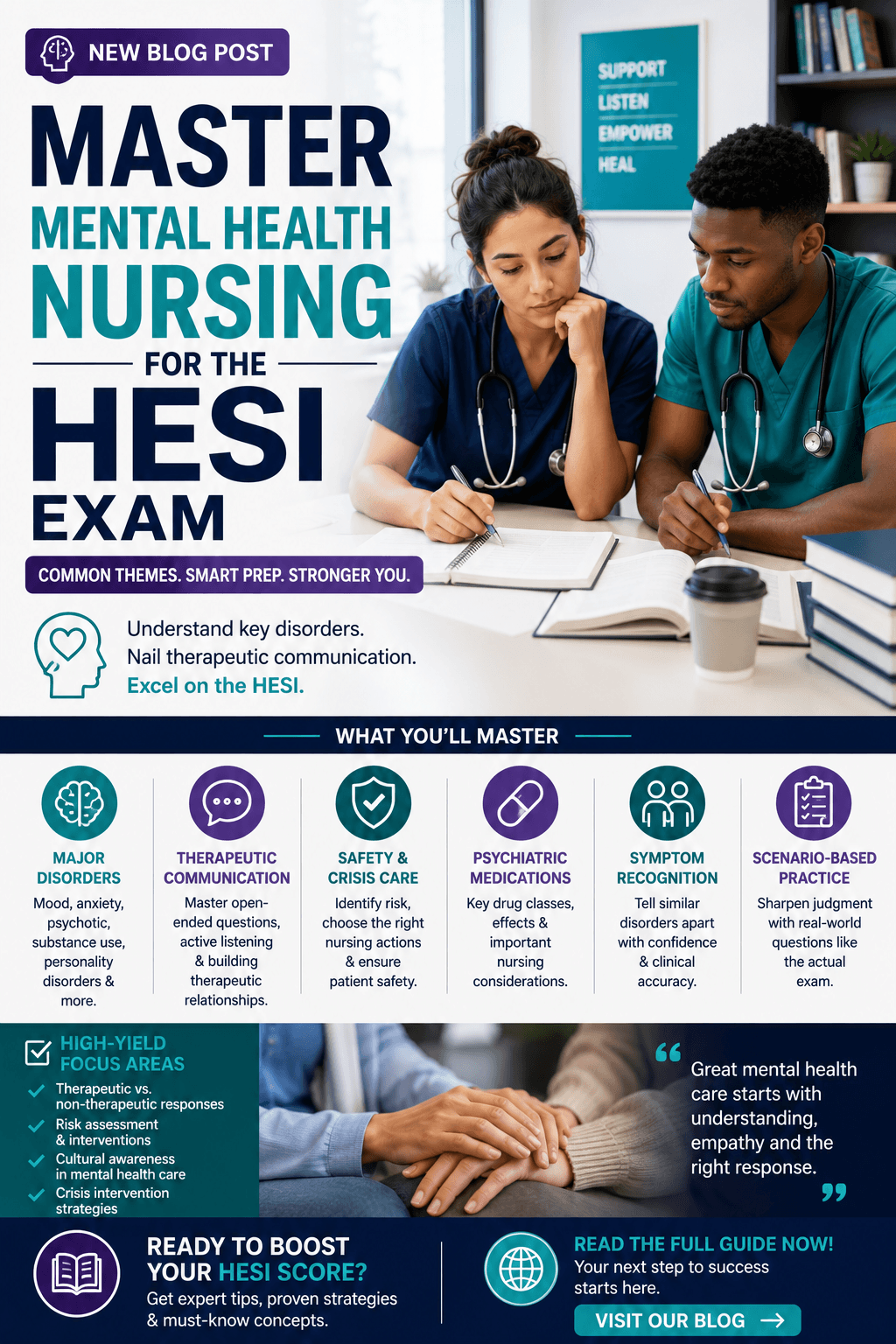
HESI mental health questions are typically based on the major categories of psychiatric disorders, and the key principles of nursing communication.
- Mood Disorders-Depression, Bipolar Disorder and Associated Nursing Considerations.
- Anxiety disorders including generalized anxiety, panic disorder, phobias and obsessive-compulsive disorder.
- Psychotic disorders — schizophrenia and related disorders: recognizing symptoms and appropriate nursing interventions.
- Substance use disorders - identifying signs of substance use and withdrawal, and nursing safety considerations.
- Personality disorders – general characteristics and communication approaches for common presentations of personality disorders.
- Crisis Intervention and Safety - Identifying indicators of risk and appropriate nursing responses in crises.
Key Therapeutic Communication Concepts
A lot of the mental health content is around communication technique because that is central to psychiatric nursing practice.
- Therapeutic communication techniques like open-ended questions, reflection, and active listening compared to non-therapeutic responses that shut down conversation or minimize a patient’s experience.
- Understand the nurse’s role in fostering a therapeutic relationship without crossing the line and how to establish appropriate boundaries.
- Recognizing non-therapeutic responses such as false reassurance, giving unwanted advice or diverting the topic away from the patient’s concerns.
- Ethnic culture in mental health care: Understanding that the patient’s cultural background affects how he or she manifests psychological distress.
Common Question Types You’ll Encounter
Mental health questions on the HESI exam often test applied judgment rather than simple recall.
- Best-response questions, which ask what response by the nurse is most therapeutic communication in a scenario with multiple responses.
- Symptom recognition questions: test your ability to recognize which symptoms match with a particular psychiatric diagnosis.
- Safety and risk-assessment questions, where you will be asked to identify appropriate nursing actions when a patient shows signs of risk.
- Medication questions about common psychiatric medications, including general effects and important nursing considerations.
High Yield Topics for Further Review
- The content is very much safety oriented throughout this section identifying risk symptoms and nursing interventions.
- Distinguishing therapeutic from non-therapeutic communication, as this distinction appears repeatedly across many question formats.
- Common classes of psychiatric medications, including general nursing considerations for antidepressants, antipsychotics, and mood stabilizers.
- Signs and symptoms that differentiate major psychiatric disorders, as often times the questions will test your ability to tell apart similar sounding conditions.
How to Study Well Mental Health Nursing
In particular, practice with scenario questions, as this section heavily relies on applying communication principles to realistic clinical situations.
- Prepare comparison tables of similar disorders and their significant differences in symptoms and nursing approaches.
- Identify the supportive, open-ended response from several options to practice active therapeutic communication phrases.
- Reinforce pharmacology and mental health content simultaneously by linking medications with disorders.
- Use case-based scenarios are a good practice as this is similar to how mental health content is generally tested.
Common Pitfalls to Avoid
- Memorized definitions only, without practicing how to apply that knowledge in a realistic clinical scenario
- The therapeutic communication content was frequent and consistent throughout this section, but I skipped it.
- Confuse similar disorders, ignoring the subtle but important differences between conditions that have symptoms in common.
- Underestimating safety and crisis content which is very important because of its clinical significance.
Concluding Thoughts
The HESI exam mental health nursing content merges the factual knowledge of psychiatric conditions with the applied judgment of therapeutic communication and patient safety. You want to be focused and confident in your prep for this section. You want to study high yield topics like therapeutic communication, symptom differentiation, crisis recognition, etc. . . . In addition, you want to practice with scenario-based questions as opposed to isolated recall questions. These ideas are much more than just about the exam and will provide a vital foundation for compassionate, effective psychiatric nursing practice throughout your career.