Are You Allowed to Retake the HESI Exam?
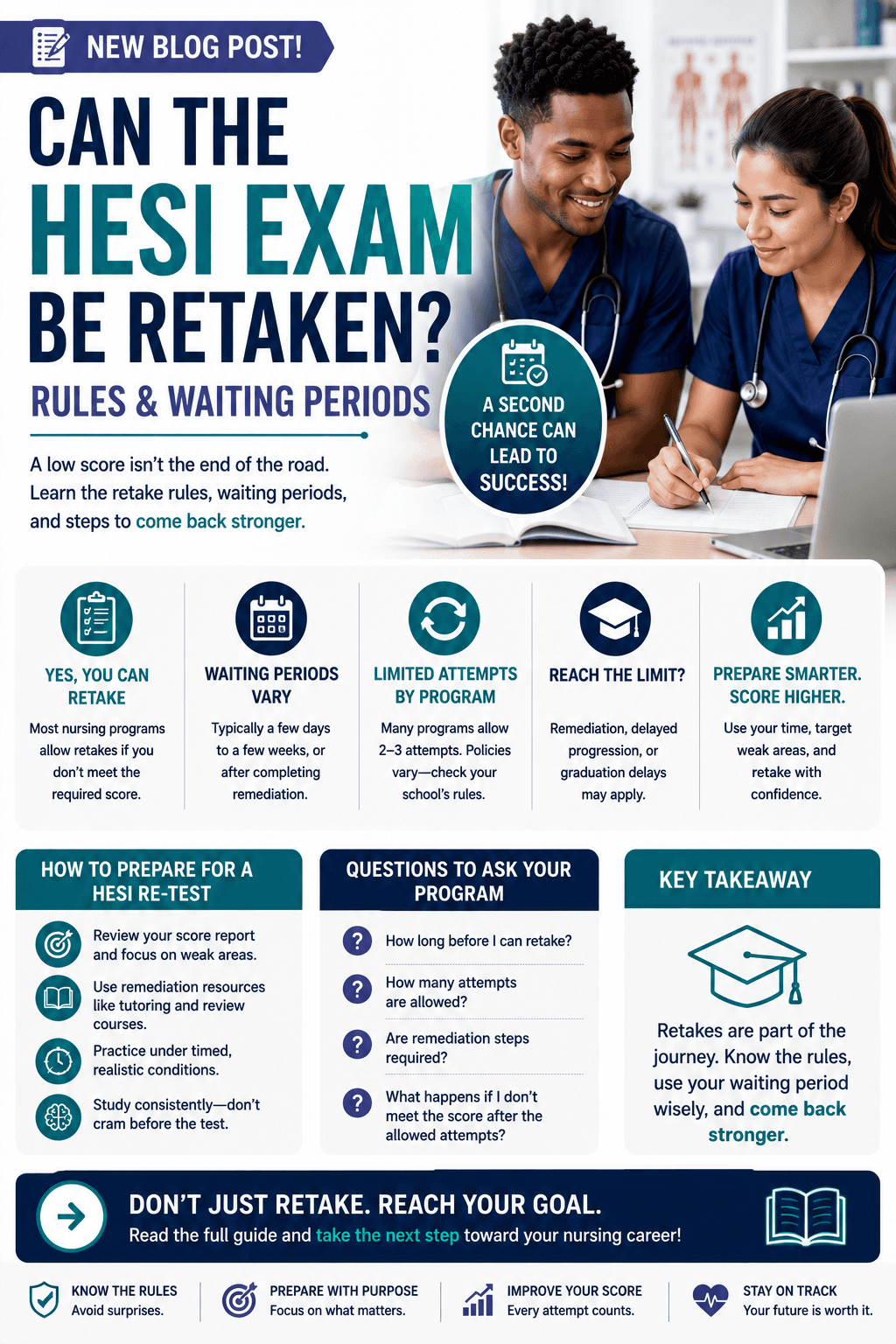
Yes, most nursing programs and testing centers will allow you to retake the HESI if you do not achieve the required score on your first try. However, the rules regarding retakes including the number of times you can retake and how long you have to wait between retakes will vary greatly depending on your individual nursing program. Because HESI exams are usually overseen and administered by individual schools, rather than a single national governing body. The policy of your program is the final authority on retake rules, not a universal standard.
Average Time between Attempts
There are many programs with similar general patterns, though the exact waiting times vary from one institution to another. The wait is usually a few days to a few weeks, giving you time to study specifically for the retest. Other programs require a structured period of remediation before allowing a retake, even if the student wants to take a second attempt immediately. Exit exams may require more time to retake than A2 retakes, as the material for exit exams is broader and typically takes longer to review.
How many times can you take the HESI test?
The number of allowed attempts varies by program too.
- Most nursing programs will give you two or three chances before further consequences come into play, but not all of them.
- Some programs may allow you to take it as many times as you want within a period as long as you complete a required wait time and remediation steps between attempts.
- Other programs may have tighter limits, especially for the Exit Exam, because it directly affects graduation and NCLEX preparedness.
Because policies vary widely, it is very important to check your individual program’s student handbook or talk with an academic advisor to learn about your particular retake limits.
What to Do If You Reach Your Retake Limit
- If a program has a maximum number of allowed attempts and a student does not achieve the required score within that limit, the consequences can vary.
- Some programs have coursework or remediation requirements prior to another attempt.
- Other programs may hold students from progressing to the next semester or clinical rotation until requirements are met.
- In more serious matters, such as the Exit Exam, if students do not meet requirements in the number of attempts, they are allowed; it could affect their ability to graduate on the timeline they originally planned.
How to Prepare for a HESI Re-Test
- If you are in the situation where you have to retake it, using the wait time to its fullest can make all the difference in your next attempt.
- Your detailed score report will show you exactly which content areas you need to work on most.
- Do not review everything equally; spend your study time on specifically weak areas.
- Take advantage of any remediation resources your program offers (tutoring, review courses, more practice tests, etc.)
- Practice under timed, realistic conditions to build both content knowledge and confidence for test day.
- Do not cram the day before you retake the test, because studying a little bit every day during the waiting period usually works better than cramming.
Questions to Ask Your Program about Repeats
Before you decide that any general retake policy applies to you, you may want to check with your nursing program on a few specifics.
- How long before you can retake.
- How many chances are there for this particular exam?
- What are the required mandatory remediation steps before a retake?
- What if I do not achieve the required score in the allowed number of attempts?
Concluding Remarks
Many nursing students will find themselves needing to retake the HESI exam, and most programs have policies in place to help with a second attempt. This is the most important part: Check your specific program’s policy directly, don’t assume a general standard applies — rules on waiting periods and allowed attempts vary widely. If you hit the retake, then you have a targeted review plan and a clear idea of the requirements for your program. Therefore, the retake is a productive step forward, and not a discouraging setback.