What Burnout Looks Like in Exam Prep
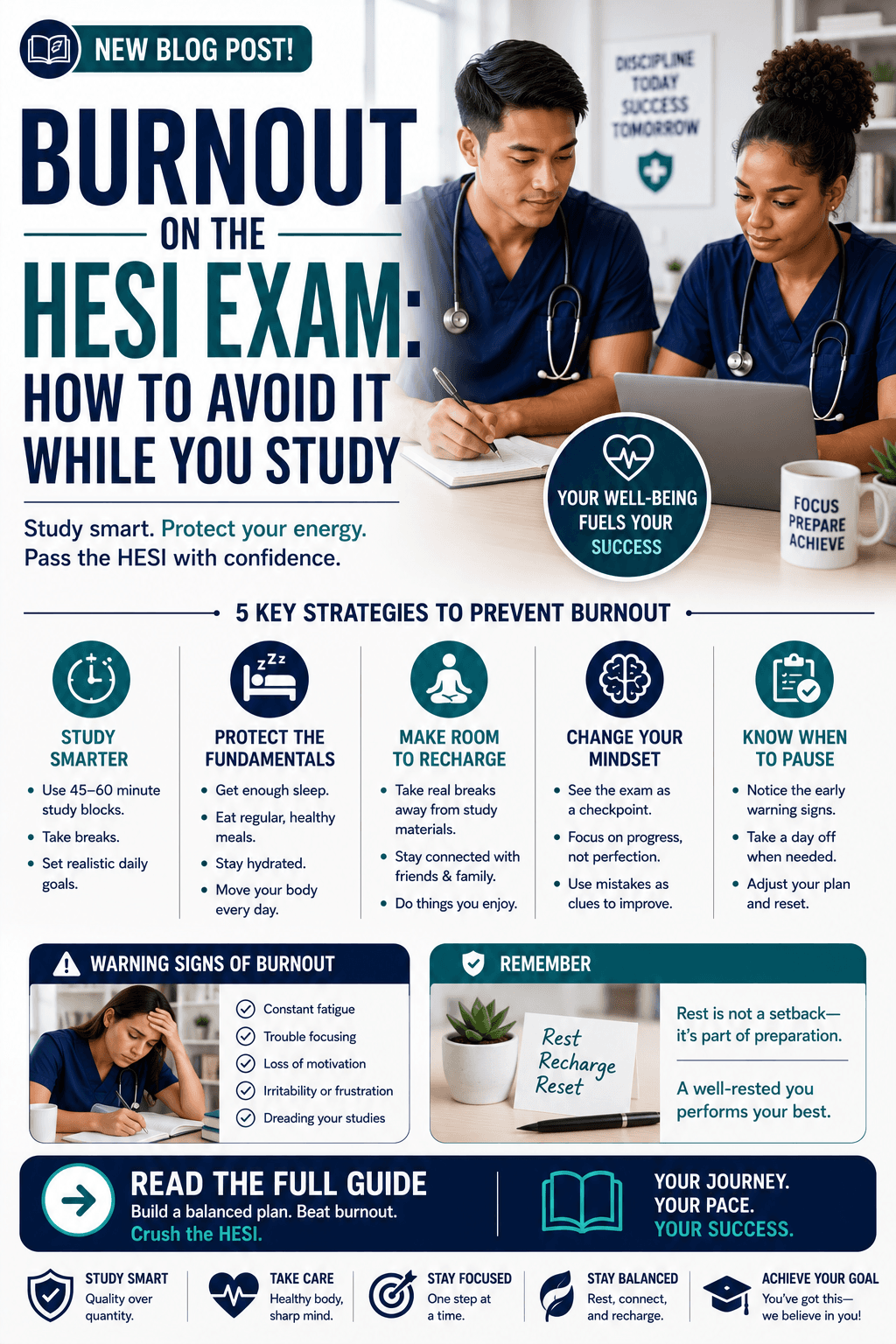
HESI prep burnout is usually more of a slow burn than an instant slam. You may feel mentally drained after a good night’s sleep. You may have trouble concentrating when you study something that used to be easy. You may lose interest in a topic that used to be interesting. You may be frustrated or stressed out by work that used to be easy.
If you notice these warning signs early on, you can change your approach before you are too burned out to prepare—or before it takes a bigger toll on your overall well-being.
Why You Get Burn Out During Test Prep
Burnout frequently occurs when the demands of study consistently exceed a student’s ability to rest and recharge. This is especially common on high-stakes exams such as the HESI, where the pressure to do well can lead students to push themselves far beyond what is actually sustainable, often at the expense of sleep, meals, exercise, and social connection.
Creating a Sustainable Study Schedule
The best way to avoid burnout is to set up a realistic and sustainable study schedule from the beginning, instead of trying to recover from exhaustion after it has already taken hold.
- Instead of attempting to grind through long, unbroken study sessions, study in tight blocks of 45 to 60 minutes, and then take a real break.
- Schedule full days of rest, especially during longer periods of study, so that your brain can consolidate what you have learned.
- Instead of open-ended expectations that can creep into long hours of study, set realistic goals for each day.
- Do not study late at night as this can affect the quality of your sleep and your ability to relax mentally.
Sleeping, Eating, Moving: Protecting the Fundamentals
- It is easy to deprioritize basic self-care when a big exam seems imminent, but this usually backfires, making study time less effective rather than more productive.
- Ensure you are getting enough sleep, as sleep is critical to memory consolidation and overall cognitive function.
- Eat regularly and healthily and do not be tempted to skip meals when you are really studying hard.
- Keep Moving, Even a Little Bit Movement is a proven method to relieve stress and support mental clarity.
- Drink water Water helps you stay hydrated throughout the day. Dehydration can cause fatigue and difficulty concentrating.
Making Room for Rest and Connection
Burnout is often the result of studying eating up every other part of your life. Creating space for rest and connection is not a distraction from your preparation — it is part of your preparation.
- Schedule real breaks away from your study materials, not just treat every waking hour as study time.
- Keep in touch with friends, family or classmates. Isolation can escalate feelings of stress and exhaustion.
- Schedule in some activities you enjoy, even if only for a short time, to give your mind a real break between study sessions.
- Credit yourself for the progress you have made, not just the amount of material left.
When to Cut Back on Your Study Schedule
- If you start to see the warning signs of burnout – constant exhaustion, slipping concentration, or a growing sense of dread about your studies – it may be better to deliberately pull back than to keep going.
- Give yourself a day off from studying, resting without guilt about taking the time off.
- Review your study plan and see if your daily goals have become unrealistic or too demanding.
- Talk to a trusted friend, classmate or advisor; talking through the pressure you are feeling can help you put it in perspective.
- Remember, rest is part of good preparation, not a setback to your progress.
Conclusion
Avoid burnout. Studying for the HESI is not about studying less because you are lazy. It is about studying in a sustainable way so you can actually stick with it throughout your entire preparation timeline. You can keep on making consistent, directed progress without compromising your overall health by taking regular breaks, safeguarding your sleep and fundamental wellbeing, and knowing the early symptoms of burnout before they escalate. In the end, a well-rested, balanced approach will do you and your exam performance a lot more favors than slogging through fatigue ever could.